

Wild Trail Hiker is reader-supported. We may earn a commission when you buy through links on this page, at no extra cost to you. We only recommend products we’d consider taking on a multi-day trip ourselves.
The best water filters for hiking prove their worth when you are kneeling beside a silty creek late in the day, your bottle is empty, and camp is still an hour away. Not when the filter is sitting on a gear table looking small and clever.
On a multi-day hike, a bad water setup does not just slow you down. It changes how far you can walk, where you can camp, and how much risk you carry between reliable sources.
The common failure points are simple:
- Slow flow when you are tired and need two litres before dark.
- Clogging after silty water, tannin-stained streams, or shallow pools.
- Awkward filling from trickles, rock pools, or shallow creeks.
- Wrong protection for the trip, especially when viruses or heavy contamination may be a real concern.
This guide is focused on practical trail filters for multi-day hiking, not kitchen pitchers, fridge cartridges, or survival gadgets that make sense only in a drawer. For the bigger gear system around water, food, shelter, and pack weight, start with Multi-Day Hiking Gear: What You Actually Need.
How We Picked
These picks focus on what matters on trail: weight, flow rate, bottle compatibility, field cleaning, and whether the setup holds up over several days. All five are from established outdoor brands. Household pitchers, refrigerator cartridges, and bulky emergency-only units are not included.
Quick Picks
| Slot | Product | Why It Stands Out |
|---|---|---|
| Best Overall | Sawyer Squeeze Water Filtration System | Reliable, proven, field-cleanable, and compatible with common bottle setups. |
| Best Fast Filter Bottle | Katadyn BeFree 1.0L Water Filter | Fast flow and easy scoop-and-drink use when water is frequent. |
| Best Lightweight Backup | LifeStraw Peak Series Solo | Tiny, simple, and useful as a backup or minimalist filter. |
| Best Modular Squeeze Filter | Platypus QuickDraw Microfilter | Fast flow, good bottle compatibility, and a compact trail setup. |
| Best Purifier Bottle | GRAYL GeoPress Water Purifier Bottle | Heavier, but better suited to sketchier water and travel-style hiking. |
Who This Is For
This guide is for hikers who need a reliable way to treat water over several days, especially when carrying every litre from the trailhead is not realistic.
It is best for:
- Solo hikers and pairs on overnight or multi-day routes.
- Hikers using streams, lakes, tarns, huts, tanks, or backcountry water points.
- People moving from day hikes into longer routes where water planning matters.
- Backpackers who want a lighter system than pump filters or boiling everything.
If you are still working out your full kit list, read Multi-Day Hiking Gear: What You Actually Need before buying isolated gear pieces.
Why Water Filters Matter More on Multi-Day Hikes
A water filter is not just a hygiene item. On a longer walk, it becomes part of your route plan.
- Water weight compounds fast: One litre weighs about one kilogram. A good filter can let you carry less between reliable sources, but only if you trust it.
- Flow rate matters when you are tired: A slow filter is tolerable on a day hike. On night three, filtering water for dinner, breakfast, and the next carry can become a morale problem.
- Source quality changes: Clear alpine water, muddy creeks, hut tanks, and lowland streams are not the same risk. Your filter needs to match the likely source.
- Cleaning matters in the field: Filters clog. If the only fix is a clean kitchen sink, it is not a great backcountry system.
For most hiking in North America, Australia, New Zealand, and similar backcountry regions, bacteria and protozoa are the main concern. Viruses are less common in remote backcountry water, but they become more relevant near heavy human use, poor sanitation, livestock, or international travel.
The Safest Bet
The Sawyer Squeeze is the safest all-round pick for most multi-day hikers. It is not the newest or flashiest option, but it has the right combination of reliability, bottle compatibility, field cleaning, and long filter life. If you want one filter to learn, carry, and keep using across different trips, start there.
1. Sawyer Squeeze Water Filtration System: Best Overall
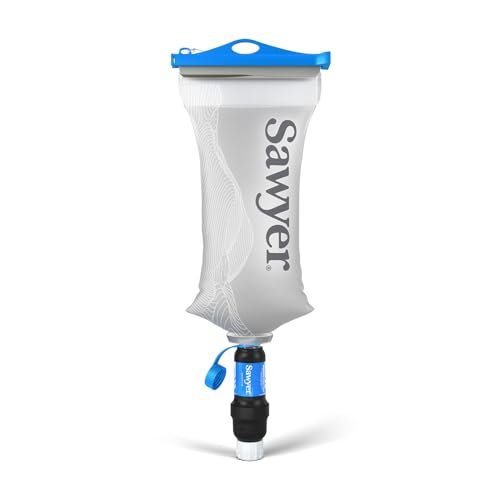
The Sawyer Squeeze is the filter most hikers should consider first. Sawyer lists it as a 0.1 micron hollow-fibre filter designed to remove bacteria, protozoa, cysts, sediment, and microplastics. The main advantage is trail practicality. You can squeeze from a soft bag, run it inline, or pair it with common bottle setups. It is also backwashable, which matters when flow slows down after silty or organic water. The included pouches are not everyone’s favourite, so many hikers pair the filter with stronger third-party bags or compatible bottles.
Best for: Most multi-day hikers who want one reliable filter.
Why it stands out: Proven design, long claimed filter life, strong ecosystem of compatible bottles and bags.
2. Katadyn BeFree 1.0L Water Filter: Best Fast Filter Bottle
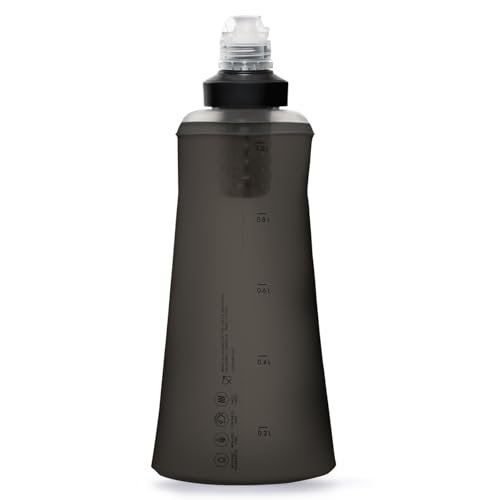
The Katadyn BeFree is the most convenient option here when water sources are frequent and reasonably clear. Katadyn positions the 1.0L BeFree around a 0.1 micron hollow-fibre filter, fast flow, and a collapsible soft flask. The big win is how natural it feels: scoop, screw on the filter cap, drink, or squeeze into another bottle. It is excellent for fast-moving hikes, trail running, and routes with regular streams. The trade-off is durability and compatibility. The flask is convenient, but it is still a soft bottle, and the BeFree ecosystem is less universal than standard 28 mm bottle-thread filters.
Best for: Hikers who prioritise speed, simplicity, and frequent refill stops.
Why it stands out: Very fast flow and easy field cleaning by shaking or swishing the filter.
3. LifeStraw Peak Series Solo: Best Lightweight Backup
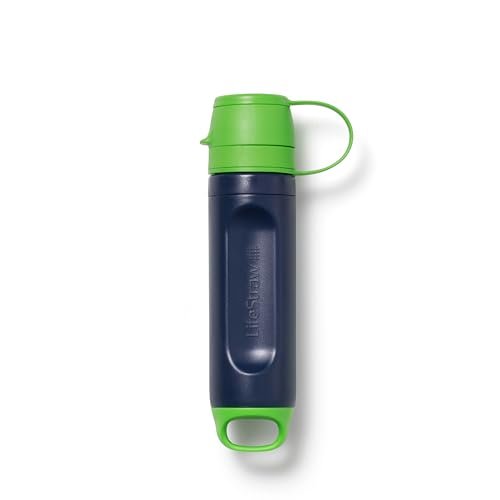
The LifeStraw Peak Series Solo is a better hiking option than the classic straw-style LifeStraw for most multi-day use. LifeStraw lists the Solo at about 1.7 ounces, with a membrane microfilter rated for bacteria, parasites, and microplastics. Its advantage is size. It can live in a hip belt pocket, first-aid pouch, or emergency kit without much penalty. The limitation is volume handling. For a full multi-day water system, a tiny filter can become slow or fiddly when you need several litres for camp. Treat it as a minimalist filter or backup, not the most comfortable group setup.
Best for: Ultralight hikers, backup filtration, and short solo trips.
Why it stands out: Very compact, light, and easier to pack than most full squeeze systems.
4. Platypus QuickDraw Microfilter: Best Modular Squeeze Filter
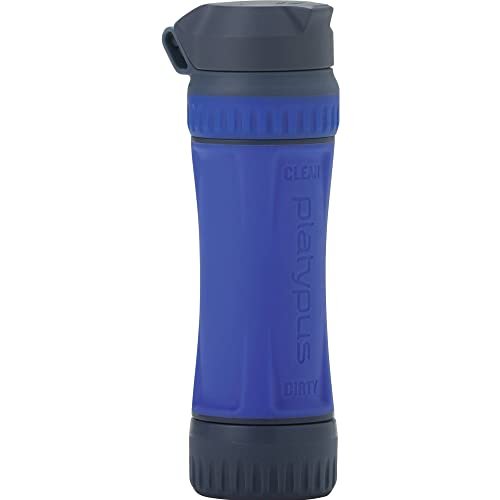
The Platypus QuickDraw is a strong alternative to the Sawyer Squeeze if you like a faster, cleaner modular setup. Platypus lists the QuickDraw as a hollow-fibre filter with a fast flow rate and compatibility with common 28 mm bottles and Platypus reservoirs. The cap and connection design are useful on trail because clean-side protection and bottle fit both matter when you are filtering repeatedly. The cartridge life is shorter than Sawyer’s claimed lifespan, but most hikers are more likely to notice ease of use and flow before they ever reach a theoretical lifetime limit.
Best for: Hikers who want a fast, compact squeeze filter with good bottle compatibility.
Why it stands out: Strong flow, practical cap design, and a tidy modular system.
5. GRAYL GeoPress Water Purifier Bottle: Best Purifier Bottle
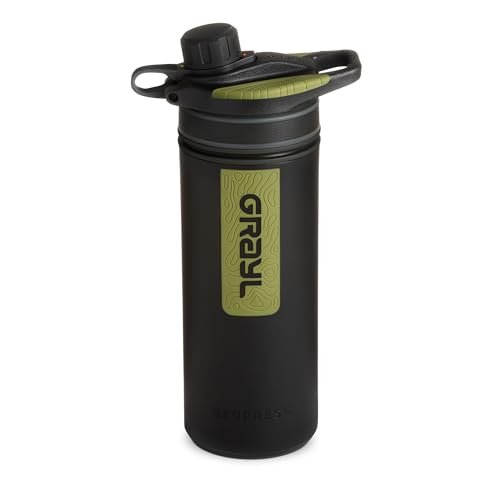
The GRAYL GeoPress is the odd one out because it is a purifier bottle rather than a minimalist trail filter. GRAYL positions the GeoPress for viruses, bacteria, protozoa, particulates, many chemicals, heavy metals, tastes, and odours. That broader protection makes it more relevant for international travel, hut-to-hut routes with uncertain tap water, or hikes near heavy human activity. The trade-off is weight and bulk. For a long mountain route with clean alpine streams, it is overkill. For mixed travel and hiking where water quality is genuinely uncertain, the extra protection may be worth carrying.
Best for: Travel-heavy hiking, questionable water sources, and trips where virus protection matters.
Why it stands out: Broader purification coverage than standard hollow-fibre hiking filters.
How to Choose a Hiking Water Filter
Picking the best water filter for hiking starts with honest questions about your trip, not the spec sheet. Start with the water risk. For most backcountry hiking, a hollow-fibre filter that handles bacteria and protozoa is enough. If you are travelling internationally, hiking near poor sanitation, or relying on questionable town or hut water, consider a purifier like the GRAYL or add chemical treatment.
Think in litres, not grams. Ultralight filters look great on a spreadsheet, but volume matters at camp. If you need to treat water for dinner, breakfast, and a dry morning carry, a slightly heavier filter with better flow can be the better choice.
Check the bottle system. Standard 28 mm bottle compatibility is useful because replacement bottles are easy to find. Proprietary soft flasks can be excellent, but they lock you into that system.
Plan for clogging. Silty water, glacial flour, tannin, algae, and shallow pools all reduce flow. A filter you can backwash, shake clean, or inspect in the field is safer than one that works beautifully only when new.
Choose the Sawyer Squeeze if you want the safest all-round system. Choose the Katadyn BeFree if speed and simplicity matter most. Choose the GRAYL GeoPress if water quality risk is broader than normal backcountry contamination.
Final Thoughts
The best water filter for hiking is the one that matches the trip, not the one with the cleverest packaging. For most multi-day hikers, the Sawyer Squeeze is the safest starting point. The Katadyn BeFree is excellent when water is frequent and you value speed. The GRAYL GeoPress is heavier, but more appropriate when the source risk is bigger than ordinary backcountry water.
Water treatment is only one part of your system. Your pack, shelter, rain gear, and sleep setup all need to work together over several days. For the full framework, read Multi-Day Hiking Gear: What You Actually Need. You may also want to compare the best power banks for hiking and the best trekking poles for multi-day hiking.
Frequently Asked Questions
Do hiking water filters remove viruses?
Most lightweight hiking filters do not remove viruses. They are usually designed for bacteria, protozoa, cysts, sediment, and microplastics. That is enough for many remote backcountry trips, but not every water source. If viruses are a realistic concern, use a purifier bottle, chemical treatment, UV purification, or boil water according to local guidance.
Is the Sawyer Squeeze better than the Katadyn BeFree?
The Sawyer Squeeze is the better all-round choice for most multi-day hikers because it is durable, backwashable, and works with many bottle and bag setups. The Katadyn BeFree is faster and simpler when water is easy to scoop and sources are frequent. Pick Sawyer for versatility. Pick BeFree for speed and convenience.
Can I drink straight from mountain streams without filtering?
Sometimes people do, but it is a risk decision rather than a rule. Clear water can still contain giardia, cryptosporidium, bacteria, or contamination from animals and people upstream. On a multi-day hike, stomach trouble can end the trip quickly. Filtering is usually a small effort compared with the downside of getting sick.
What is the best water filter for a group hike?
For a group, look for flow rate and volume handling. A Sawyer Squeeze with a larger dirty-water bag can work well for pairs or small groups. For bigger groups, a gravity system may be better than passing around a small squeeze filter. Tiny personal filters are best kept as backups, not the main group water plan.
Do I need to filter tap water at huts or campsites?
It depends on the hut, tank, and local advice. Some managed huts provide treated water. Others use rainwater tanks, streams, or untreated sources. Follow posted signs and official park guidance. When in doubt, treat the water, especially if the tank is low, the area is crowded, or recent weather may have affected water quality.
