

Last updated: August 2026
Wild Trail Hiker is reader-supported. We may earn a commission when you buy through links on this page, at no extra cost to you. We only recommend products we’d consider taking on a multi-day trip ourselves.
A dry bag looks like the easiest gear decision on the packing list. Roll it up, clip the buckle, done. The difference shows up when a wade goes deeper than expected or spray comes off a headland at low tide, and the thing standing between your phone, your permit, and a ruined trip is a strip of fabric and a buckle you never tested.
Here are the best dry bags for hiking multi-day trails, and why each one earns its place on this list rather than the cheapest roll-top on the shelf. Multi-day trips put dry bags through more than a single rainy commute:
- Sustained wet exposure: hours of spray or submersion at a river ford, not a five-minute downpour.
- Repeated rough handling: stuffed into a pack, sat on, dropped on rock, day after day.
- Mixed contents: electronics, a paper permit, and a spare layer often share one bag, so one failure risks all three.
- Cold and grit: PVC stiffens in the cold, and grit at the seal is a common cause of slow leaks over a multi-day trip.
This guide is the dry bags that hold up to that, not the cheapest roll-top on the shelf. For the wider kit picture, start with Multi-Day Hiking Gear: What You Actually Need.
How We Picked
These picks focus on what matters on a multi-day trail: a genuine waterproof rating, a roll-top or welded seal that survives repeated use, and a size that actually matches what hikers carry, phones, permits, spare layers, or a full pack liner. Products are cross-checked against independent gear-review testing (Treeline Review, CleverHiker) rather than manufacturer claims, and picks that overlap too heavily with river-sport bags were left out in favour of options genuinely suited to a hiking pack.
Quick Picks
| Slot | Product | Why It Stands Out |
|---|---|---|
| Best Overall | Sea to Summit Lightweight Dry Sack 3-Piece Set (4L, 8L, 13L) | A genuinely useful size spread for a multi-day pack in one purchase. |
| Best for Backpacking | Sea to Summit eVac Compression Dry Bag (8L) | Compresses bulky items and keeps them dry at the same time. |
| Best Budget | Earth Pak 20L Waterproof Dry Bag | Durable 500D PVC and a genuine roll-top seal at a low price. |
| Best Ultralight | Osprey Ultralight 3L Waterproof Dry Sack | Minimal weight for a phone, permit, and small essentials. |
| Best for Electronics | Sea to Summit View Dry Bag (See-Thru) | A clear window means less digging for your phone at a river crossing. |
Who This Is For
- You are hiking a trail with a genuine wet-exposure risk: river fords, tidal zones, coastal spray, or sustained rain.
- You want to protect specific high-value items (phone, permit, first-aid kit, spare layer) rather than buy a full pack cover.
- You are deciding between a small dedicated dry sack and a bigger pack liner, and want a clear answer for both.
- If your main concern is rain falling on your pack from above, a pack rain cover may be all you need instead.
Multi-Day Context
A dry bag failure on a multi-day trip is rarely dramatic. It is usually a slow leak nobody notices until the second night.
- River fords and unbridged crossings: a bag fine when dunked briefly can still leak held underwater in a stumble, exactly when it matters most.
- Coastal spray and tidal zones: hours of fine mist works into a seam more effectively than one dunk, the failure mode independent testers flag most on cheap PVC.
- Hut and campsite wildlife: mice and possums go for anything that smells like food, and a dry bag doubles as a scent barrier as much as a water barrier.
- Cold-weather stiffness: PVC dry bags get noticeably stiffer below freezing, worth knowing before an early or late-season trip.
The Safest Bet
If you want one answer without comparing five products, the Sea to Summit Lightweight Dry Sack 3-Piece Set covers the most common multi-day use case without a second purchase later.
1. Sea to Summit Lightweight Dry Sack 3-Piece Set: Best Overall
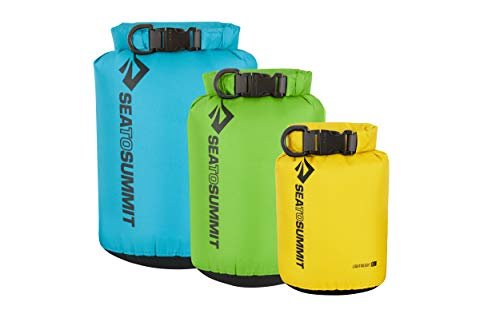
Sea to Summit lists this set at 4L, 8L, and 13L, made from PU-coated nylon with taped seams and the brand’s field-repairable Hypalon buckle. The size spread earns Best Overall: the 4L handles a phone and permit, the 8L takes a spare layer, and the 13L liners a clothing stuff sack, all in one purchase. Reviewers rate the buckle repair system highly, since a broken buckle on a solo bag is otherwise a trip-ending failure.
Best for: Hikers who want one purchase that covers small electronics through to a spare-clothing dry bag.
Why it stands out: Three genuinely useful sizes, field-repairable buckle, taped seams.
2. Sea to Summit eVac Compression Dry Bag: Best for Backpacking
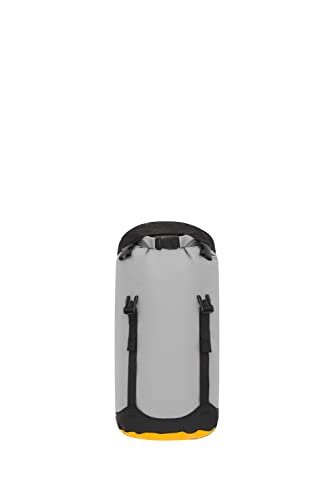
Independent testers name this Sea to Summit’s best backpacking-specific dry bag, thanks to the eVent panel that compresses it after sealing, useful for a sleeping bag or bulky insulated layer where a standard dry bag just sits at full size. The Cordura build held up over repeated testing, and compresses narrow enough to sit inside most 50L-plus packs without wasting space.
Best for: Compressing bulky insulated layers or a spare sleeping system component while keeping them dry.
Why it stands out: Genuine compression function, not just a roll-top seal, plus durable Cordura and eVent construction.
3. Earth Pak 20L Waterproof Dry Bag: Best Budget
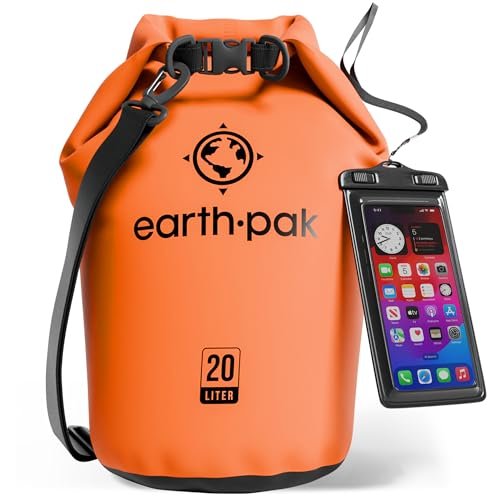
Earth Pak has built a reputation on genuine 500D PVC and taped seams at a price well under most competitors, and reviewers note it holds up to rough handling rather than just looking tough on the shelf. The 20L size works as a pack liner for a full change of clothes or a sleeping bag, and includes a small waterproof phone pouch, genuinely useful at this price. The trade-off is weight and stiffness in the cold.
Best for: Hikers who want a genuinely waterproof pack liner without paying premium-brand pricing.
Why it stands out: Durable 500D PVC, taped seams, and a bundled phone pouch at a low price.
4. Osprey Ultralight 3L Waterproof Dry Sack: Best Ultralight
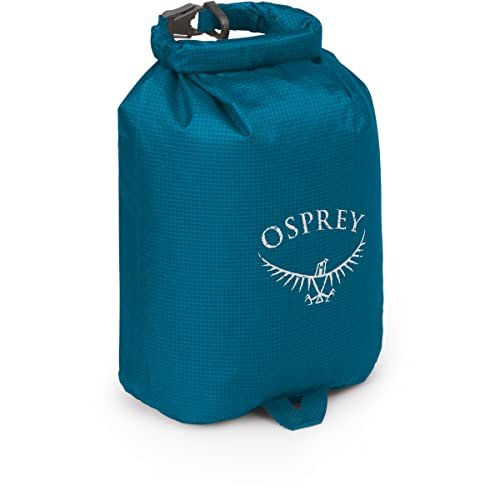
The Osprey Ultralight dry sack is built for one job: keeping a phone, permit, or small first-aid kit dry at minimal weight. Reviewers note its lowest waterproof rating of the group (IPX5), so it’s not for genuine submersion risk, but for insurance against rain and splashes that’s a reasonable trade-off. The narrow base and wide opening make it easy to pack, and the reflective logo helps find it in a dark tent.
Best for: Minimal-weight protection for a phone, permit, or small essentials, not river submersion.
Why it stands out: Very low weight, wide opening for easy packing, reflective logo for finding it in the dark.
5. Sea to Summit View Dry Bag (See-Thru): Best for Electronics
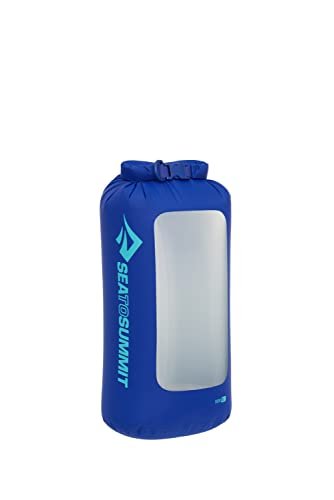
The one genuine annoyance with most dry bags is digging through an opaque bag at a river crossing with cold, wet hands. The View’s RF-welded clear window solves that: you see the phone or headlamp you need without opening the bag and risking water getting in. It carries the same taped-seam waterproofing as Sea to Summit’s Lightweight range, just with a see-through panel, though testers note clear panels degrade faster in UV over years of sun exposure.
Best for: Hikers who want to identify contents quickly without opening the bag mid-crossing.
Why it stands out: Clear RF-welded window, same taped-seam waterproofing as the brand’s standard range.
How to Choose a Dry Bag for Multi-Day Hiking
Match the size to the job, not the trip. A single oversized dry bag is harder to seal properly and wastes pack space. Most hikers do better with two or three smaller bags than one bag trying to do everything.
Check the waterproof rating, not the word “waterproof.” IPX7 or IPX8 means genuine submersion resistance; a lower or unrated “water-resistant” bag is closer to rain protection only.
Weigh PVC against nylon. PVC (like Earth Pak) is tougher and cheaper, but heavier and stiffer in the cold. Coated nylon (like Sea to Summit’s range) is lighter, at a higher price.
Don’t skip the seal test. Roll the top down at least three full turns and clip the buckle before trusting a dry bag with electronics. Too few turns is the most common real-world failure, not a manufacturing defect.
Decision aid:
- Pick the Sea to Summit Lightweight 3-Piece Set if you want one purchase covering electronics through to a spare-clothing bag.
- Pick the Earth Pak 20L if budget matters most and you want a genuine pack-liner-style bag.
- Pick the Osprey Ultralight 3L if minimal weight matters more than submersion-level waterproofing.
Final Thoughts
A dry bag is one of the cheapest pieces of insurance on a multi-day pack list, and one of the most commonly under-specced. Match the rating and size to your actual risk, not the first roll-top bag you see, and it becomes gear you forget about rather than worry about. For the full kit picture, see Multi-Day Hiking Gear: What You Actually Need, and compare best water filters for hiking and best lightweight daypacks. Planning a coastal, tide-dependent trail? See our Lost Coast Trail guide for where dry bags earn their place.
Frequently Asked Questions
Do I really need a dry bag if my backpack already has a rain cover?
A pack rain cover protects against rain falling from above, but not a river ford, a capsized crossing, or wind-driven spray, all situations where water gets inside the pack itself. A dry bag protects specific contents regardless of how the water gets in, so the two are complementary, not interchangeable.
What waterproof rating should I look for in a hiking dry bag?
For genuine submersion risk (river fords, tidal crossings, capsizing), look for IPX7 or higher. For rain and splash protection only, a lower-rated or water-resistant bag is usually enough, and weighs less.
Can I use a dry bag as a pack liner instead of a pack cover?
Yes, and many experienced hikers on wet or coastal trails prefer it. A large dry bag (13L to 20L-plus) lined inside your pack protects everything even if the exterior gets soaked, which a rain cover alone can’t guarantee.
