

Last updated: September 2026
Wild Trail Hiker is reader-supported. We may earn a commission when you buy through links on this page, at no extra cost to you. We only recommend products we’d consider taking on a multi-day trip ourselves.
Microspikes look almost too simple in the box: a stretch harness, a ring of small steel points. The difference shows up on a shaded switchback in October, when overnight refreeze turns last week’s slush into a hard, glassy crust you cannot see until your boot is sliding off the trail.
On multi-day hikes with early or late-season snow, microspikes have to handle:
- A hard-refreeze morning that softens to mud by noon, on the same pass
- Bare rock, packed snow, and glazed ice within the same mile
- Being carried dry and unused for hours, then needed fast
- A boot or trail runner swap partway through the trip that changes the fit
This guide covers the best microspikes for hiking multi-day, shoulder-season routes, not the flat sidewalk coils sold for driveway shovelling. Still working out what belongs in your kit? Start with our Multi-Day Hiking Gear: What You Actually Need. Microspikes are a conditional add, not a default.
How We Picked
These picks are built for on-trail traction, not the sidewalk-and-driveway end of the category that clutters most searches. Each has enough spike depth and a chain or plate pattern that bites into packed snow and glazed ice, not just light frost. All come from established outdoor or winter-traction brands, fit over boots or trail runners, and pack down small enough to justify carrying as insurance.
Quick Picks
| Slot | Product | Why It Stands Out |
|---|---|---|
| Best Overall | Kahtoola MICROspikes | Steel spikes, the category’s reference standard |
| Best for Trail Running / Lightweight | Black Diamond Access Spike | Low weight, fast on and off |
| Best for Backcountry / Deep Snow | Hillsound Trail Crampon Pro | Longer spikes, ratchet buckle security |
| Best for Mixed Rock and Ice | Kahtoola EXOspikes | Carbide tips, no clatter on bare rock |
| Best Budget | Yaktrax Walk | Steel coils, honest limits on real ice |
Who This Is For
This guide is for you if:
- You are hiking a route with a known snow patch, shaded pass, or north-facing descent holding ice after the rest of the trail has dried out
- You are on a multi-day trip with an uncertain forecast and would rather carry six ounces of insurance than turn back
- You hike in boots or trail runners and need traction that fits what you already own
- You want backup grip for a shoulder-season day hike, not a full mountaineering kit
Not for glacier travel or steep snow climbing. That calls for mountaineering crampons and proper training.
Multi-Day Context: Why Traction Choice Matters Over Several Days
Most traction reviews are written for a single icy commute. A multi-day hike is a different test.
Over three or four days you are dealing with:
- Repeated on-off cycles. A harness that fights you or a buckle needing bare fingers in the cold is a real cost, not a minor annoyance.
- Dead weight for most of the trip. Spikes ride unused for hours between the sections that need them, so packed size matters more than a single-day review suggests.
- Wear from mixed surfaces. Rock between snow patches chews through cheap spikes fast; a product built for sustained trail use holds its edge longer.
- Sizing across footwear changes. Hikers who swap boots for lighter shoes mid-trip need real stretch range in the harness.
The five picks below are chosen with repeated-use conditions in mind, not a single icy morning.
The Safest Bet
If you want one answer without comparing five products, the Kahtoola MICROspikes are the safest bet.
They are the reference point the rest of this category gets measured against: twelve heat-treated steel spikes, a harness rated to hold shape in genuinely cold temperatures, and a size range that covers most boots and trail runners. For most hikers carrying traction as insurance, this is the least complicated right answer.
Best Microspikes for Hiking
1. Kahtoola MICROspikes: Best Overall
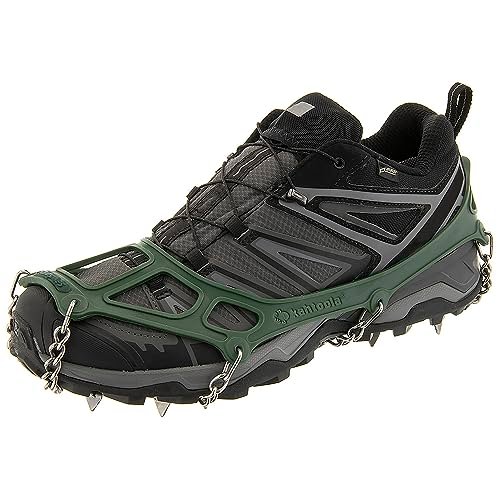
CleverHiker and Switchback Travel both name the Kahtoola MICROspikes their top overall pick, crediting the balance of grip, comfort, and packability. Twelve heat-treated steel spikes bite into packed snow and ice without the bulk of crampons. Amazon rates the harness flexible down to minus 22 Fahrenheit, well past what most hikers will see.
Best for: most hikers who want one reliable traction device for shoulder-season passes
Why it stands out: proven spike pattern, wide size range, the category’s reference standard
2. Black Diamond Access Spike: Best for Trail Running and Lightweight Use
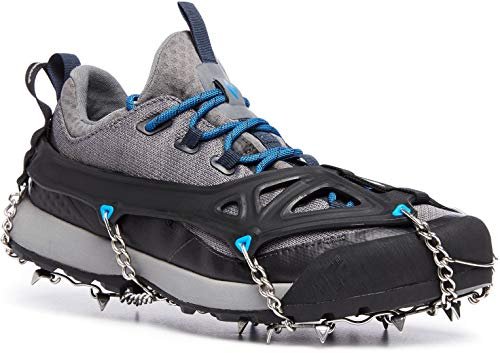
The Black Diamond Access Spike is the lighter, more packable option for hikers who move fast. CleverHiker’s direct review credits its elastomer harness and 14 optimised 8mm spikes with strong grip on snow and ice while staying stable on bare rock. A heel webbing loop speeds up on-off through the day.
Best for: fast hikers and trail runners who want low weight and quick on-off
Why it stands out: lighter build, rock-stable spikes, easy heel-loop entry
3. Hillsound Trail Crampon Pro: Best for Backcountry and Deep Snow
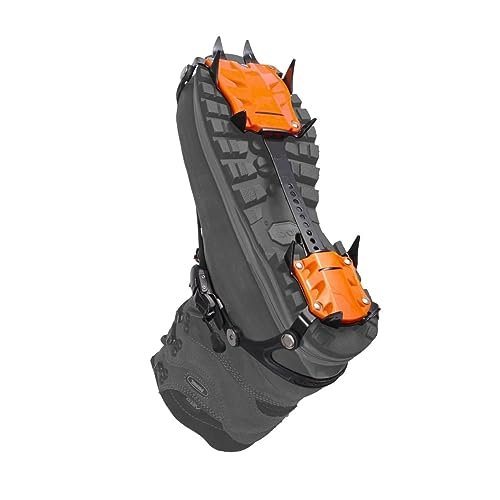
When a route holds deep, sustained snow rather than the occasional icy patch, the Hillsound Trail Crampon Pro is the stronger tool. SectionHiker and CleverHiker both cover it as a step up from standard microspikes: 10 carbon steel spikes up to 26mm, with a ratchet buckle for a more secure hold on softer snow. Anti-snowballing sole pads shed the build-up that would otherwise cancel out the extra length.
Best for: off-trail or backcountry routes with sustained deep snow, not just icy patches
Why it stands out: longer spikes, ratchet buckle security, anti-snowballing sole pads
4. Kahtoola EXOspikes: Best for Mixed Rock and Ice Terrain
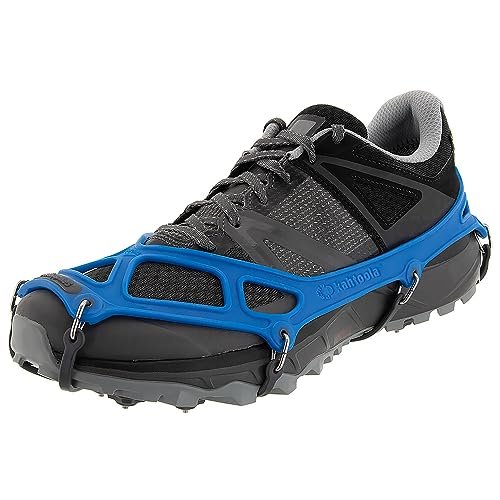
The EXOspikes solve a problem the others do not: the awkward, clattery feel of full-length spikes on bare rock. Instead of long chain-mounted points, Kahtoola fits twelve short tungsten carbide tips into the sole grid, like the metal tip on a trekking pole. TrailGroove’s review covers exactly this case: shoulder-season trails where ice is scattered between long, dry, rocky stretches, not continuous underfoot.
Best for: shoulder-season trails with scattered ice between long dry, rocky stretches
Why it stands out: low-profile carbide tips, natural feel on bare rock, built for transitions
5. Yaktrax Walk: Best Budget Pick
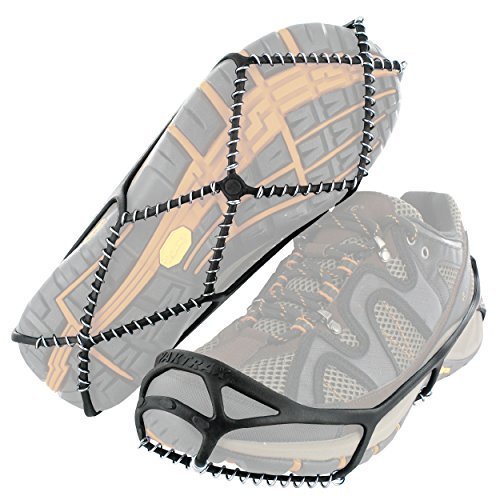
The Yaktrax Walk is the honest budget option, worth being clear about the trade-off. CleverHiker and Switchback Travel both cover it as an affordable pick built around steel coils rather than spikes, better suited to packed snow and casual use than the aggressive ice a full spike system handles. Switchback Travel frames it as closer to errand-and-driveway than serious winter hiking. For a budget-conscious hiker mostly expecting packed snow, it beats nothing.
Best for: budget-conscious hikers expecting packed snow rather than hard ice
Why it stands out: low cost, simple coil design, easy on and off
How to Choose Microspikes for Hiking
Do not buy on price alone. A coil device and a real spike system only differ on the one icy pass where you actually need it.
Terrain mix. Mostly bare trail with short icy patches favours a low-profile option like the EXOspikes. Sustained snow favours the longer Hillsound Trail Crampon Pro spikes.
Footwear and weight. Trail runners and lightweight boots pair best with a full elastomer harness like the Black Diamond Access Spike. Heavier boots handle the Hillsound’s structured, ratchet-buckle fit fine.
Cold tolerance. Cheap elastomer can stiffen and crack in genuinely cold temperatures. The Kahtoola products are rated for sustained sub-freezing use; budget coil options are built for a milder range.
Honest use case. If you actually expect glacier travel or steep snow climbing, none of these are the right tool. That is mountaineering crampon and ice axe territory.
Unsure which fits? Start with the Kahtoola MICROspikes. Mostly dry with scattered ice, go EXOspikes. Expecting sustained deep snow, go Hillsound.
Final Thoughts
The right microspikes are the pair still gripping on the fourth icy switchback, not the ones that looked fine in the box. That is the whole test for the best microspikes for hiking: match the product to the terrain and cold you actually expect, not the cheapest listing in search results.
Before your next shoulder-season trip, check current prices on Amazon, and make sure the rest of your kit is dialled in too. See our Multi-Day Hiking Gear: What You Actually Need, our 5 Best Hiking Gaiters, and our Best Trekking Poles for gear that pairs with it on snowy passes.
Frequently Asked Questions
Do I need microspikes or full mountaineering crampons?
Microspikes are for trail conditions: packed snow, refrozen slush, and icy patches on an otherwise normal hike. Glacier travel or sustained steep snow calls for full mountaineering crampons and proper training instead.
Can I wear microspikes with trail runners?
Yes. Most products here use a stretch harness sized to fit trail runners as well as boots. The Black Diamond Access Spike and Kahtoola MICROspikes both size well over lighter shoes. Check the brand’s size chart first, since fit varies more than with boots.
Will microspikes damage the trail or my boots?
Steel spikes wear down faster on bare rock than they damage the trail, and dragging is uncomfortable rather than harmful. For long dry sections between ice patches, a low-profile option like the Kahtoola EXOspikes reduces the wear and the awkward feel underfoot.
How much snow or ice justifies carrying microspikes?
If your route crosses a known shaded pass or snow patch that holds ice after refreeze, it is worth the weight. A pair of Kahtoola MICROspikes weighs well under half a kilogram, a small cost against turning back at a pass or risking a slide on ice you could not see coming.
