

Last updated: June 2026
Wild Trail Hiker is reader-supported. We may earn a commission when you buy through links on this page, at no extra cost to you. We only recommend products we’d consider taking on a multi-day trip ourselves.
Most internal frame backpacks look comfortable when they are empty.
The problem starts after the first big climb, when your food bag is full, your water bottles are loaded, and the hip belt starts sliding off the place it is meant to sit.
That is where an internal frame pack earns its place. Not in the product photo. On day two, when you are carrying shelter, sleep system, food, water, wet clothing, and a few things you probably should have left behind.
For multi-day hiking, the failure points are simple:
- Poor load transfer: too much weight sits on your shoulders instead of your hips.
- Bad fit range: the torso length does not match your body once the pack is loaded.
- Overbuilt storage: too many pockets and straps create clutter without improving carry.
- Weak wet-weather protection: a damp sleeping bag turns a normal night into a long one.
This guide focuses on internal frame packs that make sense for overnight and multi-day use. For the broader kit picture, start with Multi-Day Hiking Gear: What You Actually Need.
How We Picked
These picks focus on what matters once a pack is loaded for several days: usable capacity, hip-belt support, torso adjustability, weather protection, weight, and whether the design suits actual hiking rather than travel-only packing. The list favours 60 to 75 litre packs because that is the practical range for most beginner and intermediate multi-day hikers.
Quick Picks
| Slot | Product | Why It Stands Out |
|---|---|---|
| Best Overall for Heavy Loads / Technical Terrain | Osprey Atmos AG 65 | Anti-Gravity mesh backpanel and hip belt transfer real weight to your hips, rated to 40 lb. |
| Best Value | Kelty Asher 65L | The cleanest balance of capacity, carry weight, and trail-ready design. |
| Best Budget | TETON Explorer 65L | A roomy, affordable pack with an integrated rain cover and adjustable back panel. |
| Best Large Budget Pack | Amazon Basics 75L Internal Frame Backpack | High capacity, simple layout, and included rain protection at a low price point. |
| Best High-Capacity Option | IX INOXTO 85L Internal Frame Backpack | A large pack for bulky loads, colder trips, or hikers who are not packing ultralight. |
Who This Is For
This guide is for you if:
- You are planning overnight, weekend, or 3 to 5 day hikes.
- Your loaded pack weight is likely to sit between 30 and 50 pounds.
- You want a framed pack that transfers weight to your hips, not a soft travel bag.
- You are not ready to spend premium money on an Osprey, Gregory, or ultralight cottage-brand pack.
If your main goal is cutting weight rather than carrying comfort, read Best Ultralight Backpacks instead.
Why Internal Frame Backpacks Matter on Multi-Day Hikes
A multi-day pack is not just a large bag. It is part of your walking system.
- Day-one optimism disappears fast: A pack that feels fine around the block can feel brutal after six hours with food, water, and shelter inside.
- The hip belt does the real work: If the frame and belt do not transfer weight properly, your shoulders pay for it.
- Capacity can hide bad packing habits: A 75 or 85 litre pack lets you bring too much. That is useful in winter, but dangerous for beginners who pack every backup item they own.
- Rain protection matters more at camp: A wet jacket is annoying. A wet sleeping bag can wreck the trip.
The right internal frame pack gives you structure, weight transfer, and enough organisation without turning the pack into a hanging cupboard.
The Safest Bet
For most hikers, the Kelty Asher 65L is the safest choice in this list. It has enough capacity for real multi-day trips, but it is not so large that it encourages expedition-level overpacking. Amazon lists the 65L version with a 3 lb 5 oz weight and a 30 to 50 lb optimal carry range. If your trail involves sustained heavy carries over technical ground, the Osprey Atmos AG 65 below is built for that job.
1. Osprey Atmos AG 65: Best Overall for Heavy Loads / Technical Terrain
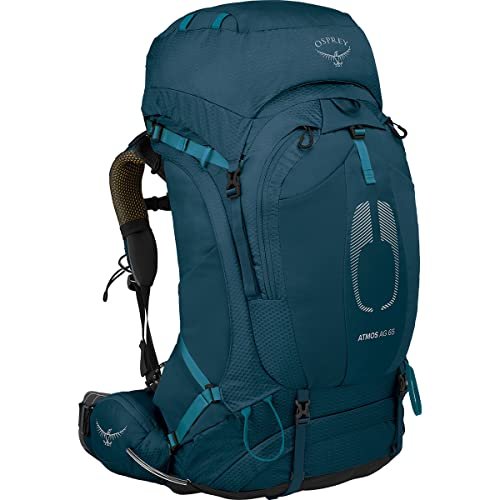
The Osprey Atmos AG 65 is the pack this guide was missing: built for sustained heavy carries over rough terrain, not a bigger budget pack. Its Anti-Gravity system, a suspended mesh backpanel extending into the hip belt, is the feature that actually does the load-transfer job the cheaper packs here only claim to do. Osprey lists it at roughly 4 lb 10 oz, 65 litres, rated to a 40 lb load. Switchback Travel found the suspension distributes weight effectively, with no loss of balance even over steep sections of trail. CleverHiker agreed: the hip belt did a great job carrying the weight, with excellent load transfer. It ships with a rain cover and on-the-fly torso adjustment. Amazon’s current listings for this pack range roughly $280 to $350 depending on size and colour, heavier and pricier than the rest of this list, and it is not meant for expedition loads over 40 pounds. A women’s version, the Osprey Aura AG 65, shares the same suspension.
Best for: sustained heavy carries over technical terrain, loads above 30 to 35 pounds
Why it stands out: genuine Anti-Gravity suspension with real hip-belt load transfer, rated to 40 lb
2. Kelty Asher 65L: Best Value
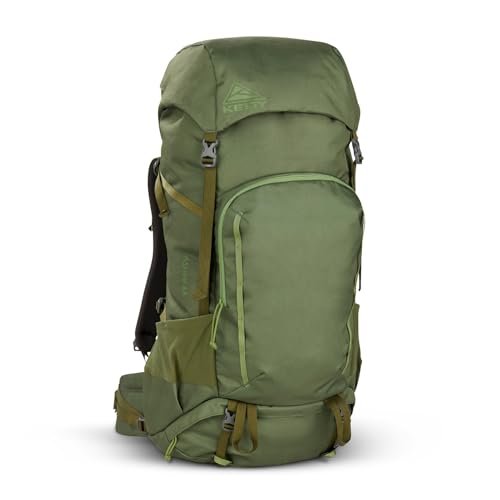
The Kelty Asher 65L is the most balanced pack here. Amazon lists the 65L version with a 15.5 to 21 inch torso range, 3 lb 5 oz weight, and 30 to 50 lb optimal carry range. Fit and carry range matter more than raw litre count. The Asher is large enough for a multi-day load, but not so huge that you are tempted to fill every spare pocket. It is the pick I would start with for a first serious overnight or multi-day pack.
Best for: weekend and 3 to 5 day trips
Why it stands out: practical capacity, lighter listed weight, clear carry range
3. TETON Explorer 65L: Best Budget
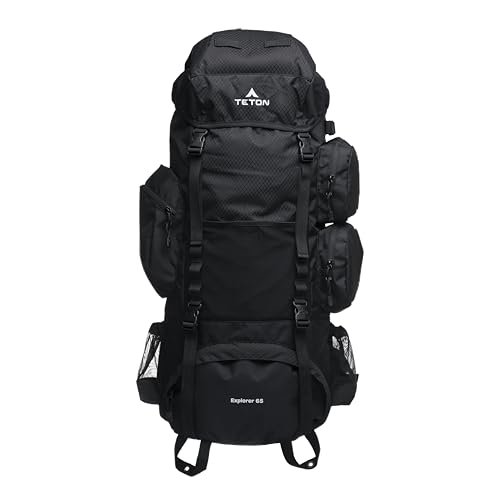
The TETON Explorer 65L is the budget workhorse. It is not the lightest pack and it will not feel as refined as a premium model, but it gives you a lot of usable capacity for the money. Amazon describes it as an affordable pack for extended journeys, with an integrated rain cover and adjustable back panel. The trade-off is bulk. Pack it sensibly and it is a practical entry point.
Best for: budget-conscious hikers building a first multi-day kit
Why it stands out: 65L capacity, integrated rain cover, adjustable back panel
4. Amazon Basics 75L Internal Frame Backpack: Best Large Budget Pack
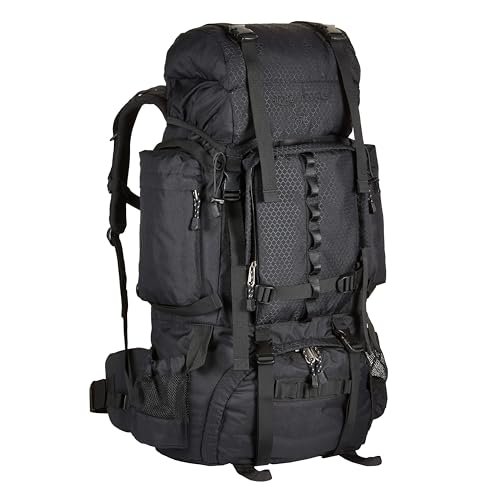
The Amazon Basics 75L pack is a large, low-cost option for hikers who need more volume and can accept a simpler build. Amazon lists it with a water-repellent exterior, integrated water-resistant rainfly for light rain, and a waterproof cover for heavier rain. That is useful if you are carrying bulky camp gear or cheaper synthetic layers. The caution is size. Buy it for bulky gear, not because you want permission to pack badly.
Best for: bulky loads, colder trips, low-budget gear setups
Why it stands out: 75L capacity, simple layout, included rain protection
5. IX INOXTO 85L Internal Frame Backpack: Best High-Capacity Option
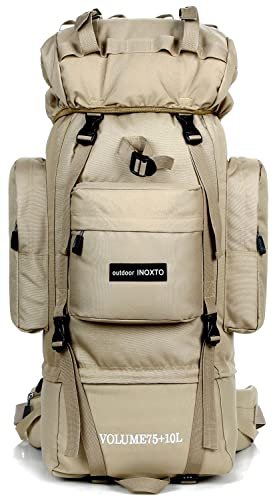
The IX INOXTO 85L is the biggest pack in this guide. That makes it useful for bulky equipment, winter layers, family gear, or a heavier traditional camping setup. It is not the right choice for a normal lightweight overnight kit. Amazon positions this model as a waterproof travel and camping backpack with a rain cover. Treat it as a high-volume budget option, not a refined long-distance backpacking pack.
Best for: bulky gear, winter-style loads, non-ultralight campers
Why it stands out: very large listed capacity, rain cover, low-cost positioning
How to Choose an Internal Frame Backpack
Start with fit, not litres
A 65 litre pack that fits your torso is better than an 85 litre pack that rides badly. Check the listed torso range before you buy.
Match capacity to trip style
For most multi-day hikers, 55 to 65 litres is enough. Move toward 75 litres if your gear is bulky, your sleeping bag is synthetic, or you are carrying extra food and water.
Watch the loaded carry range
Loaded carry matters more than empty pack weight. A light pack that carries badly at 40 pounds will feel worse than a heavier pack with better structure.
Do not trust waterproof claims on their own
A rain cover helps, but it is not a full wet-weather system. Use a pack liner or dry bags for your sleeping bag, insulation, and spare clothes.
Choose the Osprey Atmos AG 65 for heavy loads or technical terrain. Choose the Kelty Asher 65L if you want the safest mid-range all-rounder. Choose the TETON Explorer 65L if budget is the main constraint. Choose the Amazon Basics 75L if you need more room without spending much. Choose the IX INOXTO 85L only if you genuinely need the volume.
Final Thoughts
The best internal frame backpack is not the one with the biggest litre number. It is the one that lets you carry a real multi-day load without fighting your shoulders, hips, and balance all day.
For most hikers, start around 60 to 65 litres before going bigger, and reach for the Osprey Atmos AG 65 specifically if your trail means sustained heavy carries over technical terrain. For the rest of your kit, read Multi-Day Hiking Gear: What You Actually Need. If you are comparing pack styles, Best External Frame Backpacks and Best Ultralight Backpacks are the natural next reads.
Frequently Asked Questions
What size internal frame backpack is best for multi-day hiking?
For most hikers, 55 to 65 litres is best for overnight and multi-day trips. It gives enough room for shelter, sleep system, food, water, and clothing without encouraging too much overpacking. Go larger only for bulky gear, cold weather, or extra food and water.
Are internal frame backpacks better than external frame backpacks?
For most modern hiking, yes. Internal frame backpacks sit closer to your body and usually feel more stable on rough tracks, steep climbs, and uneven ground. External frame packs can still work for heavy loads, but they are bulkier.
Do I still need a pack liner if my backpack has a rain cover?
Yes. A rain cover helps protect the outside of the pack, but wind, scrub, pooling water, and heavy rain can still let moisture in. Use a pack liner or dry bags for your sleeping bag, insulation, and camp clothes.
Is a 75 or 85 litre backpack too big for beginners?
Often, yes. Bigger packs make it easy to carry too much. An 85 litre pack may become uncomfortable before the first campsite. Larger packs make sense for bulky gear, cold-weather trips, or shared group equipment. Otherwise, 60 to 65 litres is usually better.
Is a premium suspension pack like the Osprey Atmos AG 65 worth the extra cost?
If your loaded weight regularly sits above 30 to 35 pounds, or your trail involves sustained climbs or scrambles, yes. Its suspension genuinely transfers more weight to your hips than a budget pack’s padded belt. For lighter loads on moderate terrain, the Kelty Asher 65L is enough.
