

Wild Trail Hiker is reader-supported. We may earn a commission when you buy through links on this page, at no extra cost to you. We only recommend products we’d consider taking on a multi-day trip ourselves.
Most synthetic sleeping bags look reassuring when you first pull them out of the stuff sack. Puffy enough. Warm enough. Cheap enough compared with down.
The difference shows up at 3am after two wet days, when your tent floor feels cold and the bag that looked fine online now has to help you recover for another full day of walking.
For multi-day hiking, synthetic insulation is a trade-off. You usually carry more bulk and weight, but you gain better damp-weather tolerance, easier care, and a lower entry price.
The common failure points are simple:
- Too cold for the actual night temperature: A printed rating does not guarantee comfort.
- Too bulky for your pack: Synthetic insulation takes more room than down.
- Wrong shape for your sleep style: A tight mummy bag saves warmth but can feel restrictive.
- Paired with a poor sleeping pad: A good bag cannot fix cold ground underneath you.
This guide is for hikers aiming to choose the best synthetic sleeping bags for overnight and multi-day trips. For the broader system around your pack, shelter, pad, and clothing, start with Multi-Day Hiking Gear: What You Actually Need.
How We Picked
These picks focus on what matters over several nights: realistic warmth margin, packability, trail weight, mummy-bag efficiency, damp-weather usefulness, and value. The list stays focused on synthetic sleeping bags that make sense for backpacking or walk-in camping. Heavy double-wide bags, kids’ camp bags, and car-camping comfort bags are not included because they solve a different problem.
Quick Picks
| Slot | Product | Why It Stands Out |
|---|---|---|
| Best Overall | Kelty Cosmic Synthetic 20 Degree | The safest balance of warmth, price, and backpacking practicality. |
| Best Budget | TETON Sports Trailhead 20 Degree | A low-cost mummy bag that still suits cooler overnight trips. |
| Best Lightweight Summer Bag | Kelty Cosmic Synthetic 40 Degree | Better for warm-weather trips where a 20 degree bag is overkill. |
| Best Cold-Weather Synthetic Bag | Kelty Cosmic Synthetic 0 Degree | A warmer synthetic option for shoulder-season cold. |
| Best Warmer Budget Alternative | TETON Sports LEEF 0F Mummy Bag | More warmth at a budget price, with the expected bulk penalty. |
Who This Is For
This guide is for you if:
- you are building a first multi-day hiking sleep system
- you hike in damp or changeable conditions where synthetic insulation makes sense
- you want a lower-cost bag before investing in premium down
- you are carrying a 50L to 65L pack and can manage some extra bulk
- you value easy care and reliability over ultralight pack size
If you are trying to minimise every gram, synthetic may not be the best path. Start with your full sleep setup first, including your mat. A cold ground pad can make any sleeping bag feel underpowered, so also see Best Sleeping Pads for Camping: 5 Real-World Picks for Multi-Day Hiking.
Why Synthetic Bags Matter More on Multi-Day Hikes
A sleeping bag does more than keep you comfortable. It affects recovery, energy, and decision-making the next day.
- Moisture builds up over time: Condensation, wet clothes, damp tent walls, and humid air all become more noticeable by night two or three. Synthetic fill is more forgiving when conditions are not perfectly dry.
- Packed size affects the whole load: A bulky bag can force you into a larger pack or make packing harder every morning. This matters when food, shelter, and layers are already taking space.
- Temperature ratings need margin: Many hikers sleep colder outdoors than they expect. Fatigue, wind, poor nutrition, and a weak sleeping pad all reduce comfort.
- Shape changes warmth: A mummy bag is usually better for multi-day hiking than a roomy rectangular bag because there is less empty air to heat.
The Safest Bet
For most hikers, the Kelty Cosmic Synthetic 20 Degree is the safest starting point. It gives you more warmth margin than a summer-only bag, stays within a realistic backpacking weight range for synthetic insulation, and avoids the overkill bulk of a 0 degree bag unless you genuinely need that level of warmth.
1. Kelty Cosmic Synthetic 20 Degree: Best Overall
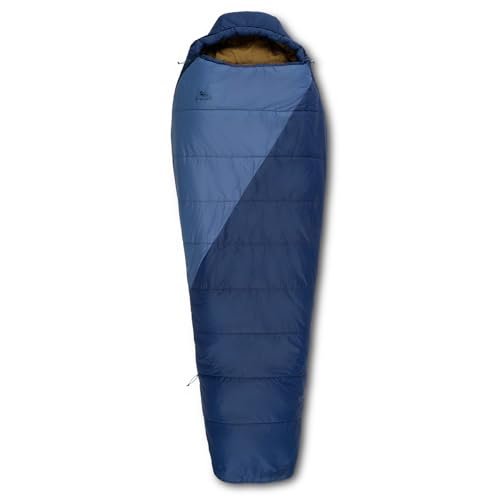
The Kelty Cosmic Synthetic 20 Degree is the most sensible all-round pick here. Amazon lists it as a synthetic mummy-style backpacking bag with a stuff sack and compression straps. The 20 degree rating gives better safety margin than a summer bag without jumping straight to the bulk of a 0 degree model. Expect more packed volume than down, but for damp conditions, newer hikers, and value-focused sleep systems, this is the easiest recommendation.
Best for: Three-season hikers who want one synthetic bag to cover most trips.
Why it stands out: Warmth margin, fair weight, accessible price, and better wet-weather tolerance than down.
2. TETON Sports Trailhead 20 Degree: Best Budget
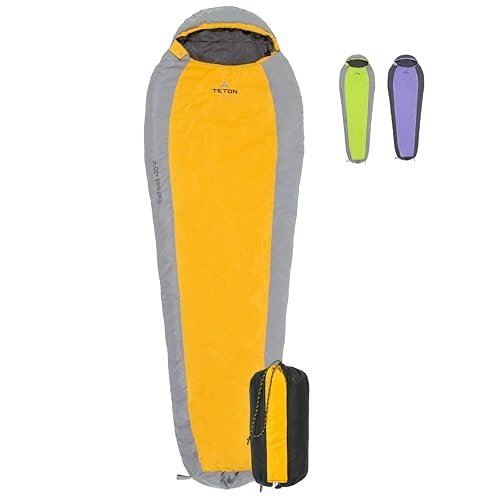
The TETON Sports Trailhead 20 Degree is the budget option for hikers who want a mummy bag without premium pricing. The current article lists it as a synthetic mummy bag for camping, backpacking, and hiking, with a 20 degree rating and a longer cut than many regular bags. It is not the most compact or technical option, and the fit may feel narrow, but it is a practical starting point for cooler overnight trips.
Best for: Budget-conscious hikers, beginners, and occasional overnight trips.
Why it stands out: Affordable warmth in a trail-sensible mummy shape.
3. Kelty Cosmic Synthetic 40 Degree: Best Lightweight Summer Bag
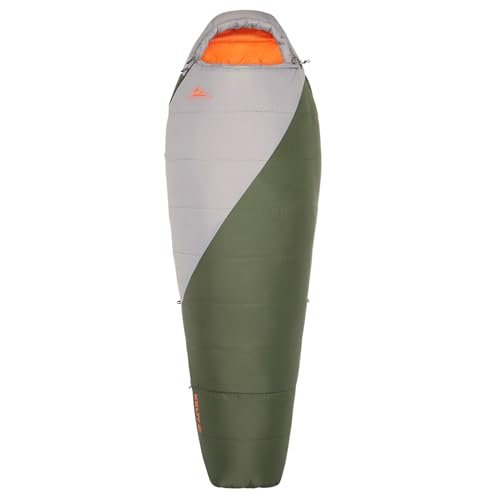
The Kelty Cosmic Synthetic 40 Degree is the better choice when your trips are warm and a 20 degree bag will simply make you sweat. Amazon lists the regular version at 2 lb 6 oz, with synthetic Cirroloft insulation, a 40 degree rating, and an integrated compression stuff sack. The limitation is obvious: it is not a cold-weather bag. Use it for huts, warm coastal routes, and summer overnights.
Best for: Summer multi-day hikes, warm climates, and hikers who sleep warm.
Why it stands out: Lower weight and less bulk than warmer synthetic bags.
4. Kelty Cosmic Synthetic 0 Degree: Best Cold-Weather Synthetic Bag
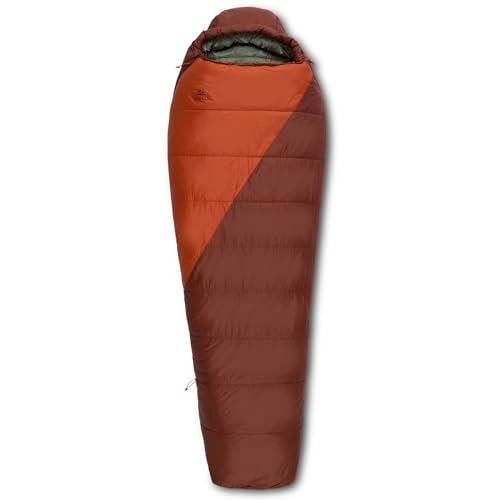
The Kelty Cosmic Synthetic 0 Degree is for hikers who genuinely expect cold nights and want synthetic insulation rather than down. This is not the bag to buy just because warmer sounds safer. A 0 degree synthetic bag will take more pack space and feel excessive on mild trips. Its value is in colder shoulder-season conditions and damp camps where extra bulk is worth the sleep insurance. Pair it with an insulated sleeping pad.
Best for: Cold shoulder-season trips, damp camps, and hikers who sleep cold.
Why it stands out: More warmth margin while staying in the synthetic category.
5. TETON Sports LEEF 0F Mummy Bag: Best Warmer Budget Alternative
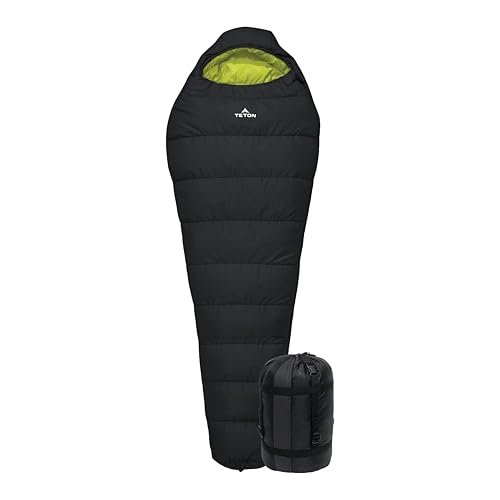
The TETON Sports LEEF 0F is a warmer budget alternative if you want more insulation without premium pricing. Amazon positions it as a mummy sleeping bag for camping, hiking, and backpacking, with a compression sack included. Treat the word lightweight carefully. For a 0 degree synthetic bag, warmth and packed size are always in tension. This suits hikers who accept extra bulk in exchange for colder-night confidence.
Best for: Budget hikers who need a warmer synthetic bag.
Why it stands out: Cold-weather positioning at a more accessible price point.
How to Choose a Synthetic Sleeping Bag for Multi-Day Hiking
Start with your coldest realistic night
Look at overnight lows, elevation, wind exposure, and how tired you will be after walking. If your route regularly drops near the edge of a bag’s rating, choose more warmth or improve your pad and layers.
Match the bag to your sleeping pad
Your sleeping pad insulates you from the ground. A warm bag on a weak pad can still feel cold, especially on wet soil, alpine platforms, or exposed campsites. Build the sleep system as a pair.
Be honest about packed bulk
Synthetic bags are usually bulkier than equivalent down bags. A 0 degree synthetic bag may be warm, but it can dominate a smaller pack.
Choose shape based on warmth, not just comfort
For multi-day hiking, a mummy shape usually makes more sense. It reduces weight, improves warmth, and packs better. The downside is less room to move.
Simple decision aid:
- Choose the Kelty Cosmic Synthetic 20 Degree for the safest all-round pick.
- Choose the Kelty Cosmic Synthetic 40 Degree for warm summer trips.
- Choose the Kelty Cosmic Synthetic 0 Degree or TETON Sports LEEF 0F only when colder nights justify the bulk.
Final Thoughts
A synthetic sleeping bag is a good choice when you want durability, value, and damp-weather forgiveness. The trade-off is bulk. For most multi-day hikers, the sweet spot is a 20 degree synthetic mummy bag paired with a proper insulated sleeping pad.
If you are still building the rest of your overnight kit, read Multi-Day Hiking Gear: What You Actually Need. For the two pieces that most affect sleep and wet-weather comfort, also see Best Sleeping Pads for Camping: 5 Real-World Picks for Multi-Day Hiking and Best Waterproof Jackets for Hiking: 5 Trail-Ready Picks.
Frequently Asked Questions
Are synthetic sleeping bags good for multi-day hiking?
Yes, synthetic sleeping bags can work well for multi-day hiking, especially in damp or changeable conditions. They are usually bulkier and heavier than comparable down bags, but they are often cheaper, easier to care for, and more forgiving if moisture becomes part of the trip.
What temperature rating should I choose for a synthetic sleeping bag?
Choose based on the coldest realistic overnight temperature, not the average forecast. A 40 degree bag suits warm summer trips. A 20 degree bag is a safer three-season starting point for many hikers. A 0 degree synthetic bag makes sense only when colder conditions justify the extra bulk.
Is a synthetic sleeping bag better than down?
Synthetic is not better overall. It is better for some use cases. Down is lighter, warmer for the weight, and more compressible. Synthetic is usually cheaper and handles damp conditions better. For multi-day hiking, the right choice depends on climate, budget, pack volume, and how much weight you are willing to carry.
Why am I still cold in a warm sleeping bag?
The most common reason is the sleeping pad. Your bag insulates above you, but your pad protects you from cold ground. You can also feel cold because the bag rating is too optimistic for your body, the bag is too roomy, you are underfed, your base layers are damp, or wind is cutting through your shelter setup.
