

Wild Trail Hiker is reader-supported. We may earn a commission when you buy through links on this page, at no extra cost to you. We only recommend products we’d consider taking on a multi-day trip ourselves.
Most freestanding tents look simple. Clip the poles together, throw the fly over the top, crawl in, done.
The difference shows up when you reach camp late on hard ground, with wind pushing across the ridge. A freestanding tent helps because the inner can stand before every peg is perfect.
That does not mean every freestanding tent belongs on a multi-day hike. The common failure points are:
- Too heavy for the distance: a family cabin tent is not a backpacking shelter.
- Too small once wet gear comes inside: usable space matters more than headline capacity.
- Poor ventilation: condensation turns a good-looking tent into a damp little cave.
- Weak weather logic: freestanding does not mean storm-proof.
This guide focuses on the best freestanding tents that make sense for hiking, backpacking, and practical multi-day use. For the broader gear system around shelter, sleep, warmth, and pack weight, start with Multi-Day Hiking Gear: What You Actually Need.
How We Picked
These picks focus on what matters once a tent is carried for more than one night: packed weight, setup simplicity, ventilation, weather protection, interior livability, and whether the tent is actually suited to trail use. Backpacking-ready models sit ahead of heavy cabin tents. Heavy shelters are only included where they solve a clear base-camp problem.
| Slot | Product | Why It Stands Out |
|---|---|---|
| Best Overall | Kelty Grand Mesa 2P | Proper backpacking shape, simple setup, reasonable trail weight |
| Best Budget Backpacking Tent | OneTigris COSMITTO 2 Person Tent | Affordable, freestanding, roomy enough for two hikers |
| Best Lightweight Budget Pick | ShinHye Backpacking Tent | Low-cost option with double-layer design and compact trail sizing |
| Best Comfortable Camp Tent | Kelty Wireless Tent | More room and vestibule space for relaxed trips and short carries |
| Best for High Wind / Storm-Prone Terrain | NEMO Kunai 2P | 4-season alpine tent built to shed wind and snow on exposed passes |
Who This Freestanding Tent Guide Is For
This guide is for:
- Multi-day hikers who want a tent that pitches easily on mixed ground
- New backpackers who are not ready for trekking-pole shelters
- Two-person hiking teams splitting shelter weight across two packs
- Campers who want one freestanding tent for short hikes and beginner overnights
- Families who need a car-camping option and understand it is not for pack-carrying
For lower pack weight, compare these against the best ultralight tents. For solo minimalists, the best bivy sacks for multi-day hiking may be worth a look.
Multi-Day Context: Why Freestanding Tents Behave Differently on Trail
A freestanding tent is not automatically better. It is easier to live with in some conditions, and heavier than many minimalist shelters in others.
Over several nights, the important trade-offs are:
- Pitch flexibility: rocky ground, timber platforms, compacted campsites, and shallow soil can make staking difficult. A freestanding frame gives you more options before the guylines go in.
- Wet setup and pack-down: double-wall freestanding tents usually separate your sleeping area from the wet fly better than basic single-wall shelters.
- Livability under bad weather: when you are stuck inside, headroom, vestibule space, and door layout matter more than they did in the shop.
- Weight creep: freestanding poles add structure, but they also add grams. A tent that is fine for a campground can become dead weight by lunch on day two.
The best freestanding tent gives enough structure without becoming the heaviest item in your pack.
Best Freestanding Tents for Multi-Day Hiking
1. Kelty Grand Mesa 2P: Best Overall
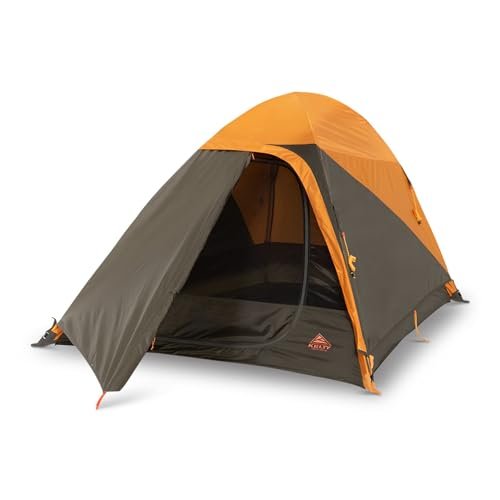
The Kelty Grand Mesa 2P is the best overall pick because it behaves like a real backpacking tent. Amazon lists the 2-person model at 4 pounds, with a 3-season design, aluminum poles, a single door, and a vestibule. That suits two hikers splitting weight or one hiker wanting more space.
The single-door layout is less convenient for two people than a two-door tent. But for a practical freestanding shelter that can handle beginner and intermediate multi-day trips, it is the easiest recommendation here.
Best for: hikers who want a reliable first backpacking tent
Why it stands out: proper trail design, reasonable weight, simple freestanding setup
2. OneTigris COSMITTO 2 Person Tent: Best Budget Backpacking Tent
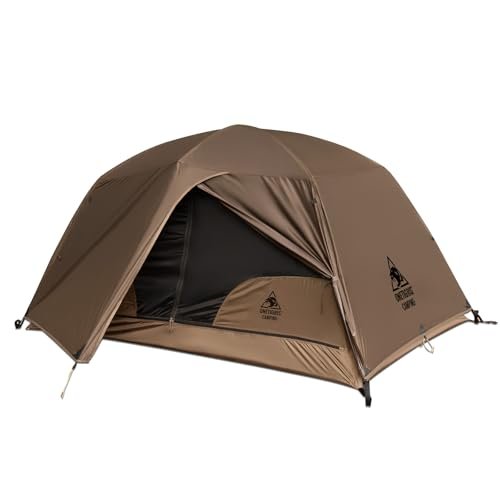
The OneTigris COSMITTO 2 Person Tent is the budget pick for hikers who want a freestanding shelter without premium tent pricing. Amazon positions it as a 3-season, waterproof, freestanding backpacking tent for hiking and mountaineering, and current listing details show it available through Amazon sellers.
The main appeal is value: a two-person footprint, freestanding structure, and trail-oriented design at a lower price than many bigger outdoor brands. The compromise is refinement and long-term track record. For cautious first-time multi-day hikers, it is a sensible starting point.
Best for: budget-conscious hikers and first backpacking setups
Why it stands out: affordable, trail-shaped, freestanding, roomy enough for two
3. ShinHye Backpacking Tent: Best Lightweight Budget Pick
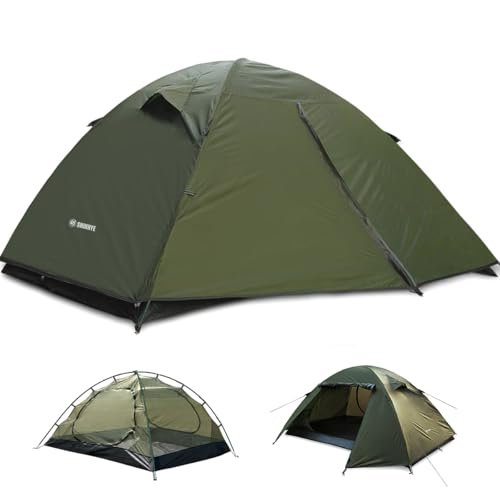
The ShinHye Backpacking Tent is a low-cost option that fits the small freestanding hiking tent brief better than the big cabin and pop-up shelters often found in this category. Amazon lists it as a 1 to 2 person double-layer tent with a 2.3 kg item weight, waterproof positioning, and a 3-season use case.
That weight is not ultralight, but it is still within a realistic short-trip range if you are not chasing fast-and-light mileage. Treat this as a fair-weather or beginner option, not a remote alpine shelter.
Best for: short overnight hikes, mild-weather trips, and low-cost entry setups
Why it stands out: affordable, compact, double-layer design
4. Kelty Wireless Tent: Best Comfortable Camp Tent
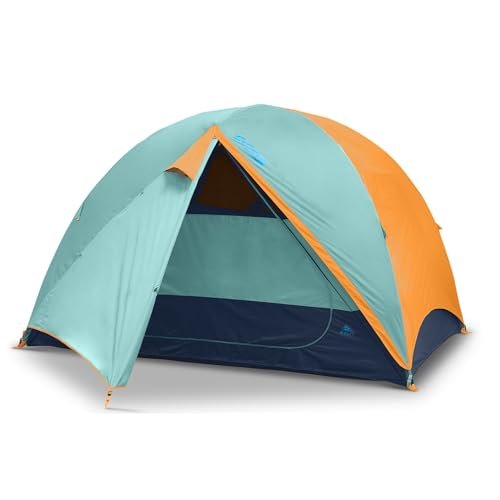
The Kelty Wireless Tent is the comfort pick, not the long-distance pick. Amazon lists the 4-person version at 5.07 kg, with two doors, two vestibules, a freestanding pitch, and a 3-season design. That makes it much more comfortable than a small backpacking tent, but also too heavy for most genuine pack-carrying trips.
It makes sense for short-carry camping, beginner base camps, family weekends, or trips where distance is modest. This is a practical camp shelter, not the tent you choose for a hard three-day route with big climbs.
Best for: short carries, base camps, and comfort-focused camping
Why it stands out: roomy interior, two doors, two vestibules, easy setup
5. NEMO Kunai 2P: Best for High Wind / Storm-Prone Terrain
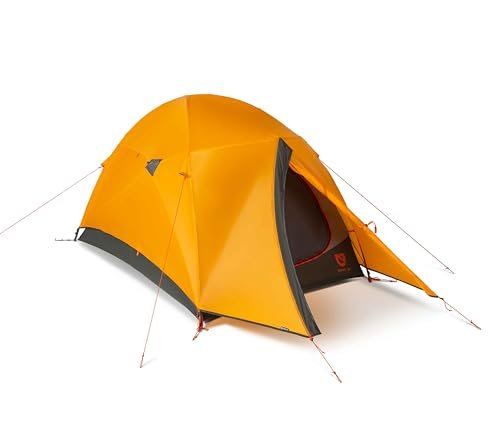
The NEMO Kunai 2P is the pick for routes where wind, not rain, keeps you up: exposed passes and alpine saddles where a storm can roll in above the treeline. The brand positions it as a 3 to 4-season mountaineering tent, and CleverHiker’s review backs that up, finding it stayed rock solid in gusty conditions even without guylines staked. The tapered, low-profile shape and DAC poles shed wind and snow, and at 4 lb 5 oz (1.96 kg) it is light for a shelter this capable.
For Wild Trail Hiker readers, this is the shelter to reach for on any route with real exposure above the treeline: alpine passes, shoulder-season snow risk, or a forecast that is more wind than rain. A standard 3-season tent survives moderate wind. This one is built for the terrain that eats standard tents.
Best for: exposed alpine passes, shoulder-season snow, and wind-heavy forecasts
Why it stands out: genuine 3 to 4-season alpine build, low-profile wind shedding shape, light for its capability
How to Choose a Freestanding Tent
Start with how far you will carry it.
For multi-day hiking, weight comes first. A 2 kg tent can be reasonable if split across two hikers. A 5 kg tent is a short-carry shelter. A 12 kg cabin tent stays at the car.
Match the size to real use, not the label.
A 2-person tent usually fits two sleeping pads, not two people plus loose packs, boots, wet jackets, and cooking gear. Vestibules matter because they keep wet gear outside your sleeping space.
Do not confuse freestanding with storm-ready.
Even freestanding tents need stakes and guylines in wind. The frame gives shape, but the pitch still needs tension.
Simple decision aid:
- Choose the Kelty Grand Mesa 2P for the best all-round backpacking fit.
- Choose the OneTigris COSMITTO if budget matters most.
- Choose the Kelty Wireless when comfort and car-camping space matter more than pack weight.
- Choose the NEMO Kunai 2P for exposed, high-wind, or shoulder-season alpine routes.
Final Thoughts
A good freestanding tent earns its place when the ground is awkward, the weather is moving in, and you need shelter up without a wrestling match. For multi-day hiking, that convenience is only useful if the tent is still light enough to carry.
The safest trail pick here is the Kelty Grand Mesa 2P. For an exposed pass or shoulder-season snow risk, the NEMO Kunai 2P is built for it. If you are still building your wider kit, read Multi-Day Hiking Gear: What You Actually Need before you buy. You may also want to compare this guide with the best ultralight tents and the best sleeping pads for camping, because shelter comfort depends on the whole sleep system.
Frequently Asked Questions
Are freestanding tents better for multi-day hiking?
Freestanding tents are easier to pitch on hard, rocky, sandy, or uneven ground, which helps on multi-day hikes where campsite conditions vary. They are not always lighter. A trekking-pole tent may save weight, but a freestanding tent is usually simpler for beginners and easier to reposition before staking out.
Do freestanding tents still need stakes?
Yes. Freestanding means the tent body can stand without being fully staked, but stakes and guylines still matter. In wind or rain, an unstaked freestanding tent can shift, flap, leak, or blow away. Treat the frame as setup support, not a substitute for a secure pitch.
What weight is reasonable for a freestanding backpacking tent?
For multi-day hiking, a two-person freestanding tent around 1.5 to 2.5 kg is a realistic range, especially if two hikers split the load. Heavier tents can work for short carries and base camps, but above 4 to 5 kg is usually car-camping territory.
Is a 4-person freestanding tent suitable for backpacking?
Usually not, unless the walk is short and the load is split across several adults. Most 4-person freestanding tents are built for camping comfort, not pack weight. For multi-day hiking, two smaller tents often make more sense than one large shelter.
