

Last updated: July 2026
Wild Trail Hiker is reader-supported. We may earn a commission when you buy through links on this page, at no extra cost to you. We only recommend products we’d consider taking on a multi-day trip ourselves.
Most hiking headlamps feel bright enough in a dark bedroom, clicked on and pointed at a wall. The test comes on night three, when you are packing up camp before sunrise, or still an hour from the hut after a slow, rocky descent, and the light on your head is the only thing standing between you and a twisted ankle.
On a multi-day hike, a headlamp has to handle more than a quick walk to the car:
- Multiple nights of use, not one evening around a campfire.
- Genuine weather, rain, condensation, and drops in the dirt.
- Battery honesty, because a dead headlamp at 5am with no spare is a real problem.
- Comfort over hours, hiking before dawn or reading in a tent after dark.
This guide is for hikers who need a genuine trail headlamp, not a multi-pack of generic camping torches. For the wider gear picture, start with Multi-Day Hiking Gear: What You Actually Need.
How We Picked
The picks nominated as best hiking headlamps for multi-day trips focus on what matters after dark on trail: genuine lumen output and beam distance, real waterproofing rather than a vague splash-resistant claim, battery type and runtime, weight and fit for hours of wear, and a proper red-light mode for camp and night vision. Every headlamp here comes from an established outdoor lighting brand and is cross-checked against independent gear-review testing. Generic multi-packs of unbranded camping torches are not included, however many lumens they claim, because they are not built for repeated multi-day trail use.
Quick Picks
| Slot | Product | Why It Stands Out |
|---|---|---|
| Best Overall | Black Diamond Spot 400-R | The clearest all-round balance of brightness, waterproofing, and rechargeable convenience. |
| Best for Battery Flexibility | Petzl Actik Core | Runs on a rechargeable pack or three AAAs, so you are never stranded without power. |
| Best for Comfort | BioLite HeadLamp 425 | A slim, no-bounce headband that disappears on your head over long days. |
| Best Ultralight | Nitecore NU25 UL | Barely there on the scale, for hikers who count every gram. |
| Best Budget | Black Diamond Astro 300 | Genuine trail brand reliability at a fraction of the price. |
Who This Is For
This guide is for multi-day hikers who need a headlamp that survives consecutive nights, not just one trip: early starts, hut-to-hut travel, summit pushes before dawn, and anyone upgrading from a generic multi-pack camping torch that is not built for real trail conditions.
If you mostly car camp within reach of the trunk, a bulkier lantern-style light may suit you better. This guide is for gear that lives on your head for days at a time.
Multi-Day Context: Where Headlamps Actually Get Tested
A headlamp that feels fine on a single evening walk can still fail on a longer trip. Multi-day trips expose problems a quick test at home never reveals:
- Battery drain over consecutive nights. Camp chores, reading, and pre-dawn starts every day add up fast. Cheap units with no battery meter leave you guessing until the light dims mid-trail.
- Real weather, not showroom weather. Rain, tent condensation, and being set down in wet grass are normal. A genuine IP-rated headlamp handles this; a vague “water-resistant” label often does not.
- Fit and bounce. A bulky headlamp tolerable for twenty minutes becomes distracting on a long descent in the dark.
- No backup plan. A rechargeable-only headlamp with a dead battery and no charging option is a real liability off-grid.
The five headlamps below are picked with these failure points in mind, not just a lumen number on the packaging.
The Safest Bet
The Black Diamond Spot 400-R is the safest bet if you want one recommendation and don’t want to overthink it. It pairs genuine IP67 waterproofing (submersible to 1 metre for 30 minutes) with a rechargeable battery, an instant-brightness PowerTap toggle, and a track record from a brand that has built trail and alpine headlamps for years.
1. Black Diamond Spot 400-R: Best Overall
[Image needed — Black Diamond Spot 400-R headlamp — upload manually. ASIN returned invalid in Amazon Creators API this session, product page/link confirmed live via web search — manual image upload needed]
The Spot 400-R is the headlamp to reach for if you want one dependable light for most multi-day conditions without compromise. It puts out 400 lumens with a beam that reaches 100 metres on its brightest setting, and the IP67 rating means genuine protection against rain or a dunk in a stream, not just a splash-resistant claim. PowerTap lets you toggle between full brightness and a dimmed setting with a single tap, useful when you do not want to cycle through every mode standing in the dark. It charges via micro-USB and holds a claimed 225-hour runtime on its lowest setting.
Best for: hikers who want one dependable headlamp for varied multi-day conditions
Why it stands out: genuine IP67 waterproofing, strong beam distance, quick-access brightness toggle
2. Petzl Actik Core: Best for Battery Flexibility
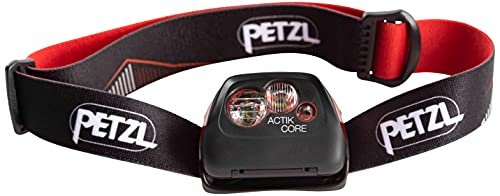
The Actik Core solves the one real anxiety with rechargeable headlamps: what happens if you cannot charge it on trail. Petzl’s Hybrid Concept lets it run on the included rechargeable Core battery or on three standard AAAs, so a multi-day hiker without reliable power access can carry spares and never be stranded. It puts out up to 450 lumens, includes a red night-vision mode that will not blow out your eyes or a tent-mate’s at 2am, and a lock function stops it turning on inside a packed bag.
Best for: multi-day hikers without guaranteed access to a charger
Why it stands out: genuinely dual-power (rechargeable or AAA), reliable red night-vision mode, accidental lock-out feature
3. BioLite HeadLamp 425: Best for Comfort
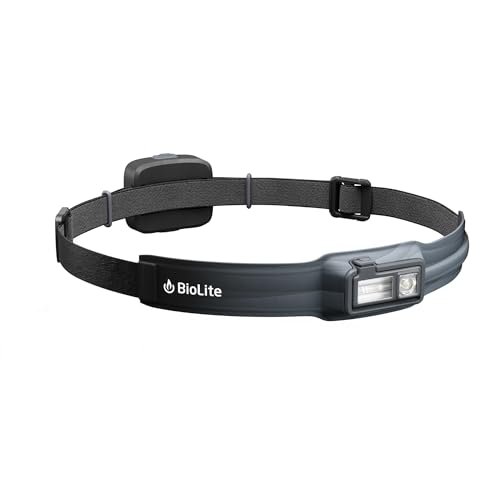
Most headlamps put the weight and bulk on your forehead. BioLite’s 3D SlimFit design spreads the battery around the back of an elasticated headband, so the front profile is barely 10mm thick and the whole unit sits flush without the forward tilt or bounce that plagues bulkier lamps on a rocky descent. At 425 lumens with a rear red light for visibility to hikers behind you, it is a genuinely comfortable option for hours of wear. The trade-off is that the fabric-integrated design cannot be field-stripped as easily as a simpler plastic-bodied lamp.
Best for: hikers who wear a headlamp for extended periods and want to forget it is there
Why it stands out: slim no-bounce fit, rear red visibility light, fast USB-C charging
4. Nitecore NU25 UL: Best Ultralight
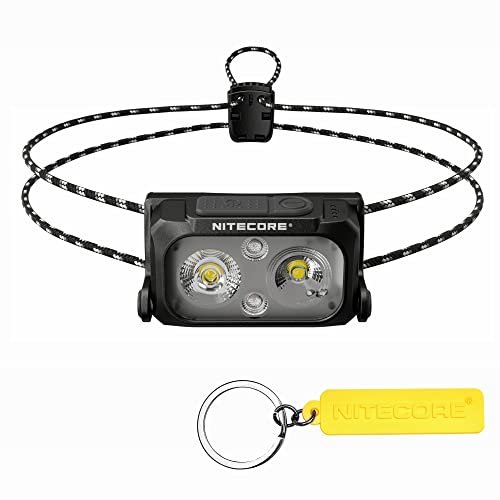
For hikers who count grams, the NU25 UL is close to disappearing in your pack. At under two ounces it still delivers up to 400 lumens and multiple colour temperatures, including a warm white mode that cuts through fog and rain better than a harsh cool-white beam, plus a dedicated red light. It charges over USB-C and claims up to 45 hours of runtime on its lowest setting. The trade-off for the minimal weight is a smaller, simpler body, less rugged than a heavier trail-focused design.
Best for: ultralight hikers and fastpackers minimising every gram
Why it stands out: very low weight, multiple colour temperatures, fast USB-C charging
5. Black Diamond Astro 300: Best Budget
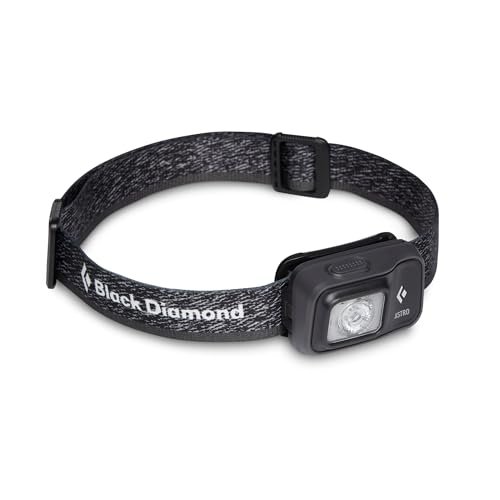
The Astro 300 proves a budget headlamp does not have to mean a generic one. It is built by the same brand behind the Spot 400-R, and it shows: 300 lumens, a genuine IPX4 stormproof rating that shrugs off rain and sleet from any angle, and a digital lockout to stop it draining in your pack, all at a fraction of the price of the premium picks above. Runtime is a claimed 140 hours on its lowest setting. It runs on three AAAs rather than a rechargeable pack, a genuine advantage on longer trips without charging access, though it means carrying spares rather than a cable.
Best for: budget-conscious hikers who still want a genuine trail-brand headlamp
Why it stands out: established trail brand reliability, real stormproof rating, low price point
How to Choose a Hiking Headlamp
Match battery type to your trip length. A rechargeable-only headlamp suits a weekend with charging access. For longer trips off-grid, a hybrid design like the Petzl Actik Core or an AAA-powered lamp like the Black Diamond Astro 300 means carrying spare batteries instead of hoping for a plug.
Don’t underrate the red-light mode. A proper red night-vision setting protects your eyes and your tent-mates’ at camp, and it matters more when you are using the headlamp every single night, not just once.
Check the rating, not just the word “waterproof.” An IP67 or IPX4-and-above rating means genuine tested protection. Vague marketing claims without a rating are the first thing to fail in sustained rain.
Weigh comfort against features. A slim, low-bounce design like the BioLite HeadLamp 425 pays off over consecutive long days. An ultralight pick like the Nitecore NU25 UL saves grams but trades some ruggedness for it.
A simple decision aid: choose the Black Diamond Spot 400-R if you want the safest all-round pick. Choose the Petzl Actik Core if you need dual battery power. Choose the Black Diamond Astro 300 if budget and reliability matter most.
Final Thoughts
The best headlamp is the one still working reliably on night four, not the one with the highest lumen number on the box. Match the battery system to how long you will be off-grid, insist on a genuine waterproof rating, and treat a proper red-light mode as a requirement.
For the wider kit list, see Multi-Day Hiking Gear: What You Actually Need. Pair your headlamp with a best power banks for hiking pick, and compare navigation backups in best hiking compasses.
Frequently Asked Questions
How many lumens do I need for a hiking headlamp?
For most trail walking, 200 to 400 lumens on the brightest setting is enough, with a dimmer, longer-lasting mode for camp use. Higher lumen counts matter more for technical night navigation or trail running, and a very bright headlamp with no dimming option drains its battery fast.
Should I choose a rechargeable or battery-powered headlamp?
It depends on trip length and access to charging. Rechargeable headlamps suit shorter trips or routes with hut or car access to power. For longer, off-grid trips, a hybrid design that also accepts standard batteries, or a battery-only headlamp with spares in your pack, removes the risk of a dead light with no way to charge it.
Is a red light mode actually necessary on a headlamp?
Yes, for multi-day hiking. A red light preserves your night vision far better than white light, so you can find gear in a tent or move around camp without your eyes readjusting every time. It is also considerate to tent-mates, since it is far less disruptive than a full-brightness white beam.
How waterproof does a hiking headlamp need to be?
Look for a genuine IP rating rather than a vague waterproof claim. An IPX4 rating handles rain and splashes from any angle, which covers most three-season hiking. An IP67 rating adds real submersion protection, worth having for stream crossings or heavy sustained rain.
