

Last updated: August 2026
Wild Trail Hiker is reader-supported. We may earn a commission when you buy through links on this page, at no extra cost to you. We only recommend products we’d consider taking on a multi-day trip ourselves.
Most insulated jackets for hiking feel plenty warm in the car park. The test comes at camp, after a long wet day, when you need warmth back fast, from a jacket that’s been stuffed in your pack all day.
On a multi-day hike, insulated jackets for hiking have to handle:
- Damp-weather insulation loss, condensation, drizzle, and sweat all reduce loft in a jacket not built for it.
- Pack compression, stuffed down for hours a day, then expected to loft back up fast at camp.
- Layering demands, under a rain shell in bad weather, over a base layer alone in camp.
- Weight-to-warmth tradeoffs, since every extra ounce is carried for days, not worn for one evening.
This guide is for hikers who need a genuine technical insulated layer for cold camps and exposed passes, not a casual puffer bought for the school run. For the wider gear picture, start with Multi-Day Hiking Gear: What You Actually Need.
How We Picked
These picks focus on what matters once an insulated jacket is doing real work on trail: warmth-to-weight, how the insulation handles damp conditions, packed size, and whether the jacket comes from a brand that actually builds for hiking. Every jacket here is cross-checked against independent gear-review testing, including OutdoorGearLab and Switchback Travel. General workwear jackets and casual commuter puffers are not included, however warm they are around town.
Quick Picks
| Slot | Product | Why It Stands Out |
|---|---|---|
| Best Overall | The North Face ThermoBall Eco Jacket 2.0 | Keeps warming when damp, the safest all-round pick. |
| Best Premium | Patagonia Nano Puff Jacket | The benchmark synthetic puffy, proven across years of testing. |
| Best Down/Lightweight | Eddie Bauer MicroTherm 2.0 Down Jacket | Exceptional warmth-to-weight, for dry cold-weather trips. |
| Best Value | Columbia Powder Lite Hooded Jacket | Technical insulation and a heat-reflective lining at a lower price. |
| Best Budget | Little Donkey Andy Insulated Hiking Jacket | Purpose-built for hiking at a genuinely accessible price. |
Who This Is For
This guide is for:
- Multi-day hikers who need a warm camp layer that packs small and recovers loft after being compressed all day.
- Hikers on trails with cold mornings or exposed, high-altitude camps, where a base layer and shell alone aren’t enough.
- Anyone upgrading from a casual puffer or workwear jacket not built for damp trail conditions.
- Hikers who need genuine warmth without a bulky expedition-weight coat.
If your trip is warm-weather and your main concern is rain rather than cold, see our best hiking jackets for waterproof shells instead. An insulated jacket is a warmth layer, not your primary rain protection.
Multi-Day Context: Where Insulated Jackets Actually Get Tested
A jacket that feels warm on a cold morning at home can still fail on trail. Multi-day trips expose problems a quick try-on never reveals:
- Damp performance. Down loses loft fast when wet and can take a full day to dry on trail. Synthetic insulation keeps working damp, an advantage on trails with condensation or sweat-heavy climbs.
- Compression recovery. A jacket stuffed into a pack for eight hours a day needs to loft back up fast at camp. Thin baffle construction can lose loft permanently.
- Layering fit. It needs to fit over a base layer alone at camp and, ideally, under a rain shell in bad weather.
- Weight discipline. You carry this jacket every hour you’re not wearing it. A few extra ounces matter more than for a one-off outing.
The five jackets below are picked with these demands in mind, not just a warmth rating on a hang tag.
The Safest Bet
If you want one recommendation and don’t want to overthink it, The North Face ThermoBall Eco Jacket 2.0 is the safest bet.
Its synthetic ThermoBall insulation keeps performing when damp, which matters more on a multi-day trail than a marginally better warmth-to-weight ratio from down. It’s a genuine technical layer from an established hiking brand, not a repackaged casual jacket.
Best Insulated Jackets for Hiking
1. The North Face ThermoBall Eco Jacket 2.0: Best Overall
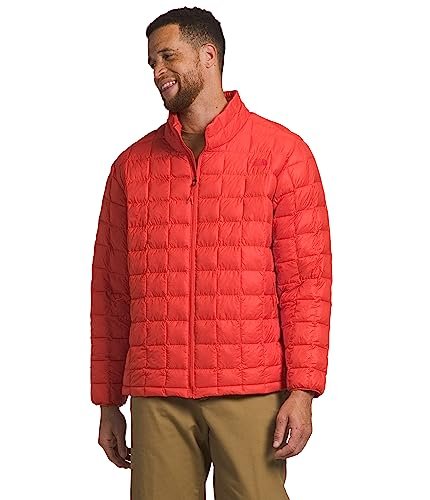
The ThermoBall Eco Jacket 2.0 is built around synthetic ThermoBall insulation, small clustered fibres designed to mimic down’s warmth-to-weight ratio while still insulating when wet. That’s a genuine advantage on trips where you can’t guarantee dry storage every night. OutdoorGearLab rates the ThermoBall Eco line a durable, well-built performer, and Switchback Travel notes it keeps insulating even when wet, unlike down. It packs down small, recovers loft quickly, and layers well under a rain shell. It won’t quite match a premium down jacket gram-for-gram, but it’s the safest all-round pick here.
Best for: hikers who want dependable warmth in unpredictable, damp trail conditions
Why it stands out: synthetic insulation that keeps working wet, quick loft recovery, proven trail design
2. Patagonia Nano Puff Jacket: Best Premium
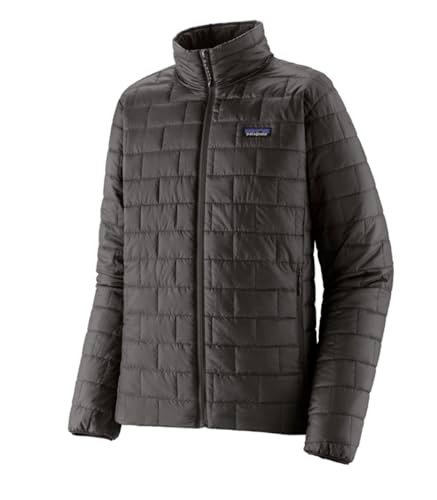
The Nano Puff is one of the most consistently recommended synthetic insulated jackets in independent gear testing. Switchback Travel’s current review credits the latest cut with a more athletic fit and better range of motion, comfortable into the low 40s Fahrenheit over a base layer. Patagonia’s PrimaLoft Gold Eco insulation delivers genuine warmth for its weight, the windproof shell shrugs off light drizzle, and the recycled-fabric build holds up to repeated use. It’s a step up in price, but the fit and reliability are why it remains a benchmark pick, not just a marketing claim.
Best for: hikers who want a proven, long-lasting premium layer
Why it stands out: benchmark warmth-to-weight, windproof shell, durable recycled construction
Check Price on Amazon (Men’s) | Check Price on Amazon (Women’s)
3. Eddie Bauer MicroTherm 2.0 Down Jacket: Best Down/Lightweight
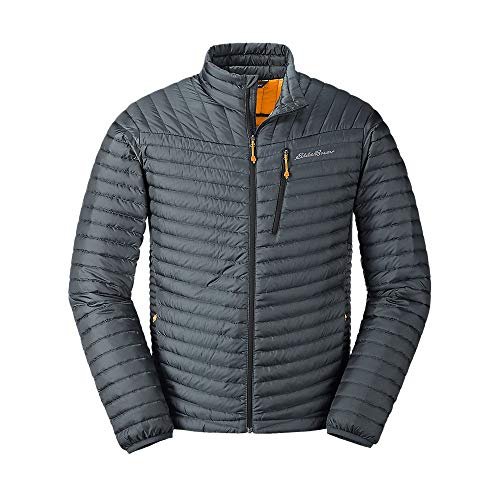
For dry, cold trips where minimising weight matters most, the MicroTherm 2.0 is the pick. Its 800-fill Responsible Down Standard down, held close through Eddie Bauer’s baffle construction, gives it a warmth-to-weight ratio synthetic insulation can’t match, and it packs into its own chest pocket. The trade-off: down loses much of its insulating power when wet and dries slowly on trail, so this is a jacket for reliably dry conditions, not a wet, shoulder-season route.
Best for: dry, cold-weather trips where minimising pack weight matters most
Why it stands out: exceptional warmth-to-weight from high-loft down, compresses very small
4. Columbia Powder Lite Hooded Jacket: Best Value
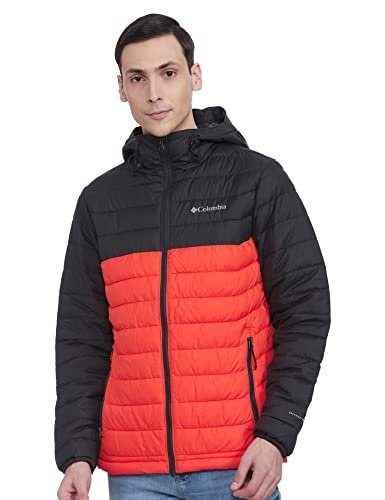
The Powder Lite Hooded Jacket brings genuine technical features to a more accessible price. Columbia’s Omni-Heat lining reflects body heat back at you, boosting effective warmth without adding bulk, and the water-resistant Storm-Lite shell handles light rain and snow without soaking through immediately. It doesn’t pack down as small as the premium picks above, but for a real hiking-brand jacket without a premium price tag, it’s a solid middle-ground choice, a clear step up from the casual puffers and workwear jackets that used to fill this slot.
Best for: hikers who want technical features without paying a premium price
Why it stands out: heat-reflective Omni-Heat lining, water-resistant shell, accessible price point
5. Little Donkey Andy Insulated Hiking Jacket: Best Budget
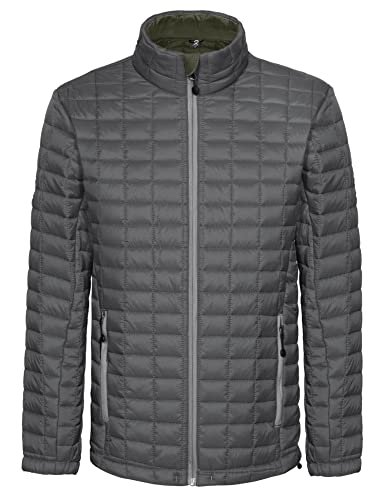
Unlike the general puffers this slot used to hold, the Little Donkey Andy jacket is explicitly designed and marketed for hiking. It uses recycled synthetic insulation, quilted in a square pattern to stop the fill shifting, for reasonable warmth and packability at a genuinely low price, with a water-repellent shell for light precipitation. Build quality won’t match the bigger brands above, and it suits occasional hikers rather than big annual mileage, but as a first insulated layer or a budget-conscious backup, it’s a real hiking product, not a repurposed casual coat.
Best for: budget-conscious hikers who want a genuinely hiking-specific jacket
Why it stands out: purpose-built for hiking, recycled insulation, accessible price
Check Price on Amazon (Men’s) | Check Price on Amazon (Women’s)
How to Choose an Insulated Hiking Jacket
Down vs synthetic is the first real decision. Down wins on warmth-to-weight in dry conditions but loses insulating power fast when wet. Synthetic is heavier for the same warmth but keeps working damp.
Think about how you’ll layer it. Under a rain shell, check the cut isn’t too bulky. As a camp-only layer, a roomier fit is fine.
Weigh packed size against budget. Premium jackets compress smaller for the same warmth, worth paying for if pack space is tight. Budget options add warmth but take more room.
Don’t oversize the insulation. A heavy expedition-weight jacket is dead weight on a three-season trail. Match the warmth to your coldest realistic camp, not the coldest day imaginable.
A simple decision aid: choose the ThermoBall Eco Jacket 2.0 for the safest all-round pick. Choose the MicroTherm 2.0 if your trip is dry and pack weight is the priority. Choose the Little Donkey Andy or Powder Lite if budget matters more than premium packability.
Final Thoughts
The best insulated jacket is the one still keeping you warm at camp on night three, not the one that felt cosy in the shop. Match the insulation type to your trail’s conditions and treat packed size as a real cost.
For the wider kit list, see Multi-Day Hiking Gear: What You Actually Need. Also compare our best fleece jackets for hiking and best base layers for hiking.
Frequently Asked Questions
Is down or synthetic insulation better for multi-day hiking?
It depends on conditions. Down offers better warmth-to-weight in reliably dry, cold conditions and compresses smaller. Synthetic is heavier for the same warmth but keeps insulating when damp and dries much faster, which matters more on trails with rain or heavy sweat over consecutive days.
Can I wear an insulated jacket under a rain shell?
Yes, and on a genuinely wet, cold trail that’s the standard layering approach. Choose a cut close enough to fit under your waterproof shell without restricting movement, rather than the roomiest jacket you can find.
How warm does an insulated jacket need to be for multi-day hiking?
Match it to your coldest realistic camp temperature, not the coldest day you can imagine. A midweight synthetic or down jacket in the 600 to 800 fill-power-equivalent range covers most three-season trips. Below-freezing, high-altitude trips need a warmer layer.
Do I need an insulated jacket if I already have a fleece?
Often, yes, both. A fleece is a breathable mid-layer for moving in cold conditions, while an insulated jacket is a static warmth layer for camp and breaks, where you’re not generating body heat through movement. Many hikers carry both and layer them on the coldest nights.
