

Last updated: August 2026
Wild Trail Hiker is reader-supported. We may earn a commission when you buy through links on this page, at no extra cost to you. We only recommend products we’d consider taking on a multi-day trip ourselves.
Gaiters look like a solved problem in the shop: fabric, a strap, a zip. The difference shows up on day two of a scree traverse, when grit you thought you’d kept out has worked past a weak ankle strap and is grinding against your heel, with the nearest stop still 40 minutes off.
On multi-day hikes, gaiters have to handle:
- Repeated sand and grit exposure on spinifex, scree, or dune sections, day after day
- Strap and hook hardware that survives constant on/off over a week
- Breathability under sustained walking, so moisture isn’t just traded for sweat
- A fit that holds against boots or trail shoes without sliding on rough ground
This guide focuses on gaiters built for that, not the generic multi-pack listings that dominate a plain Amazon search. If you’re still working out what belongs in your kit before add-ons like this, start with our Multi-Day Hiking Gear: What You Actually Need (And What to Skip). Gaiters are a small, cheap fix for a specific terrain problem, not a universal upgrade.
How We Picked
These picks focus on what matters on multi-day terrain: keeping sand, grit, and scree out over repeated days, hardware durability, breathability, and a secure fit over boots or trail shoes. All are from established outdoor brands with a genuine hiking pedigree. Generic unbranded multi-packs are not included, they solve a different problem.
Quick Picks
| Slot | Product | Why It Stands Out |
|---|---|---|
| Best Overall | Outdoor Research Crocodile GORE-TEX Gaiters | Genuinely waterproof, slim modern fit, the safest all-round pick for boots |
| Best for Sand, Scree & Spinifex | Kahtoola RENAgaiter Low | Low-profile stretch-woven build made for exactly this failure mode |
| Best Budget / Ultralight | Altra Trail Gaiter | Strapless pull-on design, lightest option here, works over trail shoes |
| Best for Snow & Alpine Passes | Rab Latok GORE-TEX Gaiter | Waterproof mountaineering build with a crampon-ready patch |
| Best Mid-Weight All-Rounder | Outdoor Research Rocky Mountain High Gaiters II | Durable abrasion-resistant build, works across boot styles |
Who This Gaiter Guide Is For
These gaiters are best for:
- Multi-day hikers on spinifex, scree, sand, or boulder-field terrain where debris in the boot is a daily problem
- Hikers on dry, dusty, or volcanic-gravel trails, not just snow and mud
- Anyone pairing gaiters with full boots or low-cut trail shoes, since fit needs differ
- Hikers tired of stopping every hour to empty their boots
If your boots themselves are the weak link, see our best waterproof hiking boots instead.
Multi-Day Context: Why Gaiters Are Different on Trail
A gaiter fine for a single afternoon walk can fail badly by day three.
Over several consecutive days you face:
- Cumulative grit load. One missed seal doesn’t matter on day one. By day three, small amounts getting in cause a hot spot a single-day hiker never sees.
- Hardware fatigue. Straps and zips get used dozens of times a week at camp and crossings. Cheap plastic hardware that survives a day hike can crack by day four.
- Breathability trade-offs. A fully sealed gaiter great in a snowfield can leave your leg damp with sweat on a hot, dry trail.
- Boot pairing. A boot-cut gaiter on trail shoes rides up, and a low-cut gaiter over full boots leaves a debris gap right where you don’t want one.
These five picks are chosen with those failure modes in mind, not a single warm-weather test walk.
The Safest Bet
If you want one recommendation and don’t want to overthink it, the Outdoor Research Crocodile GORE-TEX Gaiters are the safest bet.
Outdoor Gear Lab and CleverHiker both rate this a top overall pick: genuine GORE-TEX waterproofing, a slimmer modern fit for today’s boot profiles, and a replaceable instep strap so one broken part doesn’t retire the whole gaiter mid-trip. For hikers who want one gaiter that handles rain, mud, and moderate snow without a specialist alpine build, it’s the easiest call here.
Best Hiking Gaiters for Multi-Day Hiking
1. Outdoor Research Crocodile GORE-TEX Gaiters: Best Overall
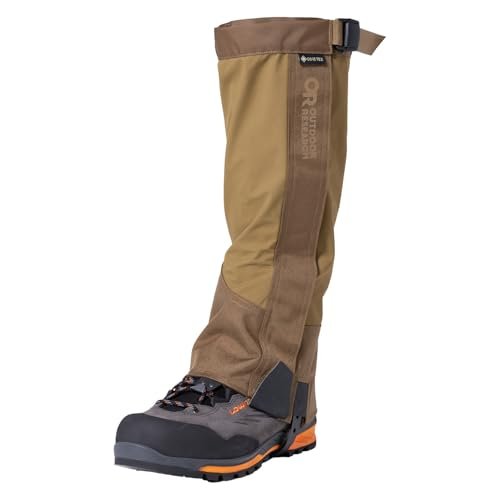
The Outdoor Research Crocodile is the gaiter most gear-review authorities land on as the top pick, and CleverHiker calls it out for cold, wet, snowy conditions on the strength of its three-layer GORE-TEX build. Amazon lists the current generation with a slimmer profile for modern boots and a replaceable instep strap, useful where field-fixable gear beats gear you have to retire mid-trip.
Best for: hikers who want one dependable, genuinely waterproof gaiter for boots
Why it stands out: real GORE-TEX waterproofing, modern slim fit, field-repairable strap system
2. Kahtoola RENAgaiter Low: Best for Sand, Scree & Spinifex
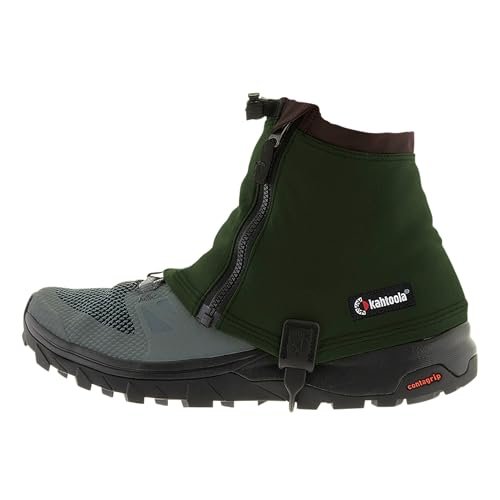
The Kahtoola RENAgaiter is a CleverHiker Best Overall pick, and the Low version is built for the failure mode behind most gaiter recommendations on this site: loose, fine debris on spinifex, scree, and sandy sections. Amazon lists a stretch-woven nylon build with a DWR water-resistant coating and a side zip with an automatic locking slider, designed to stay put over a low-cut hiking shoe.
Best for: desert, spinifex, and scree trails where sand and grit are the daily problem
Why it stands out: low-profile, breathable, made to pair with trail shoes not just boots
3. Altra Trail Gaiter: Best Budget / Ultralight
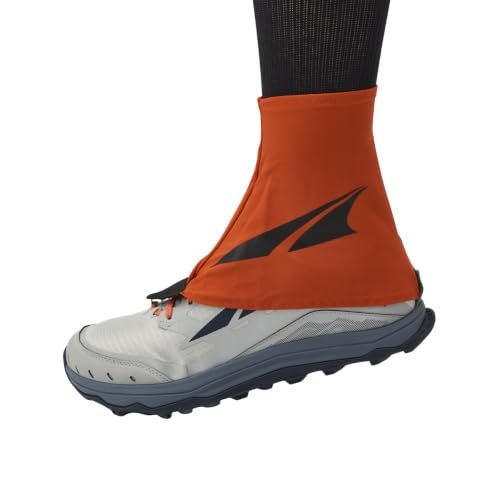
The Altra Trail Gaiter is the lightest, simplest option here, one most hikers can add to a kit without a second thought on weight or cost. Amazon describes a strapless pull-on design in breathable stretch fabric, with a front metal lace hook to stop it riding up. It’s not a snow or wet-weather gaiter, but for trail dust and grit on a dry route it does the job at a fraction of the weight and price of the technical picks above.
Best for: hikers who want a light, cheap debris gaiter and don’t need waterproofing
Why it stands out: lowest weight and cost here, easy on/off, works well over trail shoes
4. Rab Latok GORE-TEX Gaiter: Best for Snow & Alpine Passes
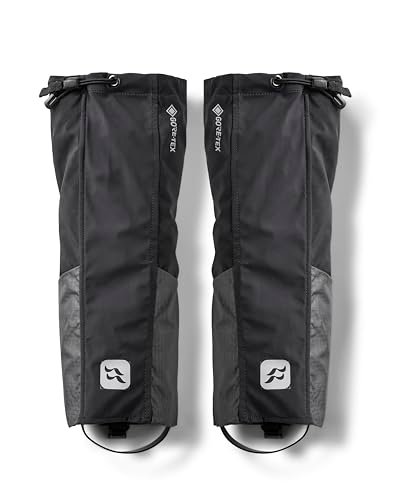
The Rab Latok is built for genuinely alpine conditions rather than dry-trail debris. Amazon lists a GORE-TEX waterproof, breathable build with a hook-and-loop closure, a stretchy Proflex panel, and a reinforced crampon-kicker patch, useful on any route crossing a lingering snow pass or early-season high country. It’s heavier than most hikers need on dry terrain, but earns its place wherever there’s real snow or ice.
Best for: trails with a genuine early-season snow pass or alpine section
Why it stands out: true waterproof mountaineering build, crampon-ready construction
5. Outdoor Research Rocky Mountain High Gaiters II: Best Mid-Weight All-Rounder
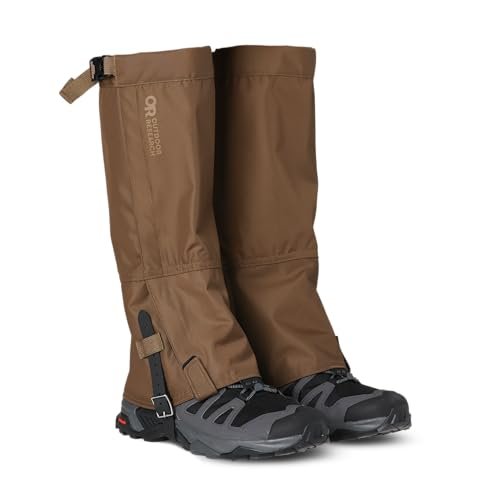
The Rocky Mountain High Gaiters II sit between the ultralight Altra and the fully technical Crocodile or Latok. Amazon lists a rugged 420D nylon build with a water-resistant polyurethane coating, reinforced boot-lace hooks, and Hypalon instep straps, built for rocks, dirt, and light snow rather than sustained wet weather. For hikers who want more durability than the ultralight picks without a full GORE-TEX build, this is the sensible middle option.
Best for: rocky, mixed-terrain multi-day trails without sustained heavy rain
Why it stands out: durable build, works across boot styles, water-resistant without full GORE-TEX weight
How to Choose Hiking Gaiters
The main thing is matching the gaiter to the failure mode on your trail, not the most technical option out of habit.
Terrain type. Fine, dry debris (sand, spinifex, scree) is a different problem to snow and wet mud. The RENAgaiter Low is built for the first, the Latok and Crocodile for the second.
Footwear pairing. Low-cut trail shoes need a low-profile gaiter like the RENAgaiter Low or Altra. Full boots carry a taller, structured gaiter like the Crocodile or Rocky Mountain High without riding up.
Weather exposure. Sustained rain or a snow pass means paying for real waterproofing. Reliably dry means the lighter, cheaper Altra saves both weight and money.
Hardware durability. Straps and hooks get used constantly on a week-long trip. Cheap plastic hardware is the most common failure point, check for a field-repairable or reinforced strap system.
Dry, sandy, or scree-heavy trail: start with the Kahtoola RENAgaiter Low. Want one gaiter for rain and moderate snow without overthinking it: the Outdoor Research Crocodile. Genuine alpine snow section: step up to the Rab Latok.
Final Thoughts
The best gaiter is the one still sealed and intact on day four, not the one that looked good in the shop.
Check current prices on Amazon, and match your choice to the terrain you’re walking. See our wider Multi-Day Hiking Gear: What You Actually Need (And What to Skip), and our 8 Best Waterproof Hiking Boots and 8 Best Trekking Poles for Hiking, both of which pair directly with gaiters on rough terrain.
Frequently Asked Questions
Do I really need gaiters for multi-day hiking?
Not always. On a well-maintained, non-sandy trail with sturdy boots, gaiters are optional. On spinifex, scree, sand, or trails with lingering snow, they solve a real, repeated problem: debris in your boot causing hot spots and blisters by day two or three. If your trail matches those conditions, they’re a cheap fix worth carrying.
What is the difference between a gaiter and a gaiter sock?
A gaiter is a separate sleeve strapped over your boot or shoe. A gaiter sock is a hiking sock with a built-in ankle cuff, generally less effective on serious sand or scree but more convenient for casual use. For light dust protection only, see our 6 Best Hiking Gaiter Socks guide.
Are cheap multi-pack gaiters on Amazon worth it?
Most aren’t for multi-day use. Generic unbranded multi-packs are usually built for yard work or light day hikes, not repeated trail abrasion and constant on/off use. The gaiters here come from established outdoor brands because the hardware and seam quality that separates a real gaiter from a generic one shows up exactly when you can’t afford it to fail, day three, mid-scree-field.
