

Last updated: June 2026
Wild Trail Hiker is reader-supported. We may earn a commission when you buy through links on this page, at no extra cost to you. We only recommend products we’d consider taking on a multi-day trip ourselves.
A hiking camera backpack can look perfect when it is empty. Padded dividers. Neat compartments. A clean place for lenses, batteries, filters, and a camera body.
The problem starts when you add a rain shell, food, water, a warm layer, a tripod, and uneven track. A camera bag that works in an airport can become awkward fast when the climb gets steep.
On a multi-day hike, a poor camera backpack usually fails in four ways:
- It protects the camera but carries badly. Your shoulders and lower back pay for the padding.
- It carries well but buries the camera. By the time you unpack it, the shot is gone.
- It has camera space but no hiking space. There is nowhere sensible for water, food, or wet layers.
- It handles dry trails only. Light rain becomes a serious problem when your camera gear is inside.
This guide is for hikers who want camera gear protected without giving up the basics of a practical trail pack. For broader pack planning, start with Multi-Day Hiking Gear: What You Actually Need.
How We Picked
The best hiking camera backpacks picks focus on what matters when camera carry meets hiking: load comfort, camera protection, usable access, weather resistance, and enough non-camera space for trail gear. Compact city camera bags, camera-only cubes, and ordinary hiking packs with no camera protection are not the main focus.
Quick Picks
| Slot | Product | Why It Stands Out |
|---|---|---|
| Best Overall | Peak Design Outdoor Backpack 45L | The strongest multi-day option for capacity plus camera-carry flexibility. |
| Best for Camera Gear and Trail Gear | VSGO Pocket Ranger Expandable 35L to 43L | A photography-first pack with enough volume for extra layers, food, and hiking gear. |
| Best Compact DSLR Pack | Thule Aspect DSLR Camera Backpack | A cleaner choice for smaller camera kits where comfort and organisation matter more than big capacity. |
| Best Budget Compact Option | Lowepro Tahoe BP 150 | Lightweight, simple, and best suited to smaller camera setups or day hiking. |
| Best for Wildlife and Trail Cameras | ALPS OutdoorZ Motive Trail Camera Backpack | Useful if your camera gear is for wildlife monitoring rather than landscape shooting. |
Who This Is For
This guide is for hikers who carry a mirrorless or DSLR camera on trail and still need space for water, food, a shell, and insulation. It suits landscape, wildlife, trail content, and travel photography.
This is not the right guide if you mainly need a lightweight overnight pack with no camera dividers. Start with Best Ultralight Backpacks or Best Multi-Day Backpacks.
Why Camera Backpacks Are Harder on Multi-Day Hikes
A camera backpack is not just a hiking pack with padding added. The extra structure changes load carry, camera access, and space for safety gear.
Key failure points:
- Weight creep. Camera bodies, lenses, batteries, filters, and a tripod can add several kilograms before food and water are packed.
- Poor load transfer. Many camera bags use padded shoulder straps but lack the hip belt and frame support needed for long climbs.
- Slow access. If every photo requires removing the pack and opening the main compartment, you will miss shots or stop too often.
- Weather exposure. Camera gear needs more protection than clothing. A rain cover helps, but zippers, seams, and wet pack fabric still matter.
The best hiking camera backpack protects your camera without making the hike harder.
1. Peak Design Outdoor Backpack 45L: Best Overall
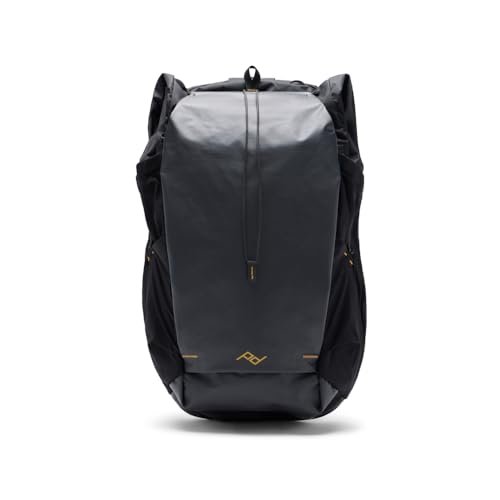
The Peak Design Outdoor Backpack 45L is the strongest choice here for hikers who need genuine pack capacity rather than just camera storage. The current article lists it as a 45 litre internally framed backpack with a roll-top design, built for hiking, camera carry, and travel. That volume gives you room for a camera cube, layers, food, and wet-weather gear. The trade-off is size. For short day hikes, it is probably too much pack.
Best for: Multi-day hikers carrying camera gear plus normal trail gear
Why it stands out: Proper capacity, internal frame structure, and flexible roll-top storage
2. VSGO Pocket Ranger Expandable 35L to 43L: Best for Camera Gear and Trail Gear
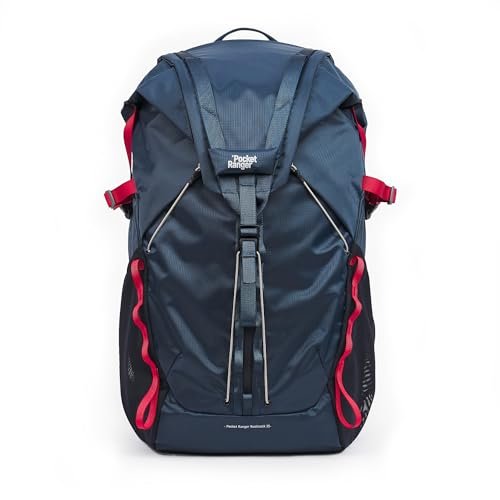
The VSGO Pocket Ranger sits between a dedicated photography pack and a practical hiking bag. The current listing positions it as an expandable 35 litre to 43 litre photography and outdoor backpack, with waterproof material and camera compartments. That suits hikers who need camera organisation plus space for a shell, fleece, snacks, and trail essentials. The caution is bulk. Pack it carefully so camera weight does not pull away from your back.
Best for: Hikers who carry a larger camera kit but still need trail storage
Why it stands out: Expandable volume and photography-first organisation
3. Thule Aspect DSLR Camera Backpack: Best Compact DSLR Pack
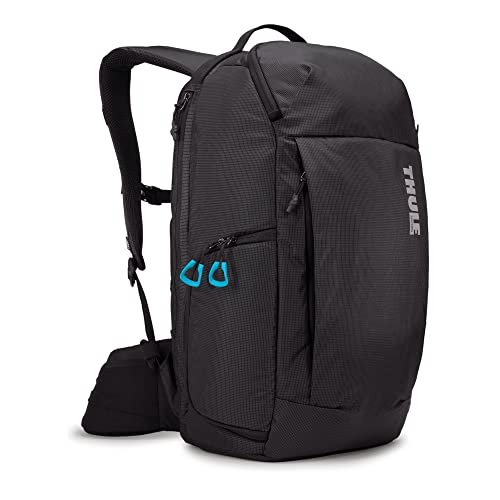
The Thule Aspect DSLR Camera Backpack is a better fit for smaller camera kits than heavy multi-day loads. The current article lists it as a lightweight camera backpack with padded compartments, padded straps, and a breathable back panel. It suits hikers carrying a DSLR or mirrorless setup with limited lenses. It is not the pick for a large overnight load. Its strength is clean organisation and lower bulk.
Best for: Day hikers and travel hikers carrying a modest DSLR or mirrorless kit
Why it stands out: Compact camera protection without the bulk of a large hiking pack
4. Lowepro Tahoe BP 150: Best Budget Compact Option
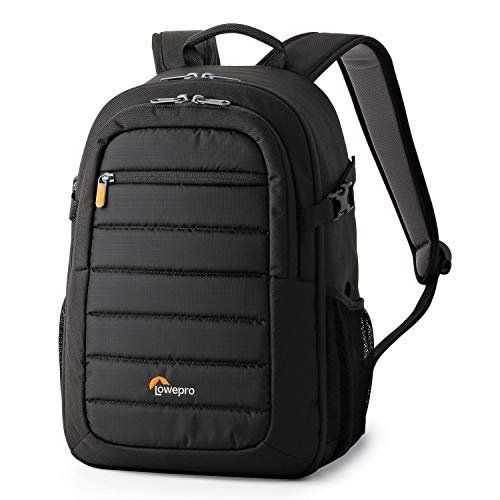
The Lowepro Tahoe BP 150 is the lightest, simplest option in this guide. The current article describes it as a compact camera backpack for small to medium camera setups, with padded dividers and a lightweight build. It is not a true multi-day hiking pack, but it makes sense if you are carrying one camera body, one or two lenses, and only light hiking extras. If your photography setup is modest and your hike is short, this is the practical budget choice.
Best for: Small camera kits, day hikes, and travel photography
Why it stands out: Lightweight, simple, and less bulky than larger camera packs
5. ALPS OutdoorZ Motive Trail Camera Backpack: Best for Wildlife and Trail Cameras
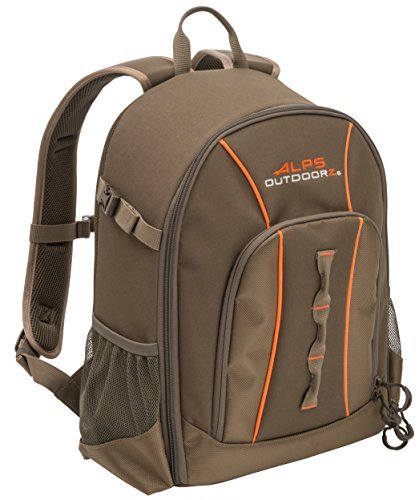
The ALPS OutdoorZ Motive Trail Camera Backpack is more specialised than the other options here. The current article describes it as a backpack with protective compartments for game cameras and accessories. That is different from carrying a mirrorless body and lenses for landscape work. For wildlife monitoring, scouting, or camera-trap work, the compartments make sense. For ordinary hiking photography, it is less versatile.
Best for: Wildlife monitoring, camera traps, and trail-camera accessories
Why it stands out: Protective compartments for specialised outdoor camera equipment
How to Choose a Hiking Camera Backpack
Start with the hike, not the camera.
A camera backpack still has to work as a hiking pack. If you need water, food, rain gear, and insulation, do not choose a small camera bag just because the dividers look neat.
Match capacity to your real load.
For short hikes, 15 to 25 litres can be enough. For hut-based or photography-heavy trips, 35 to 45 litres is more realistic. For camping trips, a proper hiking pack with a separate camera cube may work better.
Check access before you buy.
Fast access matters when the light changes or wildlife appears. Side access, rear-panel access, or a well-placed camera cube can save time.
Do not overrate waterproof claims.
Waterproof fabric is useful, but rain still finds zippers, seams, and openings. In wet conditions, use a pack liner, dry bag, or dedicated padded insert. A waterproof hiking jacket protects you. Your camera needs its own plan too.
Choose Peak Design Outdoor Backpack 45L for the most trail-capable camera carry, VSGO Pocket Ranger for photography organisation with expandable hiking space, or Lowepro Tahoe BP 150 if your kit is small and your hikes are short.
Final Thoughts
A good hiking camera backpack does two jobs. It protects expensive gear, but it also has to carry well when the track gets rough and your pack holds more than lenses.
For multi-day hiking, the safest choice is usually the pack that still behaves like a hiking pack. Camera protection matters, but not if it ruins carry comfort or leaves no room for essentials. For more pack comparisons, see Multi-Day Hiking Gear: What You Actually Need, Best Hiking Fanny Packs, and Best Internal Frame Backpacks.
Final pick:
Frequently Asked Questions
Are camera backpacks good for multi-day hiking?
Some camera backpacks are good for multi-day hiking, but many are not. A padded camera bag can protect your gear but still feel poor under real trail weight. For overnight trips, look for hiking capacity, a supportive harness, weather protection, and accessible camera storage.
Should I use a camera backpack or a hiking backpack with a camera cube?
For serious multi-day trips, a hiking backpack with a camera cube can be the better option. You get proper load transfer and enough room for food, shelter, and clothing. A dedicated camera backpack makes more sense when photography is the main purpose of the trip and your hiking load is relatively light.
What size hiking camera backpack do I need?
For day hikes, 15 to 25 litres can work if your camera kit is small. For hut-based hikes or photography-heavy trips, 35 to 45 litres gives more useful space. For camping trips, capacity depends on your shelter, sleep system, food carry, and water needs. Do not size the pack around camera gear alone.
How do I keep camera gear dry while hiking?
Do not rely only on the pack fabric. Use a rain cover, dry bag, pack liner, or dedicated padded insert with extra weather protection. Batteries and memory cards should be stored in smaller sealed bags. In sustained rain, keep the camera packed away unless the shot is worth the risk.
