

Last updated: June 2026
Wild Trail Hiker is reader-supported. We may earn a commission when you buy through links on this page, at no extra cost to you. We only recommend products we’d consider taking on a multi-day trip ourselves.
Most backpacks feel fine when they are empty in your living room. The problem starts when you add food, water, wet layers, a sleeping system, and the small gear you keep telling yourself does not weigh much.
By the second afternoon, a poor pack is not just uncomfortable. It changes how you walk. Shoulder straps start biting. The hip belt slips. The load pulls backwards on climbs. Your rain jacket ends up buried under the stove, and every snack stop turns into a full unpack.
On a multi-day hike, backpack problems usually show up as:
- Shoulder fatigue: too much weight hanging from the straps instead of sitting on your hips.
- Poor load control: a pack that sways, sags, or pulls backwards on rough ground.
- Bad access: essential gear trapped under half your camp kit.
- Weather exposure: water-resistant fabric that still needs a proper rain cover or pack liner.
This guide is for hikers choosing the best multi-day backpacks for overnight and shorter multi-day trips. For the bigger gear picture, start with Multi-Day Hiking Gear: What You Actually Need.
How We Picked
These picks focus on what matters once a pack is carrying real overnight weight: usable capacity, load support, rain protection, pocket layout, and whether the pack makes sense beyond a short day walk. Tiny 10L to 20L daypacks are not treated as multi-day backpacks here. The strongest options are 50L to 55L packs, with 40L packs included only for short overnighters, hut walks, summer trips, or hikers with compact gear.
Quick Picks
| Slot | Product | Why It Stands Out |
|---|---|---|
| Best Overall | TETON 55L Scout Internal Frame Backpack | The most complete choice here for beginner overnight and 1 to 3 day hiking loads. |
| Best Budget | Loowoko 50L Hiking Backpack | Good capacity, low weight, and rain cover included at a budget price point. |
| Best Lightweight Short-Trip Pack | Nerlion 40L Hiking Backpack | A light 40L option for minimalist overnighters or hut-based trips. |
| Best Organised 40L Pack | Maelstrom 40L Hiking Backpack | Better pocket structure for hikers who want quick access to layers, snacks, and wet gear. |
| Best Hydration-Focused Pack | IX INOXTO 26L/40L Hiking Backpack | Useful for day-to-overnight hikers who want an included bladder and compact carry. |
Who This Is For
This guide is for:
- Hikers building a budget overnight setup.
- Beginners planning 1 to 3 day hikes, hut trips, or warm-weather camping.
- Multi-day hikers carrying moderate loads, not expedition loads.
- Hikers who want a lower-cost pack before investing in premium Osprey, Gregory, Deuter, or ultralight cottage-brand gear.
This is not the best guide if you already know you want a lighter, more technical pack. In that case, read Best Ultralight Backpacks for Multi-Day Hiking instead.
Multi-Day Context: What Actually Matters
A multi-day backpack has one job: carry your gear without making the trail harder than it already is.
The main failure points are simple:
- Capacity mismatch: A 40L pack can work for compact summer gear, but it becomes painful if you are carrying bulky sleeping gear, extra food, or cold-weather layers.
- Weak hip transfer: Your hips should carry most of the load. If the belt is thin, loose, or poorly shaped, your shoulders take the punishment.
- Poor packing shape: Tall, narrow packs usually carry better than soft bags that bulge away from your back.
- Wet gear management: A rain cover helps, but serious multi-day hikers should still use dry bags or a pack liner for sleeping gear and spare clothing.
The safest move is to choose the smallest pack that genuinely fits your gear, not the smallest pack you can force shut at home.
The Safest Bet
The safest pick here is the TETON 55L Scout Internal Frame Backpack. It has the most realistic capacity for beginners doing 1 to 3 day hikes, it includes a rain cover, and the internal-frame design makes more sense for overnight loads than soft daypack-style options. It is not a premium lightweight pack, but it is the most defensible all-round choice in this list.
1. TETON 55L Scout Internal Frame Backpack: Best Overall
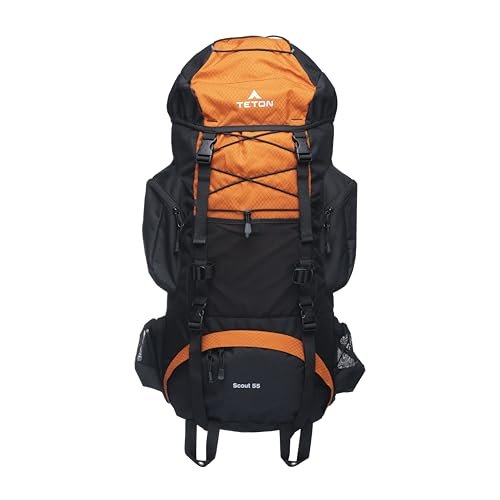
The TETON 55L Scout is the clearest multi-day pack in this list. Amazon lists it as a 55L internal-frame backpack with a rain cover, and the product description positions it for 1 to 3 day hiking trips. That is the right use case. It gives beginners enough room for a sleeping bag, shelter, food, layers, and cooking gear without having to compress everything to the edge of failure. The trade-off is bulk. This is not the pack for ultralight hikers, fastpackers, or people who already own compact premium gear.
Best for: beginner backpackers, budget overnighters, 1 to 3 day trips
Why it stands out: real multi-day capacity, internal frame, rain cover included
2. Loowoko 50L Hiking Backpack: Best Budget
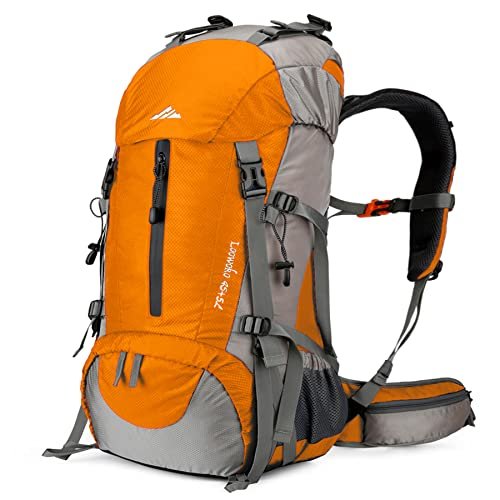
The Loowoko 50L sits in the right capacity range for short multi-day hiking. Amazon lists it as a 50L pack at 1070 grams, with nylon and polyester construction and a rain cover. That is a useful mix for hikers trying to keep cost and base weight down. The caution is support. At this price point, do not expect the same harness comfort or long-term durability as a specialist backpacking pack. It makes the most sense for lighter overnight loads, weekend trips, and hikers who already pack fairly compact.
Best for: budget hikers, short overnighters, compact summer kits
Why it stands out: 50L capacity, light listed weight, low entry price
3. Nerlion 40L Hiking Backpack: Best Lightweight Short-Trip Pack
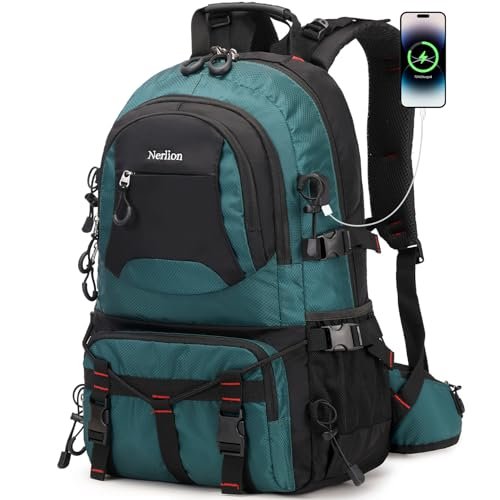
The Nerlion 40L is best treated as a short-trip pack, not a general multi-day backpack. Amazon lists it as a 40L water-resistant hiking backpack weighing 0.9 kilograms, which is appealing if your gear is already compact. The risk is capacity. Once you add a bulky sleeping bag, tent, food, and wet-weather gear, 40L disappears quickly. This pack is more convincing for hut walks, summer overnighters, minimalist camping, or as a travel-friendly hiking pack than for a first big multi-day trail.
Best for: minimalist overnighters, hut walks, compact warm-weather kits
Why it stands out: low listed weight, simple 40L capacity, water-resistant fabric
4. Maelstrom 40L Hiking Backpack: Best Organised 40L Pack
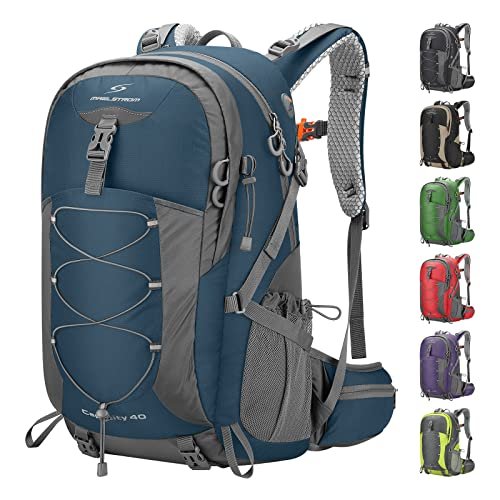
The Maelstrom 40L is another short-trip option, but it earns its place because the storage layout is more useful than a bare-bones sack. Amazon lists it as a 40L waterproof pack with a rain cover, multiple pockets, and water-resistant features. That matters when you want rain gear, snacks, first aid, and water treatment gear reachable without emptying the main compartment. The limitation is the same as any 40L pack: it suits lighter overnight use, not bulky multi-day camping loads.
Best for: organised packers, hut trips, overnight hikes, wet-weather day-to-overnight use
Why it stands out: rain cover, multiple pockets, compact 40L size
5. IX INOXTO 26L/40L Hiking Backpack: Best Hydration-Focused Pack
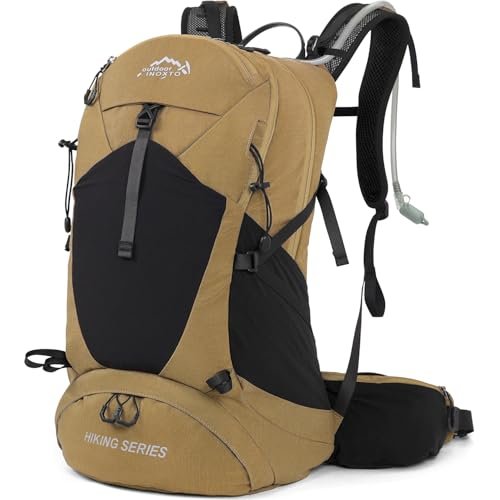
The IX INOXTO is the least traditional multi-day option here, so treat it carefully. Amazon currently shows a 26L version with a 3L water bladder, rain cover, and water-resistant design, while the listing title also references 26L/40L variants. The 26L size is not a main multi-day backpack. It is more useful as a long daypack, a hut-walk pack, or a very compact overnight option if you are carrying minimal sleep gear. Its real advantage is hydration convenience, not load-hauling capacity.
Best for: long day hikes, hut walks, hydration-focused hikers, compact overnight loads
Why it stands out: 3L bladder included, rain cover, compact carry
How to Choose a Multi-Day Backpack
Start with your real gear volume
Do not start with the pack. Start with the gear. Lay out your shelter, sleeping bag, sleeping pad, cook kit, layers, food, water capacity, first aid, and rain gear. If that kit is bulky, go closer to 50L to 60L. If your shelter and sleep system are compact, 40L may work for short trips.
Think in days, not litres
A 40L pack can be fine for an overnight hut walk. It can be miserable for a three-night camping trip in cold weather. Extra food and clothing add volume quickly. For most beginners, 50L to 55L is a safer starting range for overnight hiking.
Check the harness before chasing features
Pockets are useful, but the carry system matters more. Look for a hip belt that can take real weight, shoulder straps that do not collapse under load, and a frame or structure that keeps the load close to your back. A cheap pack with poor load transfer can make a moderate trail feel much harder.
Do not trust water resistance by itself
Water-resistant fabric is not enough for a wet multi-day hike. Use the included rain cover, but also protect your sleeping bag and spare clothing inside the pack. A simple pack liner or dry bags can save your trip when rain lasts longer than expected.
Choose the TETON 55L Scout if you want the safest beginner multi-day pack. Choose the Loowoko 50L if budget and low listed weight matter most. Choose the Nerlion 40L or Maelstrom 40L only if your kit is compact and the trip is short.
Final Thoughts
A good multi-day backpack does not make the climb easier, but it stops your gear from making it worse. For most new overnight hikers, the safer choice is a 50L to 55L pack with enough structure to carry food, water, shelter, and wet-weather gear without crushing your shoulders.
For the wider kit list, read Multi-Day Hiking Gear: What You Actually Need. If you are trying to cut pack weight, compare this guide with Best Ultralight Backpacks for Multi-Day Hiking and Best Internal Frame Backpacks.
Frequently Asked Questions
What size backpack is best for multi-day hiking?
For most beginner multi-day hikers, 50L to 60L is the safest range. It gives enough room for shelter, sleeping gear, food, water, and spare clothing without forcing a poor pack job. A 40L pack can work for summer overnighters, hut trips, or experienced hikers with compact gear, but it is less forgiving.
Is a 40L backpack big enough for a multi-day hike?
A 40L backpack can be big enough for a short overnight hike if your gear is compact and conditions are mild. It is usually tight for colder trips, bulky sleeping bags, larger tents, or several days of food. Treat 40L as a minimalist or short-trip size, not the default for all multi-day hiking.
Do I need a waterproof backpack for multi-day hiking?
You need rain protection, but the backpack itself does not have to be fully waterproof. Many hiking packs use water-resistant fabric and include a rain cover. For multi-day hiking, protect critical gear inside the pack as well. Your sleeping bag, spare base layers, and electronics should go in dry bags or a pack liner.
Are budget backpacks good enough for overnight hiking?
Budget backpacks can work for short overnight hikes if the load is moderate and the fit is reasonable. The risk is comfort under weight, especially through the hip belt and shoulder straps. For occasional 1 to 2 night trips, a budget pack may be enough. For long trails or heavy loads, a better harness is worth paying for.
How do I know what size backpack fits me?
Backpack fit is about torso length, not your height. Measure from the bony bump at the base of your neck down to the level of the top of your hip bones, then match that figure to the pack’s torso range. A pack that fits lets the hip belt sit on your hips and carry most of the weight. If the torso length is wrong, the load drags on your shoulders no matter how good the pack is.
Is an internal or external frame better for multi-day hiking?
Internal frames suit most multi-day hikers. They sit close to your back, stay stable on climbs and uneven ground, and carry moderate loads comfortably. External frames handle heavy, bulky loads well and run cooler against your back, but they are less stable on rough trails. For a closer look, see our Best Internal Frame Backpacks guide.
Should I use a rain cover or a pack liner?
Use both if you can. A rain cover keeps the outside of the pack from soaking through in steady rain. A pack liner, even a sturdy bin bag inside the main compartment, protects your sleeping bag and spare clothing, which is the gear that must stay dry. Rain covers can blow loose or leak at the seams in bad weather, so treat the liner as your real backup.
