

Last updated: September 2026
Wild Trail Hiker is reader-supported. We may earn a commission when you buy through links on this page, at no extra cost to you. We only recommend products we’d consider taking on a multi-day trip ourselves.
Most bear canisters feel ridiculous when you first pack one.
Heavy, hard-sided, they steal the space your sleeping bag and spare layers want to live in. At home, a careful food hang or lighter bear bag can seem good enough.
That changes three days into a Sierra route, when every remaining meal is inside one container and local rules say food, rubbish and scented items must be secured overnight.
A bear canister solves boring but serious problems: losing your food mid-trip, teaching bears to associate hikers with meals, and getting turned around or fined where canisters are required.
This guide covers bear canisters that make sense for multi-day hiking, especially routes where hard-sided storage is mandatory or recommended, plus the one soft-sided sack worth knowing about for regions like the Appalachians, where a hard canister isn’t required. Still building your wider kit? Start with our Multi-Day Hiking Gear: What You Actually Need guide, then come back for the food storage decision.
How We Picked
These picks focus on what matters once a container is in your pack: food volume, weight, approval status, durability and value over repeated trips. The guide favours hard-sided bear-resistant canisters with a genuine backpacking use case, plus one soft-sided sack where it’s a legitimate, accepted alternative.
Quick Picks
| Slot | Product | Why It Stands Out |
|---|---|---|
| Best Overall | BearVault BV500 Journey | Safest default for solo multi-day trips. |
| Best Mid-Size | BearVault BV475 Trek | Good capacity, less bulk. |
| Most Proven Rental Pick | Garcia Backpacker’s Cache 812 | Tough, simple, widely recognised. |
| Best Compact Hard Canister | Bare Boxer Contender 101 | Small, useful for modest needs. |
| Best for Rugged Durability | Counter Assault Bear Keg | Big, tough, but heavy. |
| Best Premium Pick | Wild Ideas Bearikade Weekender | Light for its volume. |
| Best for Long Carries | Wild Ideas Bearikade Expedition | Huge capacity for thru-hikers. |
| Best Soft-Sided Alternative | Ursack Major | A third the weight, IGBC-approved. |
Who This Guide Is For
This guide is for hikers planning trips where food storage matters: solo backpackers in Yosemite, the Sierra, Adirondacks or PCT sections, thru-hikers carrying several days of food, and small groups sharing volume. It’s also for Appalachian and Long Trail hikers in black bear country, where a hard canister isn’t required and a soft-sided sack is a genuine, lighter option.
If your biggest issue is water safety rather than food storage, see our Best Water Filters for Hiking guide instead.
Multi-Day Context: Why Bear Canisters Are Different on Day Three
A bear canister is not just another container. On a multi-day hike, it changes how your whole pack works.
- Rigid volume: a soft dry bag disappears into corners, a canister doesn’t.
- Food compression: five days of food means snacks, drink powder and rubbish too, not just dinners.
- Legal compliance: a lighter food bag may be fine in one forest and unacceptable in another.
- Camp routine: everything scented goes inside at night, sunscreen and toothpaste included.
The right food storage carries enough food, fits your pack, and satisfies the rules for where you’re walking, which matters as much for a soft-sided sack as a canister.
The Best Bear Canisters for Multi-Day Hiking
1. BearVault BV500 Journey: Best Overall
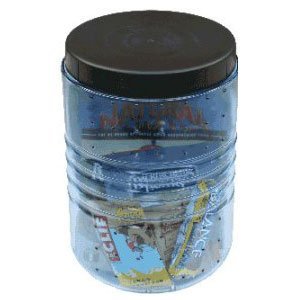
The standard answer for a reason: large enough for a week of solo food, clear enough to see what’s inside, common enough that most hikers already know it. The drawback is obvious, a big rigid cylinder, but for serious multi-day use it’s still the easiest call.
Best for: solo hikers, four to seven-day trips
Why it stands out: strong capacity, transparent body, broad familiarity
2. BearVault BV475 Trek: Best Mid-Size Canister
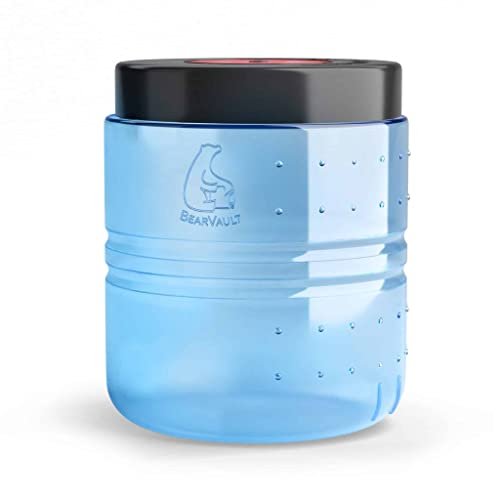
Consider it when the BV500 feels like too much but smaller weekend cans feel risky. Suits efficient packers on four to six-day trips, or two hikers sharing volume. Size up for bulky meals.
Best for: efficient packers, shorter carries, smaller packs
Why it stands out: middle ground between weekend and full-size cans
3. Garcia Backpacker’s Cache 812: Most Proven Rental Pick
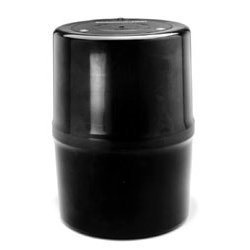
The old reliable option. Not elegant or light, but many hikers meet it through rental programs, and its dark body means remembering where things are packed. Its strength: tough, simple, proven.
Best for: renters, traditional backpackers
Why it stands out: widely recognised, tough, no-nonsense design
4. Bare Boxer Contender 101: Best Compact Hard Canister
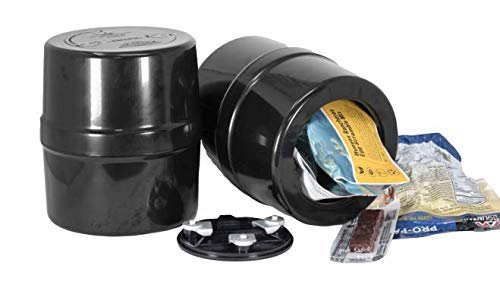
A specialist choice: small enough where larger canisters feel clumsy, but that means disciplined food planning, not bulky four-day packaging. As a first canister, it’s usually too limited unless most trips are short.
Best for: compact kits, minimalist food carries
Why it stands out: hard-sided compliance in a very small package
5. Counter Assault Bear Keg: Best for Rugged Durability
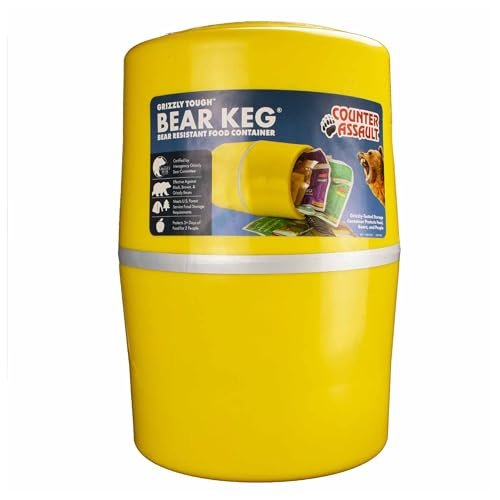
Big and tough, and you pay for that in weight. Suits hikers who care less about ounces than durability or rough handling. The coin-turn closure is straightforward, the volume real.
Best for: rugged trips, group storage
Why it stands out: large volume and very tough construction
6. Wild Ideas Bearikade Weekender: Best Premium Pick
Image needed: Wild Ideas Bearikade Weekender (upload manually, alt: “Wild Ideas Bearikade Weekender, carbon fiber bear canister for lightweight backpacking”)
Where bear canisters start feeling like premium gear: meaningful capacity at a much lower weight than hard-sided alternatives. Matters if you hike bear-canister country often. For occasional trips, renting or a BearVault is more sensible.
Best for: frequent bear-country hikers, lightweight backpackers
Why it stands out: excellent capacity-to-weight ratio
7. Wild Ideas Bearikade Expedition: Best for Long Carries
Image needed: Wild Ideas Bearikade Expedition (upload manually, alt: “Wild Ideas Bearikade Expedition, large carbon fiber bear canister for long food carries”)
For a specific problem: a long food carry where normal canisters run out of space. Overkill for weekend hikers, but right for the John Muir Trail or group hikes. Price is the barrier, the use case has to be real.
Best for: long carries, thru-hikers, small groups
Why it stands out: huge volume for the weight
8. Ursack Major: Best Soft-Sided Alternative (Where Permitted)
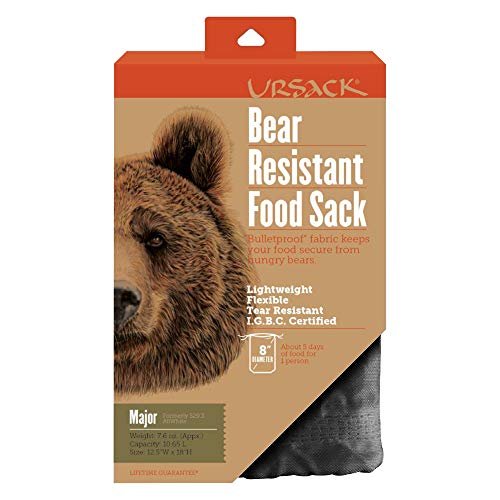
Not a canister, and it doesn’t try to be one. A flexible sack woven from the same fibre used in body armour, that a bear can bite and claw without getting inside. Amazon lists it at roughly 7.6 ounces, a fraction of any hard canister here, and it’s sat on the IGBC’s approved bear-resistant products list since July 2014. Approval isn’t universal: some parks still require a hard canister by name, and Vermont’s Long Trail lists canisters, hangs and bear boxes without naming Ursack specifically, even though hikers there use one in practice. Confirm your trail’s rule first. It resists teeth and claws but isn’t rodent-proof; the heavier, Kevlar-lined AllMitey handles mice better.
Best for: Eastern black bear country, Appalachian and Long Trail sections without a canister mandate
Why it stands out: IGBC-approved resistance at a fraction of a hard canister’s weight
How to Choose Your Food Storage
Start with the rules, not the product. A product that works in one park may not satisfy another.
Buy enough volume for your longest real trip. Count meals, snacks, drink powder, rubbish and toiletries, then add margin.
Check whether it fits your backpack. Canisters do not compress. Pack your full kit at home with it loaded.
Weigh a soft-sided sack against real convenience. An Ursack is far lighter than any canister, but needs a tree to tie to and a scent-proof liner, a genuine option in black bear country, not a universal swap.
Simple version: choose the BearVault BV500 for one dependable all-rounder, the BV475 if you pack efficiently and want less bulk, a Bearikade if you hike bear-canister routes often enough to justify the price, or the Ursack Major where soft-sided storage is permitted and weight matters more than rigid capacity.
Final Thoughts
Bear canisters are easy to resent until the moment they do their job. The best one isn’t the lightest on a spec sheet. It’s the one that fits your food, fits your pack, satisfies local rules and keeps camp simple when you’re tired. For most Western trips with a canister mandate, that’s the BearVault BV500. For Eastern black bear trails, the Ursack Major is the honest lightweight answer.
For the rest of your kit, see our Multi-Day Hiking Gear guide, plus Best Multi-Day Backpacks and Best Synthetic Sleeping Bags.
Frequently Asked Questions
Are bear canisters required for all multi-day hikes?
No. Rules vary by park and trail section. Some places require approved hard-sided canisters, some allow food hangs or approved soft-sided sacks, and some recommend canisters without mandating them.
What size bear canister do I need for a five-day hike?
Most solo hikers need a mid-size to full-size canister for five days. Efficient packers may fit a BV475, while many prefer a BV500. Strip excess packaging first, food bulk matters as much as calories.
Can I use an Ursack instead of a bear canister?
Sometimes, but not everywhere. The Ursack Major is IGBC-approved and a genuine, lighter alternative on the Appalachian Trail and parts of the Green Mountains. In strict canister-only areas, such as much of the Sierra, it isn’t accepted. Check the trail’s rules first.
Is a soft-sided bear sack as safe as a hard canister?
Against a determined bear, nothing is guaranteed. The Ursack Major carries genuine IGBC certification and a strong record, but isn’t rodent-proof and relies on being tied correctly to a fixed anchor. A hard canister remains safer in grizzly country, or wherever rules require one.
