

Last updated: August 2026
Wild Trail Hiker is reader-supported. We may earn a commission when you buy through links on this page, at no extra cost to you. We only recommend products we’d consider taking on a multi-day trip ourselves.
A hut-to-hut trek looks like the easy version of multi-day hiking. Luggage transfer moves your main bag ahead, so you only carry what fits a small pack. Then day four arrives, the trail climbs into a building storm, and your 18-litre commuter daypack is stuffed past its zipper with a rain shell, insulated jacket, lunch, and water, with no hip belt to move that weight off your shoulders.
That gap between “day pack” and “day’s worth of kit” is where the right daypacks for hut-to-hut hiking earn their keep. Operators and hikers on circuits like the Tour du Mont Blanc converge on the same number: 25 to 35 litres, structured, with a real hip belt.
An undersized or unstructured daypack on a supported trek shows up as:
- Shoulder and neck fatigue from carrying six to eight hours a day with no hip belt to share the load
- Forced gear trade-offs, leaving the insulated layer behind because it wouldn’t fit
- No rain cover on a route with a near-daily storm window
- Slow access to the map, snacks, or shell when the weather turns mid-climb
This guide covers structured daypacks built for that job. If you’re deciding how much pack you need, start with Multi-Day Hiking Gear: What You Actually Need.
How We Picked
These picks focus on what a supported multi-day trek demands: a real hip belt, 22 to 34 litres of usable capacity, a suspension built for repeated climbs and descents rather than a single day out, and enough organisation to reach a rain shell without a full unpack. All five come from established hiking-pack brands with a track record on multi-day routes.
Quick Picks
| Slot | Product | Why It Stands Out |
|---|---|---|
| Best Overall | Osprey Talon 33 | 33L, structured hip belt, AirScape panel, carries a full rain-and-insulation kit |
| Best Women’s Fit | Osprey Tempest 34 | The Talon platform on a women’s-specific harness and hip belt |
| Best Ventilated Suspension | Deuter Speed Lite 32 | Derlin U-frame keeps the pack off your back on sweaty climbs |
| Best Load-Hugging Carry | Gregory Miwok 32 | BioSync suspension moves with your stride on technical descents |
| Best for Minimalist Luggage Transfer | Osprey Talon 22 | Smaller build for hikers who travel lightest between refuges |
Who This Is For
This guide is for:
- Hikers walking a hut-to-hut or refuge trek with luggage transfer, carrying only a day’s kit
- Anyone fitting a rain shell, insulated layer, food, and 1.5 to 2 litres of water in one pack for a week or more
- Hikers whose current 18 to 20L daypack feels overstuffed by mid-morning
Carrying your full overnight kit without luggage transfer? See our 8 Best Multi-Day Backpacks. Just need a pack for short day hikes? See our Best Lightweight Daypacks.
Multi-Day Context: Why This Category Is Different
A daypack for a single afternoon hike and one carried six to eight hours a day for a week or more are not the same test.
- Cumulative shoulder load. One day without a hip belt is uncomfortable. Ten days without one means sore shoulders into town.
- The insulation-and-rain trade-off. Routes with daily storm windows, the Tour du Mont Blanc’s afternoon thunderstorms for example, mean carrying a rain shell and warm layer every day. An undersized pack forces you to leave one behind, and hikers end up cold and wet on an exposed col.
- Repeated wear on cheap components. A commuter bag’s zippers are built for a gym locker, not ten straight days of trail abrasion.
- Access under pressure. When weather turns mid-climb, you want the rain shell out in under a minute, not buried under lunch.
Get the capacity, hip belt, and suspension right, and the rest of a hut-to-hut kit falls into line.
Best Daypacks for Hut-to-Hut Hiking
1. Osprey Talon 33: Best Overall
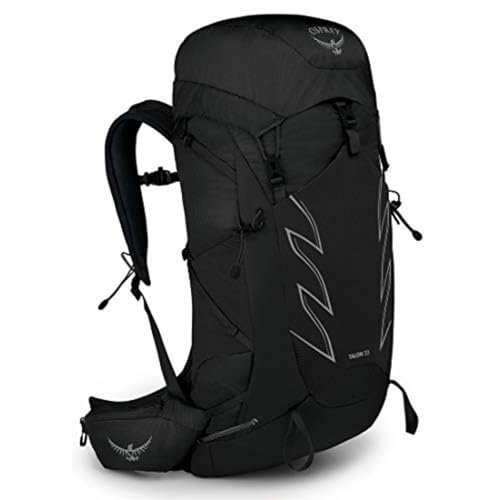
The Osprey Talon 33 is the clearest all-round pick for a supported multi-day trek. Its AirScape back panel and hip belt keep the pack stable and ventilated under a real load, not just a water bottle and jacket. CleverHiker rates the Talon line among the top daypacks it has tested, citing comfort, organisation, and durable construction. At 33 litres it carries a rain shell, insulated jacket, lunch, and water for a full day.
Best for: hikers who want one pack for every day of a hut-to-hut trek
Why it stands out: structured hip belt, AirScape ventilation, proven durability
2. Osprey Tempest 34: Best Women’s Fit
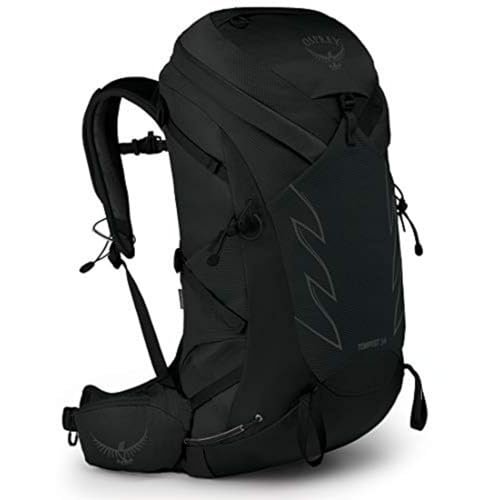
The Tempest 34 is Osprey’s women’s-specific version of the Talon platform, built on a shorter torso range with a hip belt shaped for a women’s fit rather than a scaled-down men’s harness. Switchback Travel notes the Tempest line offers enough room and organisation for casual days and technical terrain alike, with a breathable, durable suspension. At 34 litres it carries the same load as the Talon 33, in a fit that suits hikers who find unisex packs sit wrong on the hips.
Best for: hikers who want a properly fitted structured daypack, not a smaller unisex pack
Why it stands out: women’s-specific harness and hip belt on a proven platform
3. Deuter Speed Lite 32: Best Ventilated Suspension
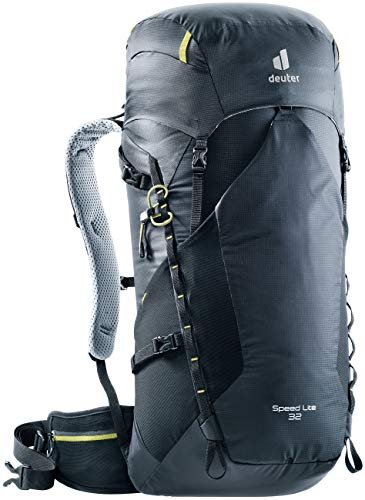
The Deuter Speed Lite 32 uses a Derlin U-frame that holds the pack body slightly off your back, trading a little load-hugging stability for a real ventilation gap on hot climbs. Deuter positions it as an ultralight, flexible pack with genuine stability under load, and Switchback Travel has long rated the Speed Lite series among its top daypack picks. The padded hip belt with pull-forward fins keeps it anchored on descents.
Best for: hikers on warm-climate routes who rate airflow over maximum load-hugging fit
Why it stands out: frame-sheet ventilation, proven Speed Lite reputation
4. Gregory Miwok 32: Best Load-Hugging Carry
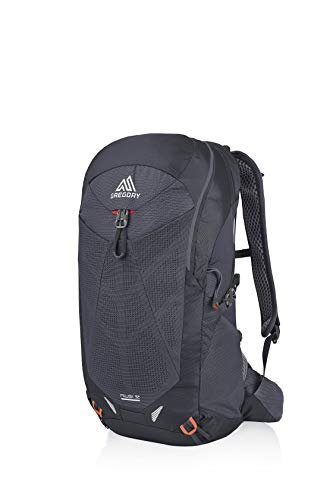
Where the Speed Lite trades stability for airflow, the Gregory Miwok 32 goes the other way. Its BioSync suspension connects the harness and hip belt to the pack body through flexible “tendons” that move with your stride, keeping the load close on technical, uneven descents. OutdoorGearLab rates the smaller Miwok 24 highly for comfort and all-season versatility, and the 32-litre version carries that same suspension at hut-to-hut capacity, in a slimmer profile.
Best for: hikers on technical terrain who want the pack to move with them
Why it stands out: BioSync suspension, slim profile, strong OutdoorGearLab track record
5. Osprey Talon 22: Best for Minimalist Luggage Transfer
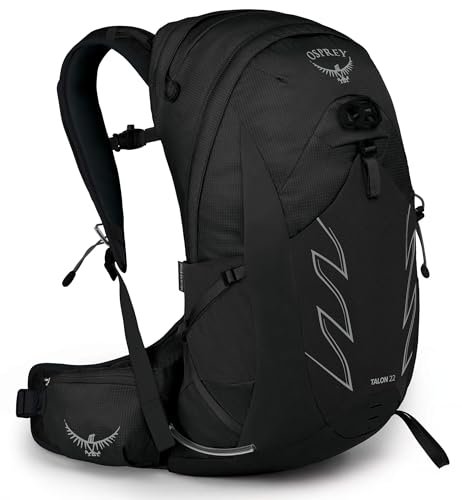
Not every hiker needs 33 litres. If you travel light and trust your luggage transfer, the Talon 22 gives you the same AirScape suspension and hip belt as the Talon 33, in a smaller build. CleverHiker calls it one of the most well-rounded daypacks available, praising its body-hugging fit, though it runs heavier than ultralight alternatives, a fair trade for the comfort it buys back. Twenty-two litres is tight for a full rain-and-insulation kit, but workable for efficient packers.
Best for: minimalist hikers who don’t want to carry spare capacity they won’t use
Why it stands out: same proven suspension as the Talon 33, lighter and more compact
How to Choose a Hut-to-Hut Daypack
Capacity. 22 litres suits minimalist packers on reliable luggage transfer. 32 to 34 litres is the safer default for a rain shell, insulated layer, and food, especially with a daily storm pattern.
Hip belt and suspension type. A structured hip belt is non-negotiable for six-plus hours a day over a week or more. AirScape and Derlin-frame designs (Osprey, Deuter) prioritise ventilation; BioSync (Gregory) prioritises close, moving contact on technical terrain.
Fit. Torso length and hip belt shape matter more on a pack carried daily. Hikers who find unisex packs sit wrong on the hips should default to a women’s-specific build like the Tempest.
Rain protection and access. Check for a built-in rain cover and side pockets you can reach without removing the pack.
Most hikers on a hut-to-hut trek are best served by the Talon 33 or Tempest 34. Go smaller with the Talon 22 only as a confirmed minimalist packer, and choose the Speed Lite or Miwok if ventilation or technical stability matters more than Osprey’s carry style.
Final Thoughts
The right hut-to-hut daypack disappears into the background of your trek: no shoulder ache by the third refuge, no forced choice between a rain shell and a warm layer, no fumbling for gear when the weather turns. Get the capacity and hip belt right and the rest of your kit falls into place.
For the full system this pack fits into, see Multi-Day Hiking Gear: What You Actually Need. Self-carrying without luggage transfer? Compare our 8 Best Multi-Day Backpacks.
Frequently Asked Questions
Do I need a hip belt on a daypack for hut-to-hut hiking?
Yes. A hip belt that genuinely transfers weight off your shoulders matters once you’re carrying a rain shell, insulated layer, food, and water for six to eight hours a day, over a week or more. A beltless daypack that feels fine for one afternoon becomes a shoulder problem by day four.
What size daypack do I need for a trek like the Tour du Mont Blanc?
Most operators and independent hikers land on 25 to 35 litres for hut-to-hut treks using luggage transfer. Minimalist packers on a reliable transfer service can get away with 22 litres.
Can I use my everyday 20-litre daypack instead of a hiking-specific one?
You can, but expect trade-offs. Most everyday daypacks lack a structured hip belt and use lighter-duty zippers not rated for repeated abrasion. It survives a short trip; a longer trek is where those gaps show.
Osprey Talon versus Deuter Speed Lite, which is better?
Both are well-regarded. The Talon and Tempest prioritise a close, stable, ventilated carry. The Speed Lite uses a frame-sheet design with a genuine air gap for hotter climbs. It depends on whether you rate airflow or stability higher.
