

Last updated: September 2026
Wild Trail Hiker is reader-supported. We may earn a commission when you buy through links on this page, at no extra cost to you. We only recommend products we’d consider taking on a multi-day trip ourselves.
Intro
A sleeping bag liner looks like the kind of thing you can skip. It’s cheap, weighs almost nothing, and it’s easy to leave off the list until the trip that changes your mind. That’s usually a hut-to-hut trek where the refuge has a house rule: bring your own liner, because they don’t wash blankets between every guest. Or it’s night five, when your bag has absorbed days of sweat and trail dust, and you’d give a lot for a layer you could pull out and wash.
On multi-day hikes, a liner earns its place for a few reasons:
- Mandatory hut rules on treks like the Tour du Mont Blanc, where a liner is often the minimum linen requirement, not optional
- Hygiene over consecutive nights, keeping body oils and dirt off a bag you can’t wash on trail
- A few extra degrees of warmth without the weight or cost of a warmer bag
- Packed size and weight that barely register, so there’s rarely a reason to leave one behind
This guide covers liners built for that job, not the padded flannel ones sold for car camping. If you’re still working out your full sleep system, start with our Multi-Day Hiking Gear: What You Actually Need. A liner is a small piece of that system, not a replacement for the bag or pad.
How We Picked
These picks focus on what matters for a liner carried over multiple nights: fabric next to skin for hours at a time, packed weight, how well it holds up to repeated washing, and whether it suits hut sleeping as well as a bag on the ground. All are from established outdoor brands building liners for backpacking and travel, not generic bedding.
Quick Picks
| Slot | Product | Why It Stands Out |
|---|---|---|
| Best Overall | Sea to Summit Premium Silk Liner, Mummy w/Hood | Hooded mummy shape, true AA-grade silk, right in the weight huts expect |
| Best Ultralight | Sea to Summit Premium Silk Liner, Rectangular | Lightest of the group, flat shape works well on hut bunks |
| Best Budget | Cocoon MummyLiner, Rip Stop Silk | Reinforced ripstop weave, lower price than the Sea to Summit line |
| Best for Hut Comfort | Sea to Summit Silk/Cotton Traveller w/Pillow Slip | Cooler, softer cotton blend, built-in pillow slip |
| Best for Added Warmth | Sea to Summit Reactor Extreme Insulated Liner | Thermolite Pro fibers add real cold-weather range |
Who This Sleeping Bag Liner Guide Is For
These liners fit:
- Hut-to-hut hikers on trails like the Tour du Mont Blanc, where a liner is often mandatory
- Multi-day hikers wanting a cleaner bag over five, seven, or more nights without on-trail washing
- Ounce counters wanting a small warmth buffer without a heavier bag
- Anyone extending a bag’s life between real washes
If you need more raw warmth, not just a clean layer and a couple of degrees, a liner won’t get you there alone. Pair it with the right bag: see our Best Synthetic Sleeping Bags or Best Insulated Sleeping Pads for Hiking.
Multi-Day Context: Why Liners Matter More on Longer Trips
A single overnight rarely tests a liner. A week or more on trail is different.
- House rules you can’t argue with. Some hut networks require a liner as a condition of booking a bed. Turning up without one on a trail like the Tour du Mont Blanc means scrambling for a rental at the desk.
- Odor and oil buildup. Body oils and sweat accumulate in a bag’s lining over consecutive nights. A liner takes that hit instead, and you can hand-wash it at a hut sink in a way you can’t a full down bag.
- Warmth range on a bag you already own. Adding a liner is a cheaper, lighter way to stretch a 3-season bag into colder shoulder-season nights than buying a second bag.
- Packed weight that’s basically free. Even the heaviest liner here adds well under 200g, a rounding error next to the rest of a multi-day kit.
The five below are picked with those pressures in mind, not just “nice to have in the cupboard.”
Best Sleeping Bag Liners for Hiking
1. Sea to Summit Premium Silk Liner, Mummy w/Hood: Best Overall
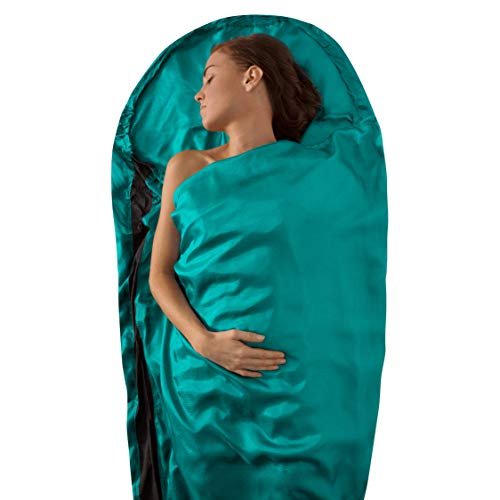
The hooded mummy cut is the clearest all-round pick for hut-to-hut trekking. Amazon lists it at 4.8oz (roughly 136g), squarely inside the 130-150g range most hut-linen rules expect. Sea to Summit builds it from AA-grade ripstop silk with stretch side panels, and independent gear roundups rate the Premium Silk line among the strongest pure-silk liners available.
Best for: hut-to-hut trekkers who want one liner covering house rules and cold nights
Why it stands out: hooded mummy shape, true AA-grade silk, weight lands where hut rules expect
2. Sea to Summit Premium Silk Liner, Rectangular: Best Ultralight
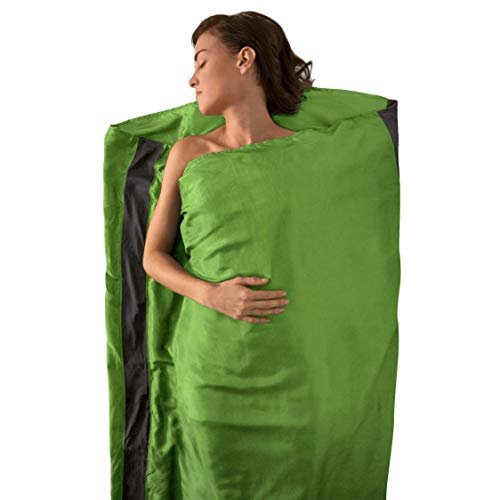
Drop the hood and taper, and the same Premium Silk fabric comes in at 4.6oz (about 130g), the lightest option here. Amazon lists the rectangular cut as suited to use inside a bag or as a stand-alone hut-bunk sheet. Less structure and no hood means it suits milder nights better than cold ones.
Best for: ounce counters mixing huts, camping, and travel beds on the same trip
Why it stands out: lightest liner here, flat shape adapts to bunk beds as well as a bag
3. Cocoon MummyLiner, Rip Stop Silk: Best Budget
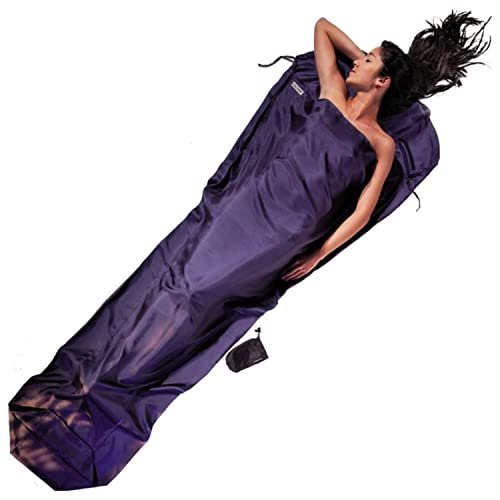
Cocoon’s Rip Stop Silk MummyLiner weighs 4.7oz (about 133g) and uses a grid-weave ripstop Cocoon positions as more tear-resistant than standard silk, at a lower price than the Sea to Summit line. REI reviewers note it holds up well to repeated washing, which matters when a liner is doing hygiene duty every night. It’s a tapered mummy fit, best paired with a mummy-shaped bag.
Best for: hikers wanting a genuine silk liner without premium-brand pricing
Why it stands out: reinforced ripstop weave, competitive weight, lower price than Sea to Summit’s silk line
4. Sea to Summit Silk/Cotton Traveller w/Pillow Slip: Best for Hut Comfort
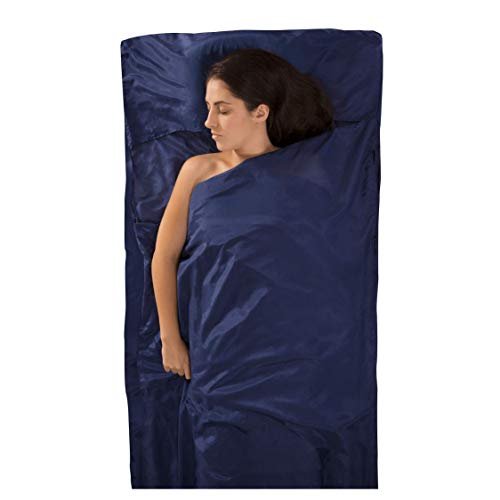
This 30 percent silk, 70 percent cotton blend is heavier at 6.3oz than the pure silk options here, but the trade is comfort. Amazon and Sea to Summit both describe the blend as cooler and softer than pure silk, and the built-in pillow slip is a genuine convenience on trips with hut pillows you’d rather avoid. Worth the extra 40 to 50g for a better night.
Best for: hut-to-hut trekkers prioritizing comfort over the last few grams
Why it stands out: softer cotton-blend feel, built-in pillow slip, still light enough not to notice
5. Sea to Summit Reactor Extreme Insulated Liner: Best for Added Warmth
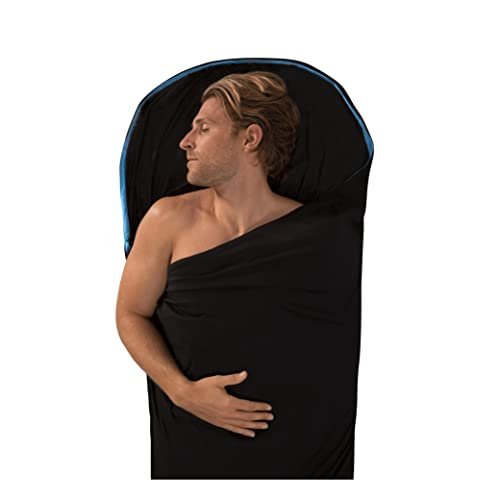
A different category to the rest of this list. It uses Thermolite Pro hollow-core fibers with infrared-reflective ceramic pigments, and Sea to Summit states it adds up to 25°F of warmth, a genuine cold-weather boost rather than a hygiene layer. It’s noticeably bulkier and heavier than the silk options above, so it’s not the cheap fix for a hut linen rule, but it earns its place when the question is “will I be warm enough.”
Best for: hikers pushing a 3-season bag into genuinely cold shoulder-season nights
Why it stands out: real, stated warmth boost, purpose-built cold-weather construction
How to Choose a Sleeping Bag Liner
Hut rules vs wild camping. Walking a trail with a mandatory liner rule, check the weight or material huts expect. Most silk liners in the 130-150g range satisfy this.
Weight vs comfort. Pure silk saves grams. Silk-cotton blends add comfort for a small weight cost, a trade-off on how many grams you’ll spend on a better sleep.
Hygiene layer vs real warmth. A silk liner is primarily a cleanliness and small-warmth layer. If the problem is being cold, an insulated liner or a warmer bag solves that more directly.
Shape match to your bag. Mummy liners pair best with mummy bags. Rectangular liners work better as standalone hut sheets, avoiding bunching.
Want hut rules and cold nights covered: the Mummy w/Hood. Grams matter most: go rectangular. Real cold on a 3-season bag: the Reactor Extreme.
Final Thoughts
A liner is one of the cheapest, lightest upgrades to a multi-day sleep system, and on hut-to-hut trails it can be the difference between a bed and an awkward conversation at check-in. Match it to the trip: silk for weight and hut rules, silk-cotton for comfort, insulated for genuine cold. See our Best Insulated Sleeping Pads for Hiking and Best Synthetic Sleeping Bags for the rest of the system, and start with Multi-Day Hiking Gear: What You Actually Need for the full picture.
Frequently Asked Questions
Do I actually need a sleeping bag liner for multi-day hiking?
Not always, but on hut-to-hut trails with a mandatory linen rule it’s often non-negotiable. Even where optional, a liner keeps body oils and dirt off your bag over consecutive nights and adds a little warmth for very little weight, one of the cheapest upgrades in a multi-day kit.
Silk or silk-cotton blend, which is better?
Pure silk is lighter and packs smaller, which matters most when you’re weighing every gram. Silk-cotton blends are heavier by 40 to 60g but feel cooler and softer in warm huts, often with a pillow slip. Neither is wrong, it depends how much you value the last few grams.
How much warmth does a sleeping bag liner actually add?
A standard silk liner adds a modest boost, often cited around a few degrees. A liner built specifically for warmth, like a Thermolite-based option, can add significantly more, with some brands stating up to 25°F. Cold-weather range calls for that, not a hygiene-focused silk liner.
Can I use a rectangular liner inside a mummy sleeping bag?
You can, but it won’t fit as cleanly, tending to bunch inside a tapered mummy bag because the shapes don’t match. If your bag is mummy-cut, a mummy-shaped liner sits better through the night.
