

Last updated: August 2026
Wild Trail Hiker is reader-supported. We may earn a commission when you buy through links on this page, at no extra cost to you. We only recommend products we’d consider taking on a multi-day trip ourselves.
A sleeping pad looks fine rolled out on the showroom floor. Firm enough, thick enough, done. The difference shows up at 2am on a cold night, when the ground underneath you has pulled every degree of warmth out of the pad and you’re lying awake doing the math on how many hours until sunrise.
That is what an R-value actually measures: how much the ground can take from you before your pad stops it. Most budget pads sold as “camping” pads do not even publish one. On a multi-day trail, that is the gap between a warm night and a long one. Failure modes worth knowing before you buy:
- No stated R-value at all. Assume it is not built for anything below mild car-camping nights.
- Cold-spot creep. Cheaper insulation shifts inside the pad overnight, leaving thin patches under your hips and shoulders.
- Slow leaks you do not find until night two. A pinhole that holds air on the lounge room floor can go flat by 3am under body weight.
- Weight that does not match the warmth. Some “insulated” pads add grams without adding real R-value, the worst trade for a multi-day pack.
The picks below are the best insulated sleeping pads for hiking multi-day trails: a genuine, manufacturer-tested R-value, built for the ground conditions you actually meet out there. For the full kit list this fits into, see our multi-day hiking gear guide.
How We Picked
These picks focus on what matters when you are carrying the pad yourself for multiple nights: a tested R-value high enough for real backcountry cold, packed weight that does not eat your pack budget, and durability that holds air on rock and scree rather than a groomed campsite. All are from established outdoor brands with published, verifiable R-values. Generic multi-packs with no stated R-value are not included, regardless of price.
Quick Picks
| Slot | Product | Why It Stands Out |
|---|---|---|
| Best Overall | Therm-a-Rest NeoAir XLite NXT | R-value 4.5 at around 340g, the benchmark 3-season backcountry pad |
| Best for Extreme Cold | Therm-a-Rest NeoAir XTherm NXT | R-value 7.3, built for winter and high-altitude nights |
| Best for Side Sleepers | Sea to Summit Ether Light XR Insulated | 10cm thick with an R-value of 4.1, the most cushioned pad on this list |
| Best for Restless Sleepers | NEMO Tensor Insulated (2022) | R-value 4.2 with a brushed top fabric built to cut the crinkle noise of older air pads |
| Best Budget | Klymit Insulated Static V | R-value 4.4 at a fraction of the price of the ultralight picks |
Who This Is For
- Multi-day and thru-hikers who have been sleeping cold on a budget or uninsulated pad and want a genuine R-value upgrade
- Hikers planning shoulder-season or alpine trips where night temperatures drop well below what a summer-only pad is rated for
- Anyone replacing a pad that has started leaking, cold-spotting, or crinkling loud enough to wake a tent partner
If you are car camping and weight is not a factor, a heavier foam or self-inflating pad will serve you better and cost less; see our sleeping pads for camping guide instead.
Multi-Day Context
Sleep quality compounds. One cold night is a rough morning. Four or five in a row on a thru-hike is a genuine risk to judgment and pace.
- Cumulative sleep debt affects decision-making. River crossings, exposed passes, and pace calls all get harder on broken sleep, and broken sleep on trail usually starts with being cold.
- Cold ground pulls heat faster than cold air. Conduction through an uninsulated pad loses heat quicker than ambient temperature alone suggests, why a pad with no real R-value can leave you cold even in a warm-rated bag.
- A slow leak has no fix at 2am. On a multi-day trip you are carrying a patch kit at best. Budget-grade materials are the ones most likely to fail when you cannot do anything about it.
- Pack weight budget is finite. An insulated pad that does its job at 340 to 450g frees up weight for the rest of your sleep system.
1. Therm-a-Rest NeoAir XLite NXT: Best Overall
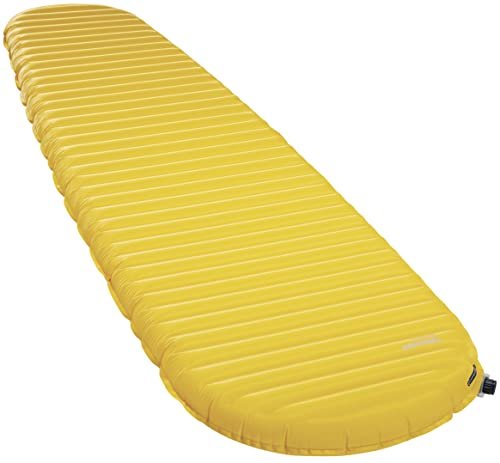
The NeoAir XLite NXT is the pad most experienced multi-day hikers land on by default. Therm-a-Rest’s ThermaCapture reflective layer and Triangular Core Matrix baffling give it a 4.5 R-value at roughly 340g in the regular size, a genuine three-season number without pushing into XTherm-level weight or price. Reviewers consistently rate it the most balanced ultralight pad on the market: warm enough for real backcountry cold, light enough to disappear in a multi-day pack.
Best for: three-season multi-day and thru-hiking where pack weight matters as much as warmth.
Why it stands out: the R-value-to-weight ratio the rest of this category is measured against.
2. Therm-a-Rest NeoAir XTherm NXT: Best for Extreme Cold
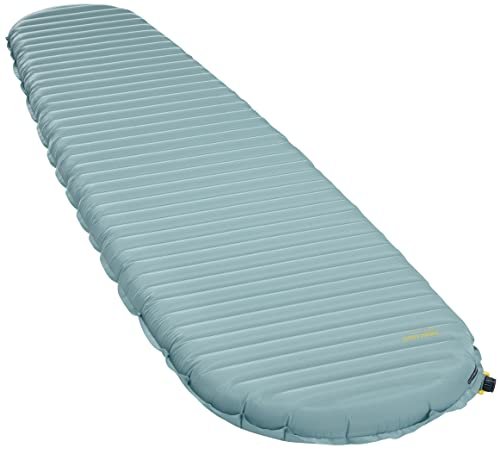
Same platform as the XLite, built for a different problem. The XTherm NXT carries a 7.3 R-value, high enough for genuine winter and high-altitude conditions where the XLite starts to fall short. It is the pad named as the practical benchmark in our Overland Track and Teton Crest Trail gear guides for exactly this reason: on routes with sustained above-treeline nights, a 4.5 R-value pad is a gamble the 7.3 pad is not.
The trade-off is weight and price. At roughly 440g it is heavier than the XLite, and the most expensive pad on this list. Reserve it for trips where the forecast or elevation profile genuinely calls for it.
Best for: winter backpacking, high-altitude passes, and any trail with sustained near- or below-freezing nights.
Why it stands out: a 7.3 R-value most competitors do not approach without doubling the weight.
3. Sea to Summit Ether Light XR Insulated: Best for Side Sleepers
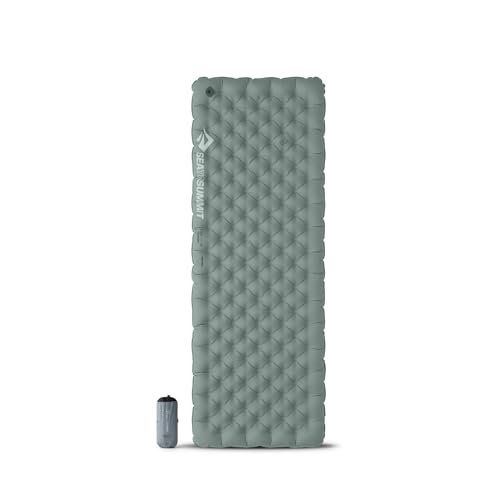
At 10cm (about 4 inches) thick, the Ether Light XR is noticeably more cushioned than the Therm-a-Rest pads on this list, which matters if you sleep on your side and feel hips and shoulders bottom out on a thinner pad. Its 4.1 R-value sits solidly in three-season territory, and Sea to Summit’s Airstream pump-sack inflation system is a genuine convenience upgrade after a long day, no more lightheaded huffing into a valve at altitude.
It is the heaviest of the true backcountry picks here and priced at a premium to match, but for hikers who have found an ultralight pad too thin to actually sleep on, the extra thickness is the difference between a pad that fits the spec sheet and one that lets you sleep.
Best for: side sleepers and anyone who has found 6 to 7cm pads too thin for real comfort.
Why it stands out: the thickest pad on this list without dropping below a genuine 4+ R-value.
4. NEMO Tensor Insulated (2022): Best for Restless Sleepers
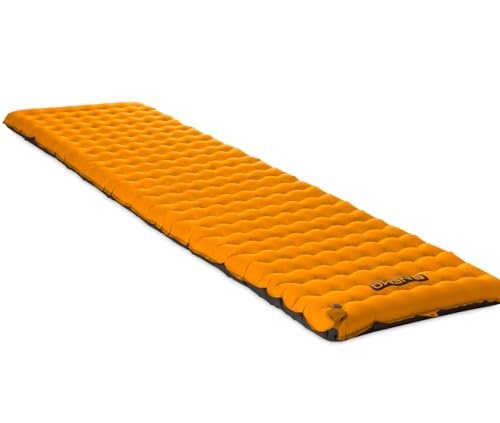
Air pads have a reputation for a crinkly, tarp-like noise every time you move, loud enough to wake a tent partner. NEMO built the 2022 Tensor around cutting that noise, with a brushed top fabric noticeably quieter than older-generation air pads while still holding a 4.2 R-value (up from 3.5) at a competitive weight. If you or your tent partner are light sleepers, the noise reduction alone can be worth the switch.
Best for: hikers sharing a tent, or anyone who wakes at every shift on a standard air pad.
Why it stands out: the quietest fabric among the ultralight insulated pads in this guide.
5. Klymit Insulated Static V: Best Budget
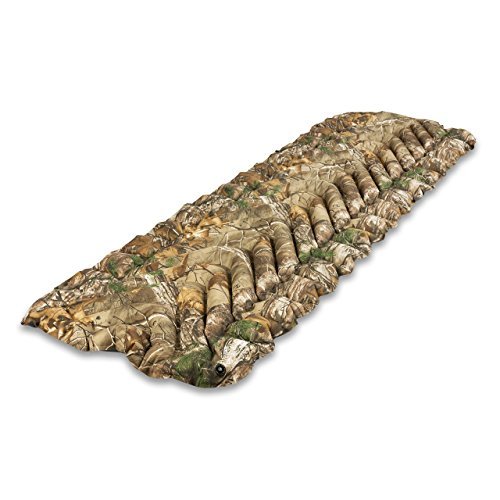
The Static V is the pad to buy if you want a genuine tested R-value without paying ultralight prices. At 4.4, it actually out-scores the pricier NEMO Tensor and sits close to the benchmark XLite NXT, in a body-mapped V-chamber design that has held up well across years on the market. It is heavier and bulkier than the ultralight picks above, but for a first genuine insulated pad or a backup for a second hiker, it is the clearest value pick here.
Best for: hikers who want a real R-value without an ultralight price tag, or a reliable second pad for the group.
Why it stands out: the best R-value-to-price ratio of any pad in this guide.
How to Choose
Match the R-value to your coldest planned night, not your average one. A single shoulder-season cold pass can undo an otherwise-warm sleeping bag if the pad underneath is rated too low.
Weigh thickness against pack weight honestly. More cushioning (like the Ether Light XR’s 10cm) means more comfort for side sleepers, but more grams and pack volume too. If weight is tight, a thinner pad with the same R-value is usually the better trade.
Consider your tent partner, not just yourself. A loud pad affects two people’s sleep. If you are sharing a tent regularly, fabric noise is worth factoring in alongside R-value and weight.
Do not buy more R-value than you need. The XTherm NXT’s 7.3 is wasted weight and cost on a summer trail where the XLite’s 4.5 is already more than enough.
If you are chasing the lightest possible three-season setup: the NeoAir XLite NXT. If winter or high-altitude cold is genuinely on the itinerary: the NeoAir XTherm NXT. If you want a real R-value without the ultralight price: the Klymit Insulated Static V.
Final Thoughts
The best insulated sleeping pads for hiking are not just about comfort, a cold night on a multi-day trail compounds into worse decisions the next day. The five pads above all carry a genuine, manufacturer-tested R-value matched to real backcountry conditions, not a car-camping spec sheet. For the rest of your sleep system, see our multi-day hiking gear guide, and if you are also due for a bag upgrade, our best synthetic sleeping bags guide pairs naturally with any of these pads.
Frequently Asked Questions
What R-value do I need for multi-day hiking?
For three-season trips with occasional near-freezing nights, an R-value of 4 to 4.5 is a safe baseline. For winter or sustained below-freezing conditions, look for 6 or higher. Match the rating to your coldest planned night, not the average forecast.
Can I stack two sleeping pads for more warmth?
Yes. R-values are additive, so a closed-cell foam pad (typically R 1.5 to 2) under an inflatable pad boosts warmth on genuinely cold trips without buying a dedicated winter pad. It adds weight and bulk, so it is a shoulder-season or winter setup rather than a default.
Are insulated pads worth the extra weight over a summer pad?
For most multi-day hikers, yes. The weight difference is often under 100g, and the sleep-quality gain on a cold night is significant. The exception is hikers doing exclusively warm-weather, low-altitude trips where ground temperature never drops.
How long do insulated sleeping pads last?
A well-cared-for pad from an established brand typically lasts several years of regular use. Punctures are the main failure point, most come with a repair kit, and storing the pad slightly inflated between trips extends seam life.
