

Last updated: September 2026
Wild Trail Hiker is reader-supported. We may earn a commission when you buy through links on this page, at no extra cost to you. We only recommend products we’d consider taking on a multi-day trip ourselves.
A trail running shoe feels great in the store: light, flexible, grippy underfoot. The difference shows up on day three of a fastpacking trip, when cushioning that felt springy on a five-mile run has packed flat under a loaded pack, and a toe box that fit fine on a fresh foot is crushing your toenails on every downhill step.
Over several consecutive days, trail running shoes have to handle:
- Midsole cushioning that compresses faster under a loaded pack than on an unloaded run
- A standard toe box crowding feet that swell on long descents, a common cause of black toenails
- Wet crossings and rain that leave mesh uppers soaked all day, since these shoes drain rather than seal
- Tread wear that shows up fast under daily back-to-back use, in a way a weekend runner never notices
This guide is for hikers using trail running shoes instead of boots on multi-day trips, not a one-off race pick. Still deciding whether trail runners belong in your kit? Start with our Multi-Day Hiking Gear guide.
How We Picked
These picks focus on what matters over consecutive days on trail: cushioning under a loaded pack, room for swelling feet, traction across wet rock and mud, and an upper that drains and dries fast. All five are current models from established trail running brands, cross-referenced against the outdoor industry’s own gear-review authorities. Road-focused shoes wearing a trail label are not included.
Quick Picks
| Slot | Product | Why It Stands Out |
|---|---|---|
| Best Overall | Saucony Peregrine 16 | The most consistent Best Overall pick across gear-review authorities, balanced cushioning and grip |
| Best for Wide Feet & Swelling | Altra Lone Peak 9 | Roomy foot-shaped toe box and zero-drop platform, built for feet that change size over a trip |
| Best Value | Hoka Torrent 4 | Max-cushion comfort at a lower price, a genuine multi-day option |
| Best Traction for Mud & Wet Terrain | Salomon Speedcross 6 | Aggressive lugged outsole built for soft, wet, slippery ground |
| Most Durable for Rocky, Technical Terrain | La Sportiva Bushido III | Rock-plate protection for trails that chew through lighter shoes |
Who This Guide Is For
These trail running shoes are best for:
- Multi-day hikers and fastpackers with a light pack (roughly under 25 to 30 lb) who want speed over ankle support
- Hikers who already trust trail runners on day hikes and want a pair that holds up over back-to-back days
- Thru-hikers who replace shoes every few hundred miles rather than resole a boot
- Anyone prioritising quick-drying comfort over the stiffness of a traditional boot
Carrying a heavier pack, or need genuine ankle support on technical terrain? See our 8 Best Hiking Boots instead.
Multi-Day Context: Why Trail Running Shoes Behave Differently on a Long Trip
A trail running shoe rated great for a single race can still let you down on a five-day hike.
Over several consecutive days you face:
- Cushioning compression. Foam that feels responsive unloaded compresses under sustained pack weight. Too little cushioning to start with goes flat fast, and fatigue follows.
- Swelling feet. Feet expand on long days, especially on sustained descents. A snug toe box can crush toes by day two, the most common cause of lost toenails.
- Wet-to-dry cycles. Creek crossings and rain are routine on multi-day routes. A shoe that drains and dries overnight keeps you moving; one that holds water means soaked feet all day.
- Accelerated wear. Consecutive days of loaded mileage wear an outsole and upper far faster than scattered weekend runs.
These five picks are chosen with that repeated-day use in mind, not a single dry test run.
The Safest Bet
If you want one recommendation and do not want to overthink it, the Saucony Peregrine 16 is the safest bet.
It is the pick nearly every major gear-review authority lands on for Best Overall: a balance of cushioning, grip, and secure fit that suits most trail conditions rather than one specific failure mode. For a single shoe that performs well across mixed multi-day terrain without a specialist trade-off, it is the easiest call here.
Best Trail Running Shoes for Multi-Day Hiking
1. Saucony Peregrine 16: Best Overall
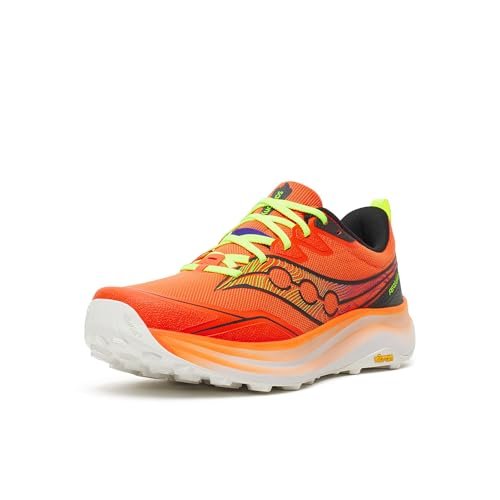
The Peregrine line is one of the most consistently recommended trail running shoes across gear-review authorities. The 16th generation keeps that reputation with a rock plate underfoot and Saucony’s PWRRUN cushioning, tuned for a firmer, stable ride. Amazon lists a lugged outsole rated for mixed wet and dry terrain, which matters more on a multi-day route than a dry-weather race.
Best for: hikers who want one dependable trail running shoe across mixed terrain
Why it stands out: balanced cushioning and grip, widely rated Best Overall, protective rock plate
2. Altra Lone Peak 9: Best for Wide Feet & Swelling
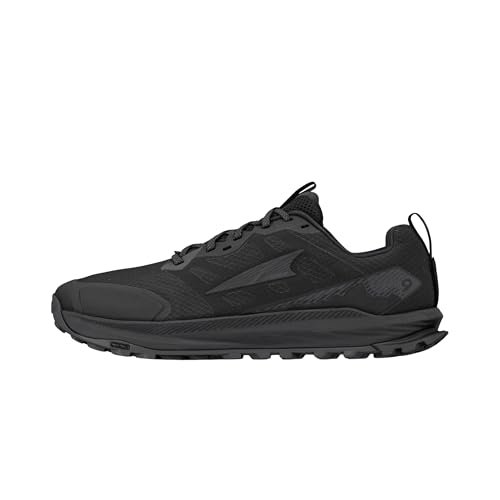
The Lone Peak line has built a loyal thru-hiking following: a foot-shaped toe box with real room to splay, paired with Altra’s zero-drop platform. That room matters most when feet swell on long descents and a narrow toe box turns into blisters and bruised toenails. Amazon lists this generation with an updated outsole, addressing a known weak point of the line.
Best for: hikers with wide feet, or anyone doing back-to-back long days where feet swell
Why it stands out: roomiest toe box here, zero-drop platform, a genuine thru-hiking staple
3. Hoka Torrent 4: Best Value
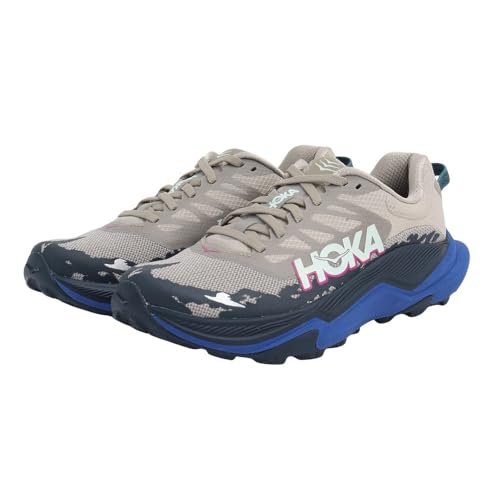
The Torrent 4 brings Hoka’s signature max-cushion ride to a lower price point without cutting features that matter. Amazon lists a full-length EVA midsole and a Vibram Megagrip outsole, the same compound used on Hoka’s premium models. A genuine multi-day option, not a budget shoe you settle for.
Best for: hikers who want real cushioning and grip without paying premium prices
Why it stands out: Vibram Megagrip traction at a value price, plush cushioning for long days
4. Salomon Speedcross 6: Best Traction for Mud & Wet Terrain
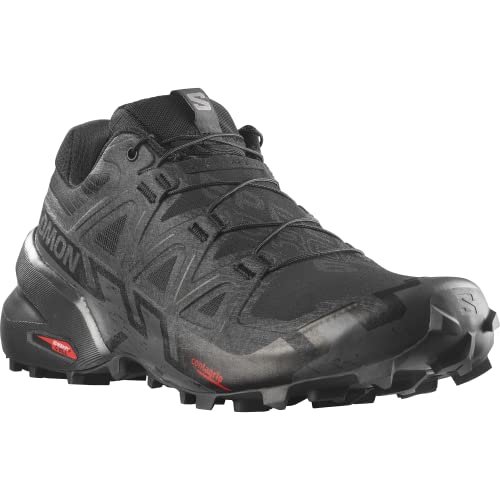
The Speedcross line is built around one job: traction in soft, wet, and slippery conditions where other trail runners slide. Amazon lists deep, multi-directional Contagrip lugs for biting into mud, plus Salomon’s Quicklace system for fast adjustment. On a route through wet forest, river crossings, or persistent rain, this is the shoe built for that failure mode.
Best for: wet, muddy, or consistently soft-ground trails
Why it stands out: the deepest, most aggressive lug pattern in this list, fast one-pull lacing
5. La Sportiva Bushido III: Most Durable for Rocky, Technical Terrain
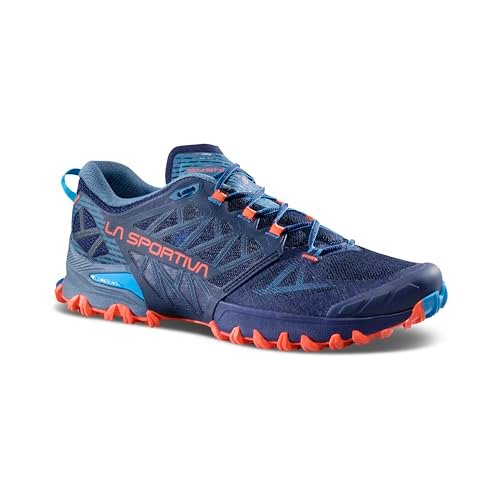
The Bushido III is positioned by gear-review authorities as one of the most durable, technical trail runners on the market, built for rocky, root-covered descents rather than groomed trail. Amazon lists a rock guard and a tougher upper than the other shoes here, at some cost to weight. Where sharp rock and loose scree are the real risk, that protection is worth carrying.
Best for: rocky, technical, or scree-heavy multi-day terrain
Why it stands out: genuine rock-plate protection, the most durable upper in this list
How to Choose Trail Running Shoes for Multi-Day Hiking
The right shoe depends on your pack weight, your feet, and your terrain, not the shoe that looks fastest in the shop.
Pack weight and cushioning. A light fastpacking setup can run a firmer shoe like the Saucony Peregrine 16. A heavier pack benefits from the Hoka Torrent 4 or La Sportiva Bushido III‘s added cushioning and protection.
Toe box room. If your feet swell on long days, or you have had black toenails before, the Altra Lone Peak 9‘s roomier toe box is the clear pick.
Terrain matching. Wet or muddy trail calls for the Salomon Speedcross 6‘s aggressive lugs. Rocky, technical terrain calls for the La Sportiva Bushido III‘s rock plate. A mixed, moderate trail suits the Saucony Peregrine 16 or Hoka Torrent 4.
Budget. The Hoka Torrent 4 delivers genuine multi-day performance without the premium price tag of the other four.
No specific problem to solve: start with the Saucony Peregrine 16. Wide or swelling feet: the Altra Lone Peak 9. Wet or muddy trail: the Salomon Speedcross 6.
Final Thoughts
The best trail running shoe for a multi-day trip is the one still comfortable and gripping on day four, not the one that felt fastest on a shakeout run.
Check current prices on Amazon, and match your choice to pack weight and terrain rather than looks. See our wider Multi-Day Hiking Gear guide, and pair your pick with our 8 Best Hiking Socks and 8 Best Breathable Hiking Shoes guides if you are still weighing trail runners against a lower shoe.
Frequently Asked Questions
Are trail running shoes actually good for multi-day hiking?
Yes, for hikers with a light to moderate pack on established trail. They are lighter and more breathable than boots, and the models here hold up over consecutive loaded days. Carrying a heavy pack, or crossing terrain that demands ankle support? A boot is still the safer call.
Should I size up trail running shoes for multi-day hikes?
Many multi-day hikers go up half a size from their normal running fit, since feet swell on long days and downhill sections push toes forward. A roomier toe box, like the Altra Lone Peak 9, is built around exactly this problem.
How long do trail running shoes last on a long hike?
Expect meaningfully less life than road running shoes under normal use. Most trail runners here last a few hundred miles of loaded, technical use before cushioning and traction degrade, so thru-hikers typically plan on replacing them partway through a long trail.
Do I need a waterproof trail running shoe?
Not usually. A waterproof membrane keeps water out on the way in, but also traps it once a shoe floods on a creek crossing, meaning a full wet day. Most multi-day hikers do better with a non-waterproof shoe that drains and dries fast, like the picks above.
