

Last updated: June 2026
Wild Trail Hiker is reader-supported. We may earn a commission when you buy through links on this page, at no extra cost to you. We only recommend products we’d consider taking on a multi-day trip ourselves.
A moisture-wicking shirt can look fine when you first pull it on. Light. Soft. Breathable enough while you are standing in the car park. The real test comes later, halfway up a hot climb with a loaded pack, sweat running down your back, shoulder straps pressing the fabric into your skin, and another two days still to walk.
On a multi-day hike, a shirt is not just a comfort layer. It is part of your temperature system, sun system, sleep system, and stink-management system. If it fails, you notice it every hour.
The best moisture-wicking shirts for hiking solve for these common failure points:
- A shirt that soaks through on climbs and chills you when you stop
- Shoulder seams or collars that rub under pack straps
- Fabric that smells bad enough by day two that you stop wanting to wear it
- Poor sun coverage on exposed ridgelines, beaches, desert tracks, and alpine approaches
This guide is for hikers who want a practical shirt for overnight and multi-day trips, not gym wear with hiking language pasted onto the listing. For the broader clothing and layering system, start with Multi-Day Hiking Gear: What You Actually Need.
How We Picked the Best Moisture-Wicking Shirts for Hiking
These picks focus on what matters once a shirt is worn under a pack for more than one day: drying speed, sun coverage, shoulder comfort, ventilation, price, and repeat-wear practicality. The strongest options here are synthetic shirts with UPF-rated fabric, simple construction, and enough airflow to work in warm weather. Heavy cotton tees, fashion-first activewear, and shirts built mainly for indoor training are not included.
Quick Picks
| Slot | Product | Why It Stands Out |
|---|---|---|
| Best Overall | Columbia Silver Ridge Utility Lite Short Sleeve Shirt | Best all-round hiking cut, with better airflow than a clingy tee |
| Best Sun Hoodie | WILLIT Men’s UPF 50+ Sun Protection Hoodie Shirt | Maximum coverage for hot, exposed, high-UV tracks |
| Best Budget Long Sleeve | BALEAF Men’s UPF 50+ Long Sleeve Shirt | Low-cost full-arm coverage with a simple pack-friendly design |
| Best Button-Up Long Sleeve | 33,000ft Men’s UPF 50+ Hiking Shirt | Adjustable ventilation, collar coverage, and trail-to-town usefulness |
| Best Short Sleeve Value Pick | MAGCOMSEN Men’s Short Sleeve Quick Dry UPF 50+ Shirt | Cheap synthetic tee for warm trips where simplicity matters |
Who This Is For
This guide is for you if:
- You are planning overnight or multi-day hikes where one hiking shirt may need to work for several days.
- You carry a loaded pack and care about shoulder, upper-back, sternum-strap, and waist-belt comfort.
- You hike in warm, humid, exposed, or mixed conditions where drying speed matters.
- You want Amazon-available picks, including budget options, rather than hard-to-source niche apparel.
- You are choosing a trail shirt, not a clean camp layer.
If you are still building the full clothing system, start with Multi-Day Hiking Gear: What You Actually Need before buying single pieces in isolation.
Why Moisture-Wicking Shirts Matter More on Multi-Day Hikes
A hiking shirt behaves differently on day three than it does on a one-hour walk.
- Sweat becomes a temperature problem: A damp shirt may feel fine while climbing, then turn cold fast when you stop for lunch or reach camp in wind.
- Pack pressure magnifies small problems: Shoulder seams, chest logos, collars, and pocket edges can all become rub points once a pack is loaded.
- Drying time affects your spare layers: If your shirt stays wet overnight, your fleece, rain shell, or sleep layer has to compensate.
- Odor becomes practical, not cosmetic: On a multi-day hike, stink affects whether you can wear the shirt again, sleep near it, or keep it in the tent.
- Sun exposure compounds: One exposed day is annoying. Three exposed days without arm, neck, or hood coverage can leave you cooked.
The best shirt is not always the lightest or softest. It is the one that manages heat, sweat, sun, pack friction, and repeat wear without becoming the thing you complain about every afternoon.
The Safest Bet
The Columbia Silver Ridge Utility Lite Short Sleeve Shirt is the safest all-round pick for most hikers. It is a proper hiking shirt rather than a gym tee, with a button-up cut that gives you more airflow control, better trail-to-town use, and less cling when your back is wet. It is not the cheapest option, but it is the one most likely to work across warm trails, travel days, campsites, and resupply towns.
1. Columbia Silver Ridge Utility Lite Short Sleeve Shirt: Best Overall
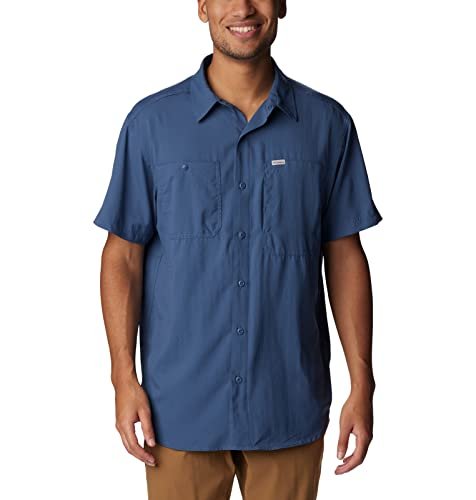
The Columbia Silver Ridge Utility Lite is the most trail-specific shirt in this list. The value is not just moisture wicking. It is the cut. A button-up shirt gives better airflow than a close synthetic tee, sits more naturally in town or at camp, and lets you vent without changing layers. Columbia positions the Silver Ridge line around warm-weather hiking, with Omni-Wick moisture management and Omni-Shade sun protection on current versions. For a multi-day hiker, that combination makes sense: sweat management on climbs, sun coverage through the torso and shoulders, and a less clingy feel when your pack comes off.
Best for: Hikers who want one shirt for trail, camp, travel, and resupply stops
Why it stands out: Outdoor cut, good ventilation, more versatile than a basic tee
Price feel: Mid-range compared with the budget synthetic shirts here
Trade-off: Short sleeves mean your arms still need sunscreen, sun sleeves, or a different layer on exposed tracks
2. WILLIT Men’s UPF 50+ Sun Protection Hoodie Shirt: Best Sun Hoodie
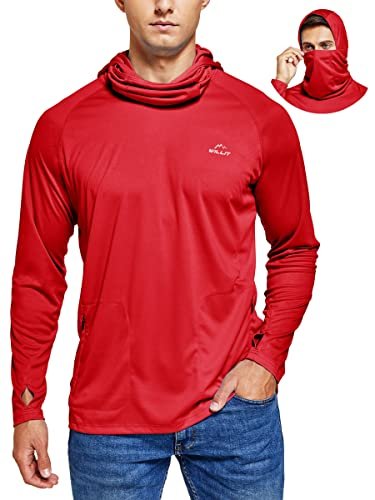
The WILLIT UPF 50+ hoodie is the best pick here when sun exposure is the main problem. A hooded shirt solves a real trail annoyance: keeping sun off your neck and ears without constantly adjusting a buff, cap, or collar. That matters on alpine ridges, desert trails, coastal tracks, open farmland approaches, and long days above the tree line. The trade-off is warmth. A hoodie can feel hotter than a short sleeve button-up when humidity rises or the track is shaded. But for exposed multi-day routes, the extra coverage is often worth it.
Best for: Exposed tracks, hot sun, and hikers who burn easily
Why it stands out: Hood coverage, UPF 50+ rating, simple layering under a shell
Price feel: Budget to lower mid-range, depending on size and colour
Trade-off: Less airflow than a loose button-up when the track is humid or sheltered
3. BALEAF Men’s UPF 50+ Long Sleeve Shirt: Best Budget Long Sleeve
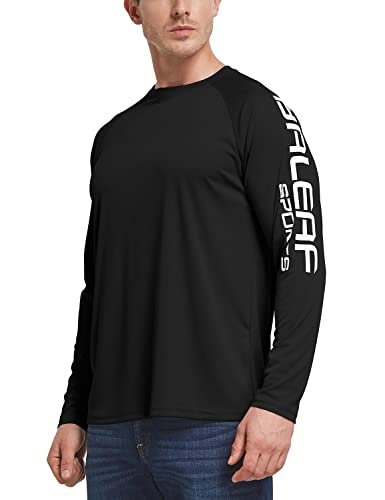
The BALEAF long sleeve is the practical budget answer if you want arm coverage without paying outdoor-brand prices. The brand lists this style around UPF 50+ protection, polyester fabric, quick drying, moisture wicking, flatlock seams, and a tagless collar on comparable versions. Those details matter more than the logo. Flat seams and no scratchy tag are useful under a pack. Long sleeves reduce sunscreen admin. Polyester dries faster than cotton after sweat, creek rinses, or a humid night in the tent. It is not a premium hiking shirt, but it is a sensible low-cost trail layer.
Best for: Budget-conscious hikers who want full-arm sun coverage
Why it stands out: Affordable, light, easy to rotate across trips
Price feel: Usually one of the cheapest long sleeve options in this guide
Trade-off: More basic fit and finish than Columbia or premium sun shirts
4. 33,000ft Men’s UPF 50+ Hiking Shirt: Best Button-Up Long Sleeve
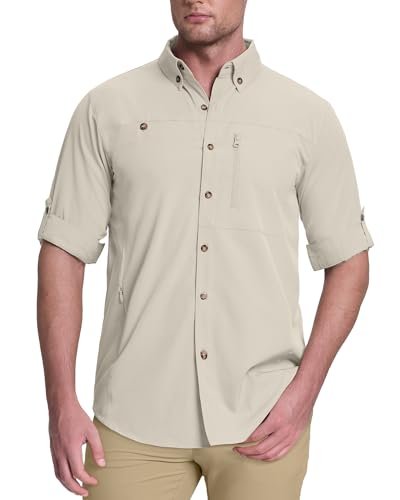
The 33,000ft long sleeve shirt is for hikers who like a collared button-up but want more coverage than the Columbia short sleeve. This style is usually listed as UPF 50+, quick dry, lightweight, and suitable for hiking, fishing, safari, and travel. The hiking value is adjustability. You can open the front for airflow, roll sleeves when climbing, button up when insects arrive, and use the collar for neck shade. For multi-day trips with town stops or travel either side, it also looks less like gym kit than most synthetic tees.
Best for: Hot-weather hikers who prefer a collared long sleeve
Why it stands out: Adjustable ventilation, collar coverage, trail-to-town practicality
Price feel: Lower mid-range, usually below premium outdoor button-ups
Trade-off: More buttons, pockets, and fabric than a minimalist tee, so check comfort under your specific pack
5. MAGCOMSEN Men’s Short Sleeve Quick Dry UPF 50+ Shirt: Best Short Sleeve Value Pick
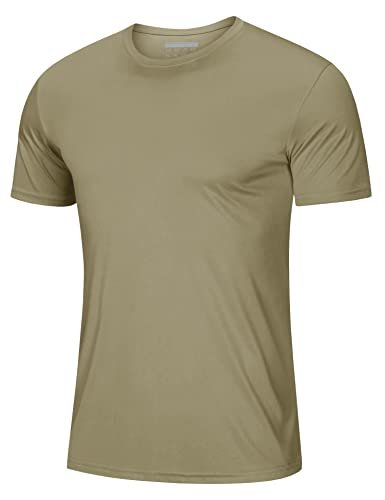
The MAGCOMSEN quick-dry tee is the simple value pick. It is the shirt to consider when you want a cheap synthetic short sleeve for warm tracks, training hikes, hostel-to-trail travel, or as a spare hiking top. The appeal is not technical depth. It is price and simplicity. A basic synthetic tee can dry faster than cotton, sit easily under a pack, and give you a usable rotation piece without spending much. The catch is coverage. For exposed multi-day trips, a short sleeve tee leaves too much sun management to sunscreen.
Best for: Warm-weather hikers who want a low-cost synthetic tee
Why it stands out: Simple design, quick-dry positioning, strong value
Price feel: Budget
Trade-off: Less sun coverage and less trail-specific structure than the other picks
How to Choose a Moisture-Wicking Shirt for Hiking
Start with sleeve length
Short sleeves feel cooler and less restrictive, but they leave your arms exposed. Long sleeves and hoodies give better sun coverage, especially above the tree line, on coastal tracks, in deserts, and on long open approaches. For multi-day hiking, sun coverage often beats the small comfort gain of bare arms.
Think about pack contact points
Your shirt does not just sit on your body. It sits under shoulder straps, a sternum strap, and often a hip belt. Avoid bulky shoulder seams, raised logos, scratchy tags, thick pockets, and stiff collars that sit directly under load. If you can, wear the shirt with your pack before committing it to a long trip.
Prioritise drying speed over showroom softness
Cotton feels good at home but holds moisture on trail. Synthetic shirts usually dry faster and handle repeated wear better. Merino can manage odor well, but it is usually more expensive and can dry slower than thin polyester. For this guide, the focus is on accessible synthetic shirts that can be bought easily and used hard.
Treat UPF as part of your sun system
UPF 50 fabric blocks about 98% of UV radiation, but the shirt still has to cover the right skin. A UPF short sleeve does not protect your forearms. A hooded shirt does not protect your hands. For exposed multi-day hikes, pair the shirt with sunscreen, sunglasses, a hat, and a plan for your hands and neck.
Match the shirt to the trip, not the product photo
For humid forest tracks, airflow matters. For exposed alpine or desert routes, coverage matters. For travel-heavy trips, a button-up may be easier to live in. For budget weekend overnighters, a simple synthetic tee may be enough.
Simple decision guide:
- Choose the Columbia Silver Ridge Utility Lite if you want one all-round hiking shirt.
- Choose the WILLIT Sun Hoodie if sun protection is the priority.
- Choose the BALEAF Long Sleeve if you want budget full-arm coverage.
- Choose the 33,000ft Button-Up if you like adjustable ventilation and a collar.
- Choose the MAGCOMSEN Short Sleeve if you want a cheap synthetic tee for warm trips.
Final Thoughts
A moisture-wicking hiking shirt is not the most exciting thing in your pack. That is exactly why it is easy to get wrong. On a multi-day hike, the right shirt helps you stay cooler while moving, drier when you stop, less rubbed under load, and less cooked by the sun.
For the full clothing and gear system, see Multi-Day Hiking Gear: What You Actually Need. Related guides: Best Base Layers for Hiking and Best Waterproof Jackets for Multi-Day Hiking.
Frequently Asked Questions
Are moisture-wicking shirts better than cotton for hiking?
Yes, for most multi-day hikes. Cotton can feel comfortable at first, but it holds moisture and dries slowly. A wet cotton shirt can chill you when you stop moving or arrive at camp in wind. Synthetic moisture-wicking shirts usually dry faster, manage sweat better, and are easier to reuse across several days.
Should I choose a short sleeve or long sleeve hiking shirt?
Choose short sleeves for hot, shaded, low-exposure trails where airflow matters most. Choose long sleeves for exposed ridgelines, alpine tracks, desert hiking, coastal trails, or long days in strong sun. For multi-day hiking, many people prefer long sleeves because sun protection becomes more important as fatigue builds.
Is a sun hoodie better than a hiking shirt?
A sun hoodie is better when the route is exposed and shade is limited. The hood protects your neck and ears without relying only on sunscreen. A button-up hiking shirt is usually better in humid conditions because it vents more easily. For hot open routes, choose the hoodie. For mixed trail and travel use, choose a button-up.
Do moisture-wicking hiking shirts stop odor?
Not completely. Synthetic shirts can still smell after repeated wear, especially in warm weather. Some fabrics and treatments manage odor better than others, but no hiking shirt stays fresh forever. For multi-day trips, drying speed, pack comfort, and whether you can air the shirt at camp matter more than expecting it to smell clean every day.
Can I wear the same hiking shirt for several days?
Yes, if it dries quickly and stays comfortable under your pack. Many multi-day hikers rotate one hiking shirt and one dry camp or sleep layer. Air the hiking shirt whenever possible, avoid cotton, and do not sleep in the damp layer unless conditions force you to.
