

Wild Trail Hiker is reader-supported. We may earn a commission when you buy through links on this page, at no extra cost to you. We only recommend products we’d consider taking on a multi-day trip ourselves.
A GPS handheld looks simple enough in the shop. Screen on, waypoint marked, done. The real test comes on day three, deep in a valley with no phone signal, the battery indicator dropping fast, and the last trail marker an hour behind you.
Multi-day hikers ask more of a GPS device than a day walker ever will:
- Battery life that survives several days without a wall outlet.
- Signal reliability that holds up under tree cover, in canyons, or in bad weather.
- A way to call for help when you are well outside phone range.
- Rugged housing that keeps working after drops, rain, and cold, clumsy hands.
This guide covers five hiking GPS devices for the best hiking GPS devices for multi-day trips, not a two-hour loop near the car park. For the rest of your kit, see our guide to Multi-Day Hiking Gear: What You Actually Need.
How We Picked
These five devices are chosen for what actually matters on a multi-day trail: battery life across several days, signal reliability away from cell coverage, rugged build quality, and two-way satellite communication where the trip calls for it. All are current Garmin models, confirmed in stock and shipping, the brand with the deepest track record in backcountry navigation. Devices without proven multi-day battery performance did not make the list.
Quick Picks
| Slot | Product | Why It Stands Out |
|---|---|---|
| Best Overall | Garmin eTrex 32x | Balanced GPS accuracy, battery life, and price for most multi-day trips. |
| Best Premium / All-in-One | Garmin GPSMAP 66i | Full topo mapping plus inReach satellite SOS in one device. |
| Best for Emergency SOS | Garmin inReach Mini 2 | Ultralight two-way satellite messaging with no mapping bulk. |
| Best GPS Watch | Garmin Instinct 2 Solar | Hands-free tracking with solar-assisted battery life. |
| Best Budget | Garmin eTrex 10 | Reliable basic navigation at the lowest price point. |
Who This Is For
This guide is for hikers who:
- Spend multiple days on trail, away from marked day-walk routes.
- Hike in areas with unreliable or no cell signal.
- Want a dedicated device rather than relying on a phone with a battery pack.
- Are weighing up a handheld GPS against a satellite communicator, or want both in one unit.
If you are planning something like the Larapinta Trail, the Overland Track Tasmania, the above-treeline Presidential Traverse, or Iceland’s fog-prone Laugavegur Trail, this is exactly the guide to read before you go.
If you mostly hike well-marked day trails close to town with full phone coverage, a phone navigation app may be all you need. For the rest of your setup, start with Multi-Day Hiking Gear: What You Actually Need.
Multi-Day Context
A GPS device that works fine on a weekend trip can fall apart by day four of a longer one. Multi-day conditions expose weaknesses fast:
- Battery drain compounds: a device that lasts two days on a charge does not simply need “half the battery” on a four-day trip. Cold nights and constant tracking eat into the margin you are counting on.
- Signal gaps get more dangerous over time: losing GPS lock for twenty minutes on a day hike is an inconvenience. Losing it in a canyon on day three, tired and slower to decide, is when people actually get lost.
- Weather exposure is cumulative: a device that survives one afternoon shower is not the same as one that has sat in a pack through four days of rain and temperature swings.
- Rescue matters more the further you go: the farther you are from a trailhead, the longer help takes to arrive if something goes wrong. That is where a satellite communicator earns its keep.
Buy for the trip you are actually planning, not the trailhead car park.
The Safest Bet
If you want one device and do not want to think about it twice, the Garmin GPSMAP 66i is the safest pick. It pairs full topographic mapping with two-way satellite messaging and SOS in a single unit, so you are not choosing between navigation and a way to call for help. It costs more than a standalone handheld, but for serious multi-day trips it removes the biggest gap in most hikers’ kit.
1. Garmin eTrex 32x: Best Overall
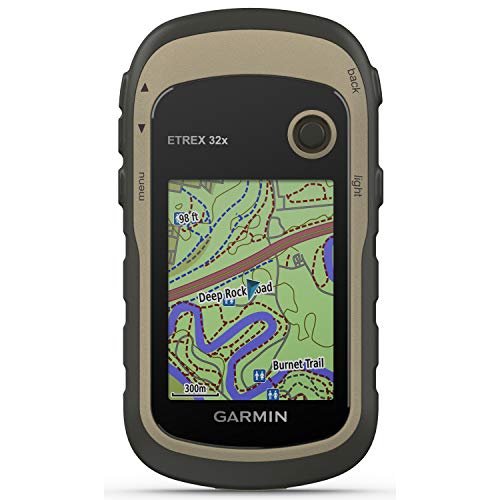
The Garmin eTrex 32x is the most balanced pick here for multi-day hikers who want solid GPS accuracy without paying for satellite messaging they may not need. Its high-sensitivity GPS and GLONASS receiver holds a lock under tree cover and in canyons, and the preloaded worldwide basemap covers you before you even add detailed topo maps. At 0.31 pounds it barely registers in a pack, and the button-operated interface keeps working in rain and cold when touchscreens fumble. It will not send an SOS message, so pair it with a personal locator beacon on remote trips, but for day-to-day navigation across a multi-day route it is hard to beat at this price.
Best for: Multi-day hikers who want reliable mapping without satellite messaging.
Why it stands out: High-sensitivity GPS, long battery life, and a rugged, lightweight build.
2. Garmin GPSMAP 66i: Best Premium and All-in-One
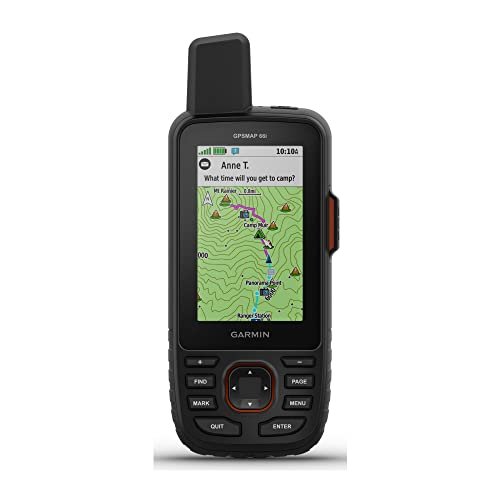
The Garmin GPSMAP 66i combines a full-featured handheld GPS with Garmin’s inReach satellite communicator, so mapping and emergency messaging live in one device instead of two. TopoActive mapping comes preloaded, and the larger color display is easier to read at a glance than the smaller eTrex screens. Two-way satellite messaging means you can update people at home or trigger an interactive SOS from well outside phone range, which matters most on remote, multi-day routes. It is heavier and pricier than a basic handheld, and it needs an ongoing satellite subscription to use the messaging features, but for hikers who want one device that does almost everything, this is the one to budget for.
Best for: Remote multi-day routes where mapping and emergency SOS both matter.
Why it stands out: Full topo mapping plus two-way inReach satellite messaging in one unit.
3. Garmin inReach Mini 2: Best for Emergency SOS
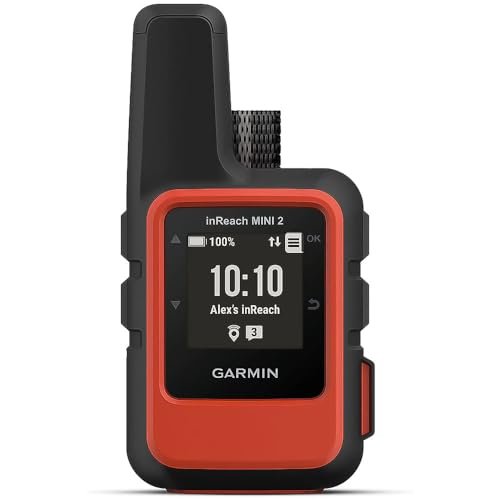
The Garmin inReach Mini 2 is built for one job: keeping you in contact when nothing else works. At 3.5 ounces it is the lightest device on this list, small enough to clip to a pack strap and forget about until you need it. It sends and receives two-way messages over satellite, tracks your route, and can trigger an interactive SOS anywhere in the world, all without cell coverage. It is not a mapping device, and the screen and interface are minimal, so most hikers pair it with a dedicated handheld or a phone app for navigation and use the Mini 2 purely as a safety net. For solo multi-day hikers heading into remote terrain, that safety net is worth the subscription cost.
Best for: Solo hikers who want the lightest possible satellite safety net.
Why it stands out: Ultralight two-way messaging and SOS with no mapping bulk.
4. Garmin Instinct 2 Solar: Best GPS Watch
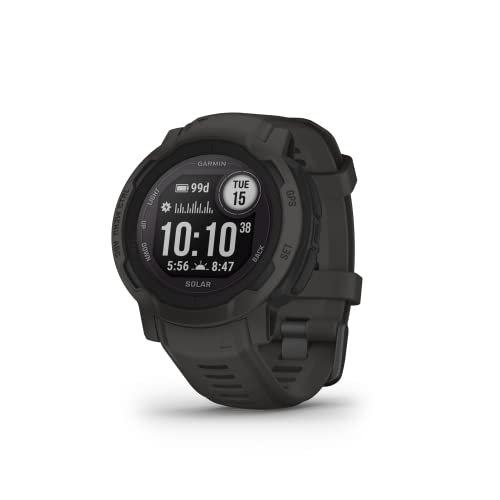
The Garmin Instinct 2 Solar puts GPS tracking, multi-GNSS support, and TracBack routing on your wrist, which matters when you want navigation without digging a handheld out of a pocket. Solar charging genuinely extends battery life on long days outdoors, stretching a device that would otherwise need a mid-trip recharge into something that can realistically cover several sunny days between charges. The rugged case handles drops and scrapes better than most sports watches, and it doubles as a fitness and sleep tracker off trail. Screen resolution is basic and it will not replace a dedicated mapping device on technical terrain, but for hands-free route tracking and TracBack on established trails, it earns its spot.
Best for: Hikers who want hands-free tracking without a handheld.
Why it stands out: Solar-assisted battery life and TracBack routing on the wrist.
5. Garmin eTrex 10: Best Budget
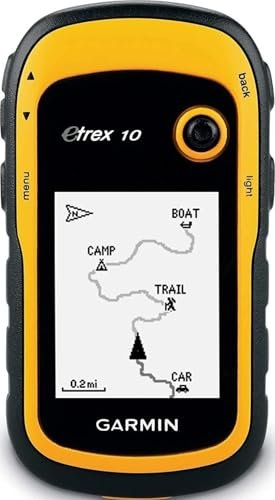
The Garmin eTrex 10 is the simplest, cheapest device on this list, and that simplicity is the point. It offers a worldwide basemap, a monochrome sunlight-readable screen, and straightforward button navigation without the extras that push other devices past $200. Battery life is long precisely because there is little else drawing power. It will not give you detailed topo maps out of the box or any satellite messaging, so it suits hikers who want basic, reliable position tracking on established multi-day routes rather than technical off-trail navigation. For a first GPS device, or a reliable backup to a phone, it does the job without asking much of your budget.
Best for: Budget-conscious hikers and backup navigation.
Why it stands out: Simple, reliable, and priced well below the rest of this list.
How to Choose a Hiking GPS Device for Multi-Day Hiking
Decide whether you need satellite messaging first.
If your routes go well beyond cell coverage, an inReach-equipped device (GPSMAP 66i) or a standalone communicator (inReach Mini 2) covers the single biggest safety gap in most hikers’ kit: the ability to call for help. If you mostly hike routes with occasional signal or carry a separate personal locator beacon, a standard handheld like the eTrex 32x or eTrex 10 is enough.
Match the device to how you actually navigate.
A handheld GPS is built around a map screen and is the right tool if you plan routes and check position against terrain. A GPS watch like the Instinct 2 Solar suits hikers who want tracking without stopping to check a screen, but it is a poor substitute for detailed mapping on technical terrain.
Weigh weight and battery life against features.
More mapping detail and satellite messaging both cost battery life and pack weight. The eTrex 10 and eTrex 32x are the lightest options here. The GPSMAP 66i is the heaviest and priciest, but it replaces two devices with one.
Budget for the subscription, not just the device.
Any inReach-equipped device needs an active satellite subscription to send messages or trigger SOS. Factor that ongoing cost in before you buy.
Decision aid:
- Pick the Garmin eTrex 32x if you want solid mapping at a fair price and already carry a way to call for help.
- Pick the Garmin GPSMAP 66i if you want mapping and satellite SOS in one device.
- Pick the Garmin inReach Mini 2 if your priority is the lightest possible safety net, not mapping.
Final Thoughts
None of these devices make you a better navigator. They give you an accurate position, a way to retrace your steps, and in some cases a way to call for help when things go wrong far from a trailhead.
For most multi-day hikers, the Garmin eTrex 32x is the sensible default, and the Garmin GPSMAP 66i is the upgrade worth paying for once your routes go genuinely remote. Round out your kit with our guides to Best Power Banks for Hiking to keep any of these charged on longer trips, and Best Hiking Compasses as a battery-free backup. For everything else, start with Multi-Day Hiking Gear: What You Actually Need.
Check the Best Hiking GPS Devices on Amazon
Frequently Asked Questions
Do I need a satellite communicator if I already carry a phone?
Phones lose signal fast outside town limits and their batteries drain quickly when used for navigation. A phone works as a backup, but on multi-day routes without cell coverage, a dedicated satellite communicator like the inReach Mini 2 or a GPSMAP 66i is the only reliable way to call for help if something goes wrong.
What is the difference between a handheld GPS and a GPS watch?
A handheld GPS is built around a map screen for route planning and terrain reference, while a GPS watch prioritizes hands-free tracking and fitness data. For technical or off-trail navigation, a handheld gives you more to work with. For established trails where you mainly want a track log, a watch is lighter and more convenient.
How long does a hiking GPS battery actually last on trail?
It depends heavily on tracking frequency, screen brightness, and temperature. Basic handhelds like the eTrex 10 can run for weeks with GPS checked only occasionally. Devices with satellite messaging and constant tracking, like the GPSMAP 66i, typically need a recharge every few days on an active multi-day trip.
Do Garmin inReach devices require a subscription?
Yes. Two-way messaging and SOS on the inReach Mini 2 and GPSMAP 66i both require an active satellite subscription plan, billed separately from the device itself. Check current plan pricing before you buy if messaging is the main reason you are considering one.
