

Last updated: September 2026
Wild Trail Hiker is reader-supported. We may earn a commission when you buy through links on this page, at no extra cost to you. We only recommend products we’d consider taking on a multi-day trip ourselves.
A sun hat looks like the easiest gear decision you will make. Grab something with a brim, done. Then you are four hours into an exposed ridge walk, the sun sitting hard on one side of your face, the brim flipped up in the wind for the third time, and the chin cord you never bothered to adjust doing nothing about it.
The best sun hats for hiking are the ones still doing their job on day five. On a multi-day trip, a sun hat has to survive more than one good afternoon:
- Sweat and sunscreen soaking into the band day after day, with no wash in between
- Wind gusts on exposed ridgelines and passes, where a loose brim becomes a real problem
- Hours of pack contact at the neck, which a stiff or oversized back brim turns into a fight
- Being stuffed away wet or dusty and pulled back out still in shape
This guide is built around hats that hold up to that use, not the first wide-brim option that comes up in a search. Still working out your full clothing and sun-protection system? Start with Multi-Day Hiking Gear: What You Actually Need. A sun hat is one piece of that system, not a standalone fix.
How We Picked
These picks focus on what matters over consecutive days on exposed trail: brim and neck coverage, a certified UPF 40+ or UPF 50+ fabric rating, a way to keep the hat on in wind (chin strap, cord or crown cinch), breathability, and how well it packs when you take it off. All five are from established outdoor and sun-protection brands and were in stock at the time of writing. Novelty, fashion and costume-style hats are not included.
Quick Picks
| Slot | Product | Why It Stands Out |
|---|---|---|
| Best Overall | Sunday Afternoons Ultra Adventure Hat | UPF 50+, 6 inch neck cape, chin strap, folds flat |
| Best Max Coverage | Sunday Afternoons Adventure Hat | 4 inch front brim and 7.5 inch neck flap for the most shade here |
| Best Budget | Columbia Bora Bora Booney | UPF 50 wide brim and mesh venting at roughly half the price of the others |
| Best Cap-Style | Outdoor Research Sun Runner Cap | Ballcap profile with a removable cape, sits clear of a tall pack |
| Best Lightweight | Outdoor Research Helios Sun Hat | 2.41 ounces, UPF 50+, detachable chin cord |
Who This Sun Hat Guide Is For
These hats are best for:
- Multi-day hikers on exposed, above-treeline, or low-shade routes: desert trails, alpine passes, coastal ridgelines
- Anyone who has come home from a trip with burnt ears, a burnt neck or a burnt part line
- Hikers who want a hat that still works with a loaded pack and shoulder straps on
If your trail is mostly under forest canopy, a plain cap will do. If sun is a whole-body problem rather than a head one, see Best Moisture-Wicking Shirts for Multi-Day Hiking. For glare off rock, snow or water, pair your hat with a pair from Best Sunglasses for Hiking.
Multi-Day Context: Why Sun Hats Fail on Longer Trips
Most sun hat reviews are written around a single day out. Multi-day use exposes different weak points.
- Sweatband breakdown. A hat that feels fine on day one can smell and lose its grip by day three, once it has been soaked and dried repeatedly without a wash.
- Cumulative UV exposure. A small coverage gap is a minor annoyance on a day hike. Over five or six exposed days, the same gap on your ears or neck adds up to real sunburn.
- Wind fatigue. A brim that flips up occasionally on day one becomes something you are fighting constantly by day four, when you are tired and the wind has not let up.
- Pack interference. Wide back brims catch a loaded pack when you look up, which gets old fast on a trip spent watching your footing.
The five hats below are picked with these failure modes in mind, not how they look in a gear-shop mirror.
Best Sun Hats for Hiking
1. Sunday Afternoons Ultra Adventure Hat: Best Overall
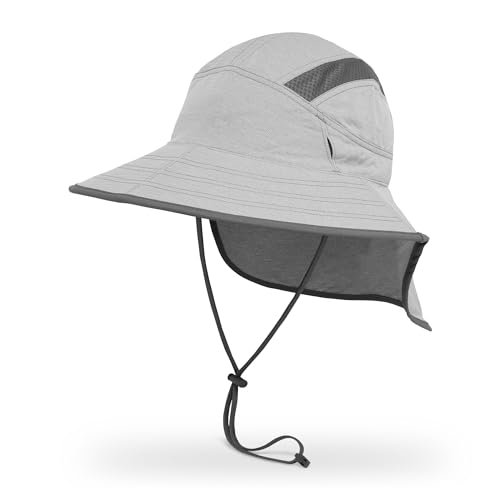
This is the one hat here that covers every multi-day requirement without a real weak spot. Sunday Afternoons lists UPF 50+ fabric, a 3.25 inch reverse split brim and a 6 inch neck cape, so your face, ears and neck are all shaded. An adjustable chin strap and internal sizing keep it on in wind, side mesh panels vent heat, and the moisture-wicking sweatband takes the brunt of multi-day sweat. It is crushable and folds flat, so it goes into a pack without losing its shape. Sizing matters, so check the size chart before ordering.
Best for: hikers who want one reliable hat for any exposed trip
Why it stands out: full face, ear and neck coverage plus a chin strap and a flat-folding design
2. Sunday Afternoons Adventure Hat: Best Max Coverage
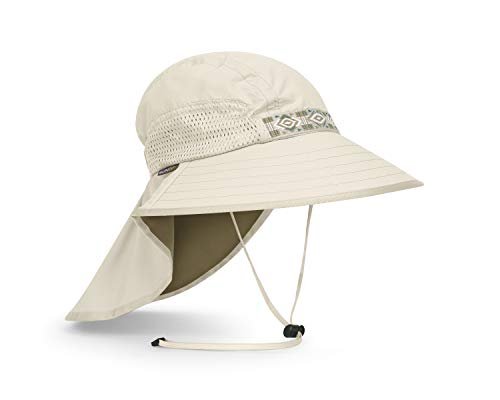
If you burn easily or spend most of a trip above treeline, this is the most shade you will get from any hat here. The brand lists a 4 inch downsloping front brim, 3.75 inch side brims and a 7.5 inch back veil neck flap with a lift-up tab, all in UPF 50+ fabric (the mesh vents are not rated). It weighs 3 ounces, and the foam-core brim holds its shape in wind. The trade-off is the long neck flap: it can brush a tall pack when you look up, so lift the tab on steep climbs.
Best for: desert and alpine trails, hikers prone to sunburn
Why it stands out: the widest brim and longest neck coverage in this guide
3. Columbia Bora Bora Booney: Best Budget
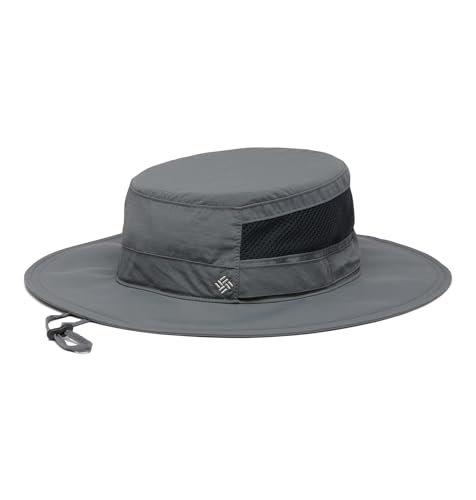
This is the pick for real sun protection without paying premium-brand prices. Columbia lists Omni-Shade UPF 50 fabric, an extra wide brim, mesh venting to let heat out, and an Omni-Wick sweatband to pull sweat away over a long day. An adjustable drawcord holds it in place, and the flexible build packs into a side pocket. It lacks the neck cape of the Sunday Afternoons hats, so pair it with a collared shirt or a buff on fully exposed days.
Best for: budget-conscious hikers and anyone who loses hats
Why it stands out: UPF 50 wide brim and venting at the lowest price here
4. Outdoor Research Sun Runner Cap: Best Cap-Style
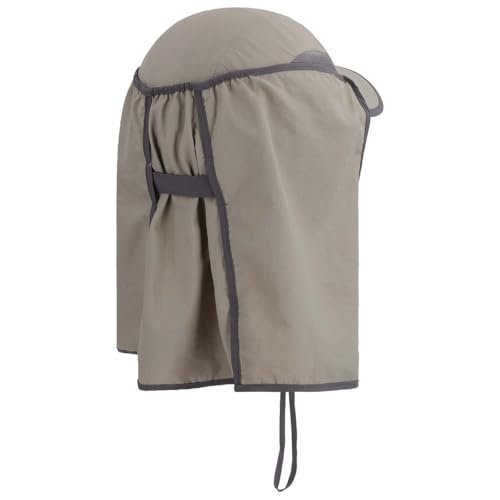
If a full brim always ends up fighting your pack, this is the alternative. It is a ballcap with a 2.75 inch brim and a 10.75 inch removable cape that snaps on for exposed sections and comes off in shade. Outdoor Research lists UPF 40+ fabric, a wicking sweatband, mesh side panels and a removable chin cord. The cape can flap about in strong wind, and the sides of your face get less shade than under a full brim.
Best for: hikers carrying a tall pack, or anyone who prefers a cap
Why it stands out: cap comfort with neck protection you can add or remove
5. Outdoor Research Helios Sun Hat: Best Lightweight
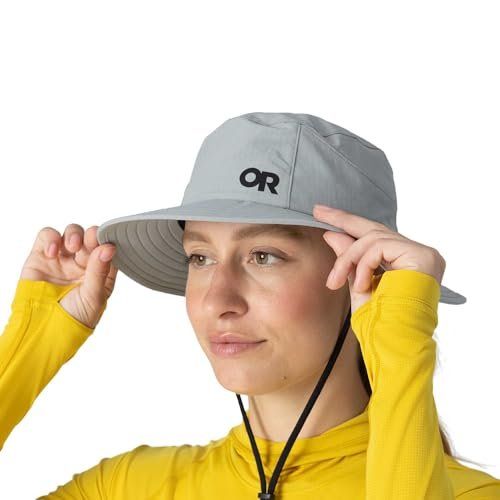
At 2.41 ounces, this is the lightest hat here and the easiest to forget you are carrying. It is a classic boonie in UPF 50+ quick-drying nylon, with a crown cinch for fit and a detachable, adjustable chin cord for wind. It is water resistant enough to shrug off light rain. The 2.75 inch brim gives less coverage than the wide-brim picks, so it suits hikers who already cover their neck with a collar or buff.
Best for: ultralight hikers and mixed shade-and-sun trails
Why it stands out: lightest weight in this guide with a secure chin cord
How to Choose a Sun Hat
Do not default to the widest brim you can find. Coverage matters, but only if the hat stays on and stays comfortable every day of your trip.
Exposure level. On a desert trail or long stretches above treeline, such as the Larapinta Trail or the High Sierra Trail, prioritise coverage: the Adventure Hat or Ultra Adventure Hat. On routes with regular shade and open sections, the Sun Runner Cap or Helios is enough.
Wind security. A wide brim without a chin strap or cord is a liability on an exposed pass. The Ultra Adventure, Helios and Sun Runner all have one. Cinch it before the wind picks up, not after.
Pack fit. Long back brims and neck flaps catch a tall pack when you look up. A cap-style hat or a shorter boonie avoids this.
Packability. If the hat spends time off your head, weight and pack-down size matter more. The Helios and the Ultra Adventure both stow easily.
For most multi-day trips, start with the Ultra Adventure Hat. If you are exposed all day and burn easily, go to the Adventure Hat. If budget is deciding it, the Bora Bora Booney gets you UPF 50 shade for a fraction of the price.
Final Thoughts
The best sun hat for hiking is the one still doing its job on day five, not the one that looked good in the mirror on day one. Coverage, wind security and comfort under a pack matter more over a multi-day trip than on a single afternoon.
See Multi-Day Hiking Gear: What You Actually Need for how head, body and eye protection fit together, and pair your hat with Best Hiking Pants or Best Sunglasses for Hiking if sun is a problem for more than your face.
Frequently Asked Questions
Do I really need a dedicated sun hat, or will a baseball cap work?
A baseball cap shades your face but leaves your ears, neck and scalp exposed. On short, shaded hikes that is fine. On multi-day trips with real sun exposure, a wide brim or a cap with a neck cape cuts sunburn risk and how often you need to reapply sunscreen.
What UPF rating should I look for?
UPF 40 or higher, and UPF 50+ where you can get it. UPF 50 fabric blocks around 98 percent of UV. Note that mesh vent panels are often not rated, even on a UPF 50+ hat, so they let some UV through.
Will a wide-brim hat get in the way of my pack?
It can. A long back brim or neck flap can catch a loaded pack when you tilt your head back. If that bothers you, a cap-style hat like the Sun Runner Cap, or a shorter boonie like the Helios, avoids it.
How do I keep a sun hat on in windy conditions?
An adjustable chin strap or cord does most of the work, backed by a snug fit at the crown. Tighten it before you reach an exposed pass or ridge. A hat without a strap will end up in your hand, not on your head.
