

Last updated: August 2026
Wild Trail Hiker is reader-supported. We may earn a commission when you buy through links on this page, at no extra cost to you. We only recommend products we’d consider taking on a multi-day trip ourselves.
Intro
A hydration bladder looks like the simplest thing in your pack. A bag, a tube, a bite valve. Fill it, zip it, forget it. The trouble starts on day two, when the tube has kinked inside your pack, the bite valve is dribbling into your shirt, or you unroll the bladder at camp to a faint sour smell from water that sat since breakfast.
Picking the right hydration bladders for hiking matters more on longer trips, where you can’t just tip out a bad bottle at the next tap. On multi-day routes a water carry setup needs to handle:
- Dry stretches between reliable sources, where you’re carrying two or three litres at once, not sipping and refilling
- Daily cleaning and drying, without a kitchen sink or a spare afternoon
- Rough handling in a loaded pack, rubbing against a stove, tent poles, or a bear canister
- Redundancy, so one punctured bladder doesn’t leave you with nothing
This guide covers reservoirs built for a pack’s hydration sleeve and the soft bottles that back them up, not novelty bladders or gym gear. If you’re still working out your wider kit, start with Multi-Day Hiking Gear: What You Actually Need.
How We Picked
These picks focus on what changes over multiple days on trail: flow rate when you’re tired, ease of field cleaning, durability against rubbing and rough packing, and how well each pairs with a backup soft bottle. All are from established hydration brands with genuine hiking or backpacking positioning. Novelty and gym-focused bladders are not included.
Quick Picks
| Slot | Product | Why It Stands Out |
|---|---|---|
| Best Overall | Platypus Big Zip EVO Reservoir (1.5L) | High flow rate, self-sealing bite valve, easy one-handed fill and field cleaning |
| Best High-Flow / Big Water Days | CamelBak Crux 3L Reservoir | Wide-mouth fill, leak-resistant cap, biggest sip-to-sip flow of the group |
| Best Rugged / Most Durable | HydraPak Force Reservoir (3L) | Reversible for cleaning, insulated tube, built for repeated rough packing |
| Best Collapsible Soft Bottle | HydraPak Flux Collapsible Bottle (1L) | Stands rigid like a hard bottle, packs flat when empty, filter-thread compatible |
| Best Ultralight Backup | Platypus SoftBottle (1L) | About an ounce empty, near-zero packed volume, cheap enough to carry as a spare |
Who This Is For
This guide is for hikers who need to carry real water volume between sources, not just top up a bottle at the trailhead tap.
It’s best for:
- Backpackers on routes with dry stretches of an hour or more between water sources
- Hikers who want hands-free drinking through a hose while walking
- Anyone who wants a backup soft bottle in the pack in case a reservoir leaks
- Multi-day hikers moving from day-hike gear into longer trips where carry capacity matters
If you’re doing shorter day hikes with frequent water access, a hard bottle and a good filter cover you without the extra weight. See our 5 Best Water Filters for Multi-Day Hiking.
Multi-Day Context: Why Water Carry Fails Differently on Longer Trips
A hydration bladder that works fine on a day hike can become a genuine problem by day three of a longer trip.
- Slow leaks compound. A pinhole from rubbing against a stove or trekking pole tip is easy to miss on day one and soaks your pack by day three. Reservoirs kept clear of sharp gear, plus a backup bottle, limit the damage.
- Cleaning gets skipped. Without a sink or spare afternoon at camp, bladders that trap water in seams start to smell within days. Wide, reversible designs rinse and dry faster.
- Cold and altitude bite tubes. On cold mornings or high passes, drink tubes can stiffen or freeze. Blowing the line clear after drinking matters more than the spec sheet.
- Capacity planning changes the day. Carrying too little water on a genuinely dry stretch is a route-planning failure, not just a gear one. Match size to the longest realistic gap between sources.
The picks below hold up better against these failure modes than a bladder bought purely on price.
Best Hydration Bladders for Multi-Day Hiking
1. Platypus Big Zip EVO Reservoir: Best Overall
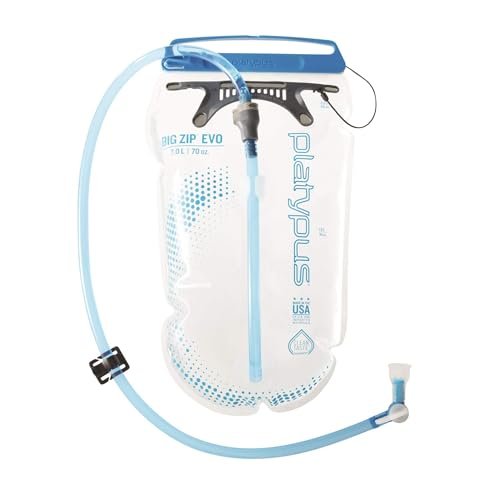
The Platypus Big Zip EVO is the easiest all-round recommendation here. Platypus lists it with a self-sealing HyFLO bite valve, a large drink tube for faster flow, and a wide slide-zip opening for one-handed filling. It also turns inside out for cleaning, which matters more on trail than it sounds. It comes in 1.5L, 2L, and 3L sizes.
Best for: most multi-day hikers who want one reliable reservoir
Why it stands out: strong flow rate, genuinely easy field cleaning, sizes to match different trip lengths
2. CamelBak Crux 3L Reservoir: Best High-Flow / Big Water Days
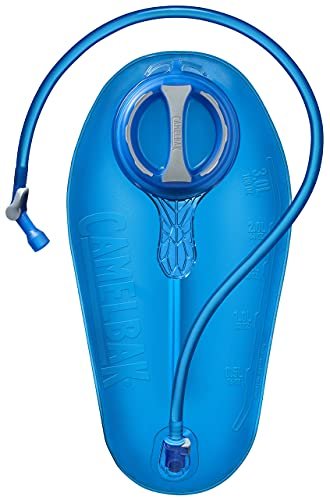
The CamelBak Crux is the pick for the biggest, fastest sip available. CamelBak positions it around a faster flow rate than older reservoirs, a leak-resistant on/off cap, and a wide mouth for filling from shallow sources. At 3 litres it carries genuine capacity for a long dry stretch, at the cost of being the heaviest option here when full.
Best for: hot trails and long gaps between water sources where volume matters most
Why it stands out: high flow rate, wide-mouth fill, biggest realistic capacity in this list
3. HydraPak Force Reservoir: Best Rugged / Most Durable
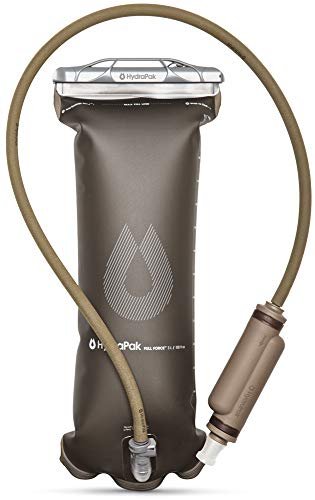
The HydraPak Force is built for hikers who are hard on gear. HydraPak lists it with ultra-durable construction, an insulated drink tube and dust cover, and a slide-seal top that opens wide for filling and closes tight against leaks. It’s fully reversible and dishwasher safe, a real advantage after a week of use, and backed by a lifetime guarantee.
Best for: hikers who want the toughest reservoir against rubbing, punctures, and repeated use
Why it stands out: rugged build, easy reversible cleaning, strong brand warranty backing
4. HydraPak Flux Collapsible Bottle: Best Collapsible Soft Bottle
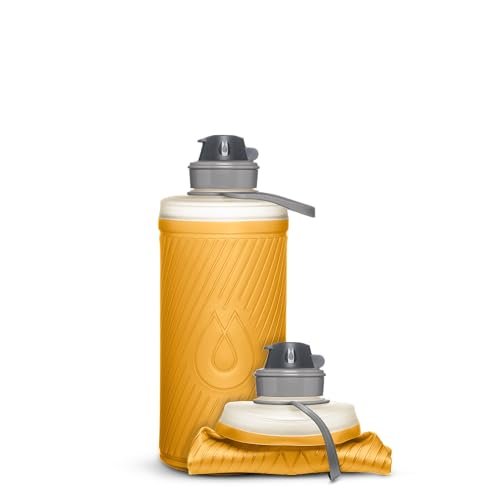
The HydraPak Flux is the strongest collapsible bottle to pair alongside a reservoir as backup capacity. HydraPak lists it as standing rigid when full, then packing flat to pocket size once empty, a real space saver over a second hard bottle. It’s compatible with common 42mm threaded filters, including the Katadyn BeFree, so it doubles as a scoop-and-filter bottle, not just a spare tank.
Best for: carrying redundant capacity or a filter-compatible backup bottle without extra bulk
Why it stands out: stands upright like a hard bottle, filter-thread compatible, packs flat when empty
5. Platypus SoftBottle: Best Ultralight Backup
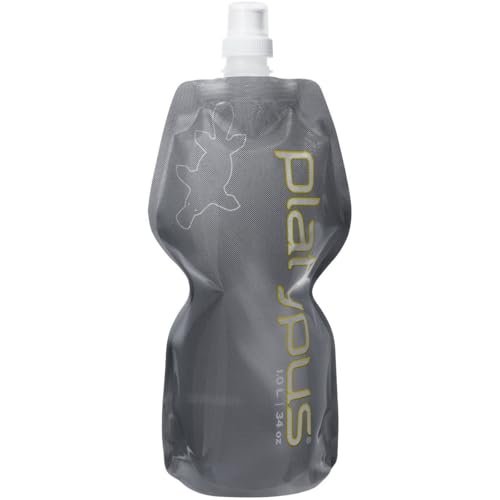
The Platypus SoftBottle is the lightest option here by a wide margin. Platypus lists the 1-litre version at around 1.2 ounces empty, collapsing to a fraction of its filled size once drained. It won’t win on durability against rough handling, but as a cheap, near-weightless spare it’s hard to argue against. The liner doesn’t retain flavours, useful for mixing electrolytes some days and plain water others.
Best for: ultralight hikers who want a genuine spare bottle with almost no weight penalty
Why it stands out: about an ounce empty, minimal packed volume, low enough cost to carry as a backup without a second thought
How to Choose Hydration Bladders for Hiking
Match capacity to the driest stretch, not the average day. Look at the longest realistic gap between water sources, then size up from there. A 1.5L reservoir is fine on a trail with frequent streams. A dry, exposed route calls for 2 to 3 litres, or a reservoir plus a backup bottle.
Plan for cleaning, not just filling. A reservoir that’s awkward to open fully will get used dirty more than you’d like. Wide openings and reversible designs cost little and save real hassle at camp.
Carry redundancy on longer trips. A punctured reservoir with no backup is a real problem two days from the trailhead. A light collapsible bottle in the bottom of your pack is cheap insurance.
Check pack compatibility before buying. Confirm your pack’s hydration sleeve size and hang-loop position match the reservoir, especially pairing a 3L reservoir with a daypack built around a 2L sleeve.
Choose the Platypus Big Zip EVO for one dependable reservoir, the CamelBak Crux 3L for hot, dry routes with real volume needs, and add a HydraPak Flux or Platypus SoftBottle alongside either for backup capacity that barely adds weight.
Final Thoughts
The right hydration bladder for hiking is the one still delivering clean-tasting water, without a leak or a clogged tube, on day three. None of that shows up on a shelf, only on trail.
Pair your reservoir choice with a reliable filter and think through your route’s dry stretches before committing to a capacity. See our 5 Best Water Filters for Multi-Day Hiking and the full framework in Multi-Day Hiking Gear: What You Actually Need. You may also want to check 8 Best Multi-Day Backpacks to confirm your pack’s hydration sleeve suits the reservoir you choose.
Frequently Asked Questions
How big a hydration bladder do I need for multi-day hiking?
It depends on the driest stretch on your route, not your average day. A 1.5 to 2 litre reservoir covers most trails with regular water sources. For hot, exposed, or genuinely dry routes, size up to 3 litres or add a backup soft bottle.
Should I carry a hydration bladder and a bottle, or just one?
Carrying both is worth the small weight penalty on multi-day trips. A reservoir gives hands-free drinking while you walk, and a light collapsible bottle acts as backup capacity if the reservoir ever leaks or clogs.
How do you stop a hydration bladder from tasting bad?
Rinse it after every trip, dry it fully open rather than rolled up damp, and avoid leaving sugary drink mixes sitting in it overnight. Reversible reservoirs clean more thoroughly than ones with sealed internal seams.
Can hydration bladders freeze on cold-weather trips?
The tube and bite valve freeze first, before the main reservoir. On cold mornings or high passes, blow water back into the reservoir after each drink to clear the line, and consider an insulated tube sleeve for genuinely cold trips.
