

Last updated: August 2026
Wild Trail Hiker is reader-supported. We may earn a commission when you buy through links on this page, at no extra cost to you. We only recommend products we’d consider taking on a multi-day trip ourselves.
Before You Go
The Kalalau Trail is not a casual coastal walk. Anyone hiking past mile 2 (Hanakāpī’ai) needs a valid camping permit, even for a day trip: there is no day-use option beyond that point, full stop. Permits are capped, sell out fast, and release exactly 90 days ahead. Add an exposed cliff section at mile 7 to 8, no cell coverage anywhere on the route, and streams that flash flood without warning, and this trail punishes under-preparation more than most on this site. This trail has also closed multiple times in recent years for storm erosion, flooding, and health advisories: check the DLNR Nāpali Coast park notices page for current trail and erosion status before you book anything.
Why This Trail
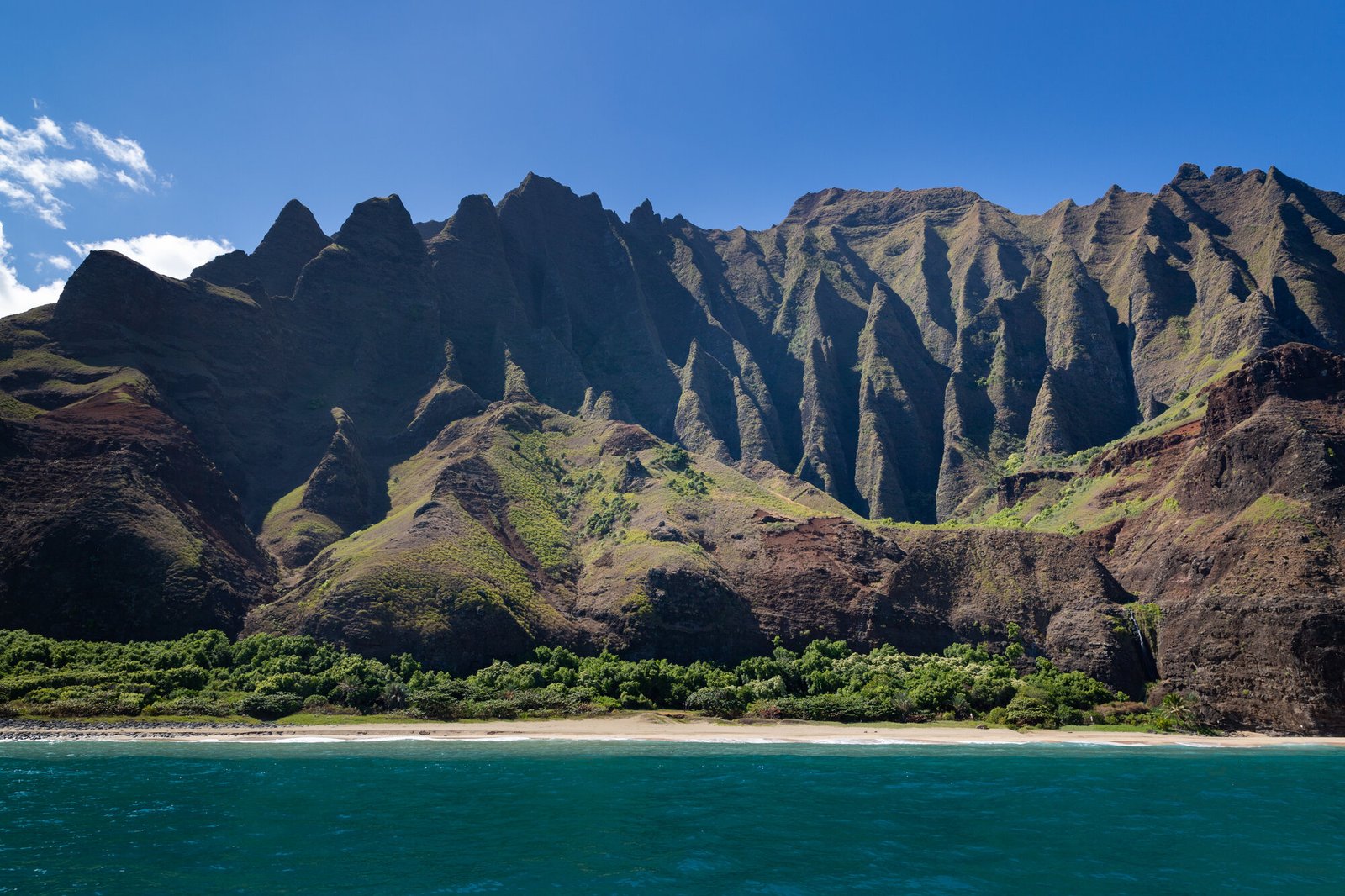
Ask hikers who have walked more than one of Hawaii’s coastal trails which one they’d send a friend to first, and the Kalalau Trail comes up constantly, usually followed by a warning. It is the only way to see the Nā Pali Coast’s fluted green cliffs and hanging valleys from land rather than a tour boat or helicopter, eleven miles of trail cut into sea cliffs that rise as much as 4,000 feet straight out of the Pacific. The route crosses five valleys, Hanakāpī’ai, Ho’olulu, Waiāhuakua, Hanakoa, and finally Kalalau itself, each one a short, humid drop to a stream crossing followed by a climb back into open, wind-scoured ridgeline.
What sets it apart from a typical multi-day trail is how much the terrain changes over such a short distance. You are in dense jungle one hour and standing on a bare, narrow ledge above open ocean the next. The trail ends the only way it can, at Kalalau Beach, a mile-long stretch of sand backed by sea caves and boxed in by cliffs too sheer to climb. There is no road out. You hike back the way you came, or you do not leave.
The permit system and the trail’s reputation for difficulty keep it from being overrun the way some famous coastal trails are, even though it sits within a short drive of Kauai’s main tourist strip. That contrast, genuine wilderness minutes from a resort town, is a large part of its pull.
Trail at a Glance
- Distance: 11 miles one-way (22 miles round trip), per the Hawaii Division of State Parks’ official trail listing.
- Duration: Most hikers take 2 to 3 nights (3 to 4 days) round trip. Fit, minimal-pack hikers sometimes cover the full 11 miles in one long day, but the state park itself recommends against attempting the 22-mile round trip in a single day, even with a permit.
- Difficulty: Difficult to expert. Narrow, exposed cliff sections, unbridged stream crossings that become dangerous in flash floods, and no cell coverage or rescue access beyond what a helicopter or boat can reach.
- Best season: May through October (Hawaii’s drier summer season) brings steadier trade winds and lower flash-flood risk. Winter (November through April) sees larger swells, storms, and stream surges. ⚑ Conditions can turn quickly in any month; check current stream and surf conditions before you go.
- Permits: Mandatory beyond Hanakāpī’ai (mile 2), whether day-hiking or camping. Released 90 days in advance and routinely sold out for summer dates. See Logistics below for the full process.
- Start trailhead: Kē’ē Beach, Hā’ena State Park: Hā’ena State Park on Google Maps
- End trailhead: Kalalau Beach (same point for the return, since this is an out-and-back, not a loop or point-to-point with a separate exit): Kalalau Beach on Google Maps
Unlike most trails on this site, the Kalalau Trail is neither a loop nor a true point-to-point route. It dead-ends at Kalalau Beach, boxed in by cliffs. Boat pickup from Kalalau is illegal without a commercial operating permit (and no legal commercial pickups currently operate), so every hiker walks back out the same eleven miles.
Trail Map
View the Nā Pali Coast (Kalalau) Trail on AllTrails: includes an elevation profile, current condition reports, and thousands of hiker photos and reviews.
Official Kalalau Trail brochure and map, Hawaii Division of State Parks (PDF, opens in browser): the source of truth for camping areas, mileage points, and safety notices.
Getting There and Away
Getting there: The nearest airport is Lihue Airport (LIH), roughly 41 miles and about 1.5 hours’ drive from the trailhead at Hā’ena State Park, on the northwest end of Kūhiō Highway (Route 56). A rental car is the practical option for most visitors flying in. Parking at Hā’ena is limited to around 100 stalls and needs an advance reservation for every vehicle, made through the park’s own booking site, gohaena.com; a valid camping permit grants park entry, but you still need a separate overnight parking reservation to leave a car there.
Because trailhead parking fills fast, many visitors instead book the Kauai North Shore Shuttle, a dedicated round-trip service to and from Hā’ena State Park from several North Shore pickup points, with park entry included. This sidesteps the parking-reservation problem and is worth comparing against driving in peak season. ⚑ Confirm current shuttle schedule and fares before your trip; the last return run in past seasons left Hā’ena around 6:40pm, which matters if your hike-out day runs long.
Getting away: Same trailhead, since this is an out-and-back on the same eleven miles. There is no separate exit route from Kalalau Beach, and no legal boat or helicopter pickup for hikers, so build your return hike into your itinerary rather than treating it as a formality.
Staging town: Hanalei and Princeville, both roughly 20 to 30 minutes from the trailhead, are the natural North Shore bases with the widest range of lodging, food, and gear shops. Kapa’a and Lihue, closer to the airport, work as a secondary base with more budget options, at the cost of a longer drive to the trailhead (45 minutes to just over an hour). Book North Shore accommodation well ahead in peak season; it sells out alongside the permits.
Day-by-Day Breakdown
This breakdown follows a common 3-night, 4-day pace: two days to hike in with an overnight split at Hanakoa, a rest day exploring Kalalau, and one long day to hike all the way back out. Faster, fitter parties often compress the hike in to a single 11-mile day and use the extra nights entirely at Kalalau; that variation is noted at the end of this section.
Day 1: Kē’ē Beach to Hanakoa Valley (about 6 miles)
Highlight: The switchback climb out of Hanakāpī’ai and the crossing into Hono o Nā Pali Natural Area Reserve.
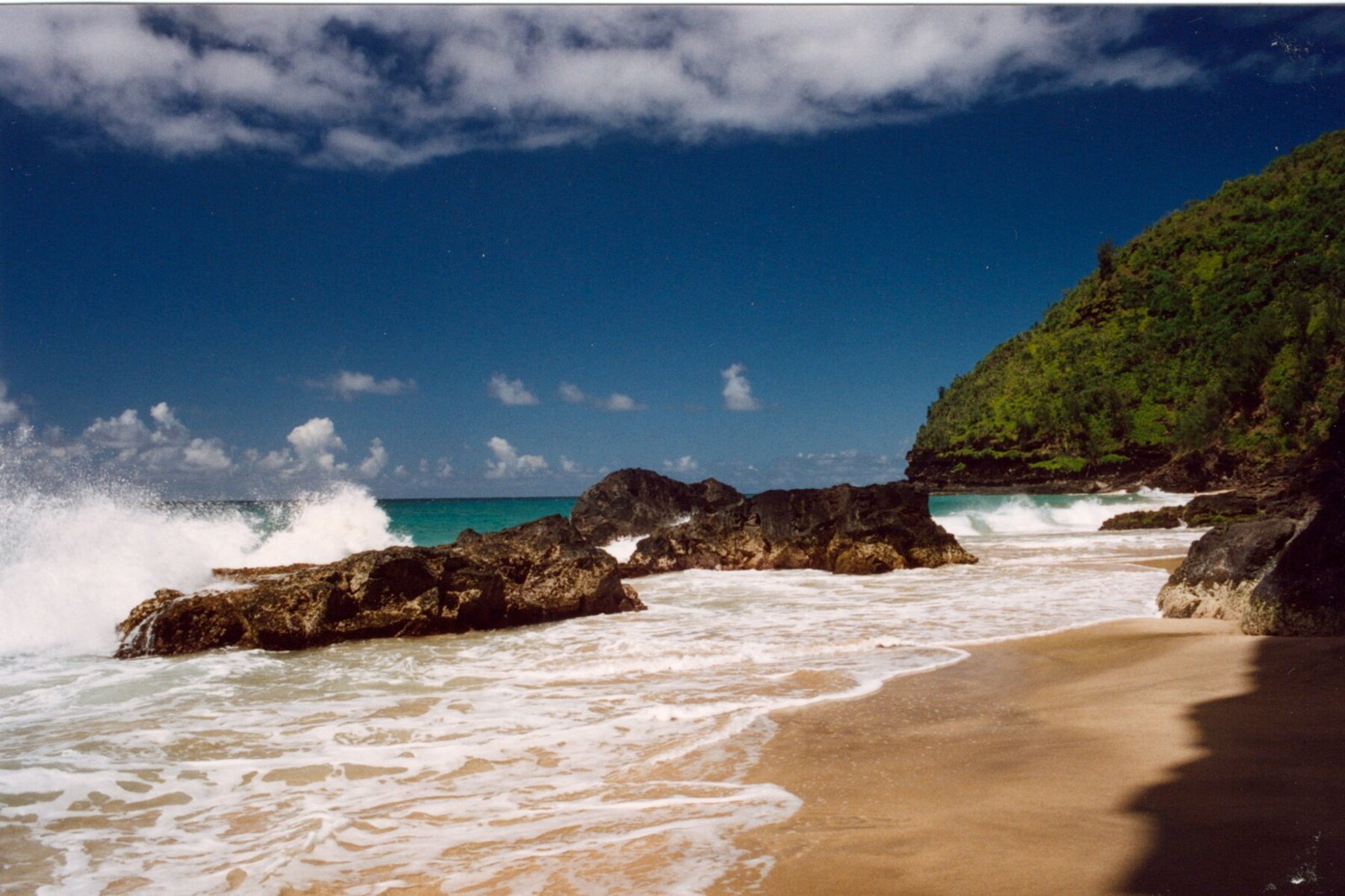
The first two miles, from Kē’ē Beach to Hanakāpī’ai, are the only stretch open to day hikers without a camping permit, and it shows: expect company on a clear morning. Roughly half a mile in you get the first real coastal views, and by Hanakāpī’ai you reach a broad summer sand beach where swimming isn’t recommended (rip currents here are dangerous and drownings occur regularly). Past Hanakāpī’ai, a valid overnight camping permit is required for everyone continuing further, and the trail begins a steep, switchbacking 800-foot climb out of the valley. From the top, it traverses two small hanging valleys, Ho’olulu and Waiāhuakua, inside the Hono o Nā Pali Natural Area Reserve, home to native lowland forest plants found in few other easily reached places on Kauai. The trail reaches Hanakoa Valley around the 6-mile mark, with a composting toilet, two roofed rest shelters, and old agricultural terraces, first Hawaiian taro, later replanted as coffee in the 1800s and still growing wild today. Camping here is capped at one night at a time; the permit system does not allow two consecutive nights at Hanakoa.
Day 2: Hanakoa Valley to Kalalau Beach (about 5 miles)
Highlight, and the trail’s defining test: Crawler’s Ledge.
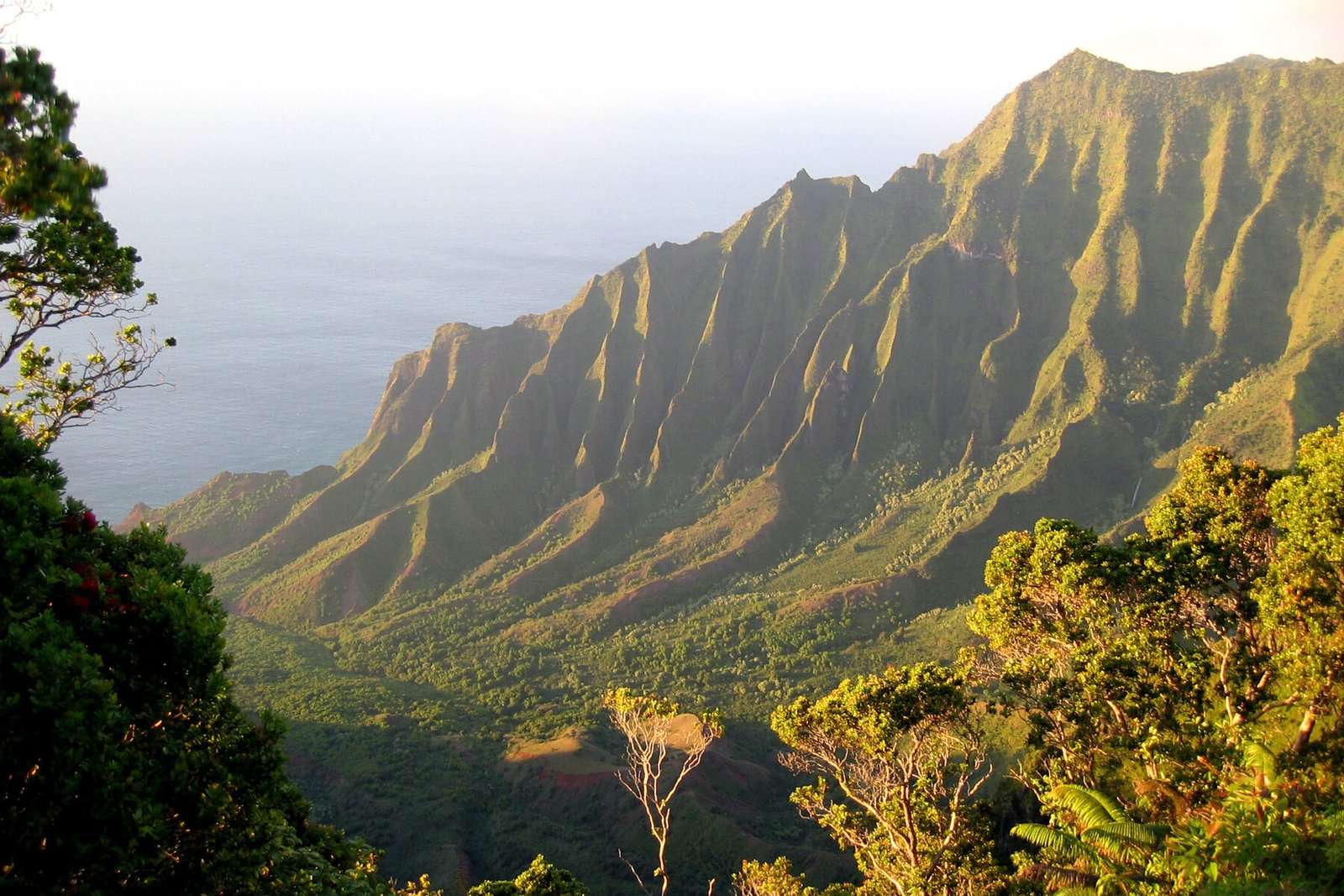
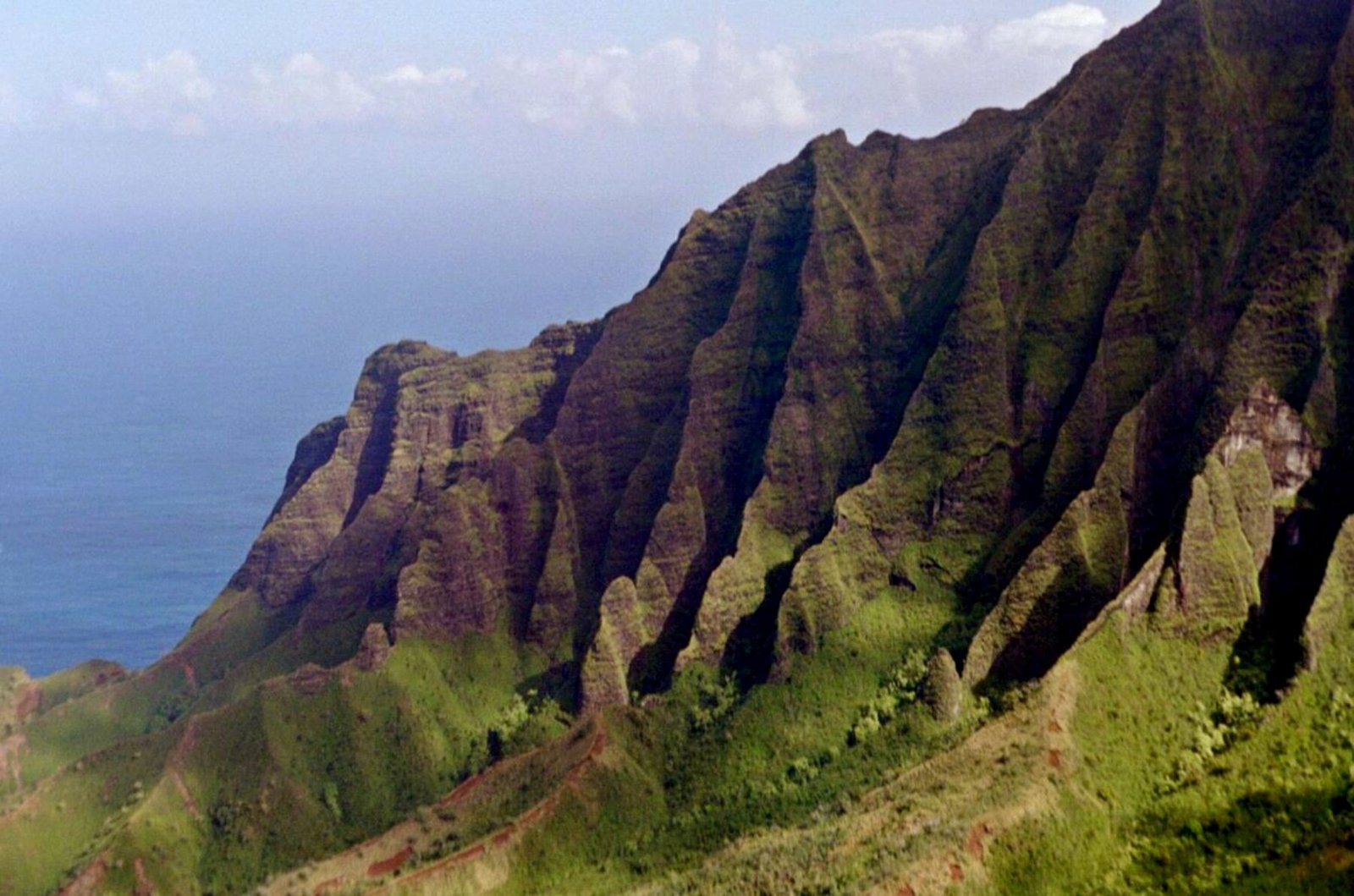
Leaving Hanakoa, the trail climbs again onto drier, exposed ridgeline with little shade, shifting a final time from tropical valley to open, wind-scoured cliff. Somewhere around mile 7 to 8, hikers reach the section widely known in trip reports and guidebooks as Crawler’s Ledge, cut into a near-vertical cliff face with a severe drop to the ocean on one side. It isn’t officially named on state park maps, but every experienced hiker who has walked this trail knows it and treats it seriously. The tread itself isn’t technical, no ropes or scrambling required, but it is narrow, can be slick after rain, and the exposure is real; many hikers stow trekking poles here so both hands stay free. Cross in daylight and dry conditions where possible, and skip it if you’re not comfortable with sustained exposure. Past the ledge, the views open fully onto Kalalau Valley’s fluted green cliffs, a payoff most hikers say makes the crossing worth it. The trail then descends to cross Kalalau Stream near the valley mouth before reaching Kalalau Beach, a mile of sand backed by sea caves and a small waterfall.
Day 3: Rest day at Kalalau (optional, no mileage)
Highlight: The Kalalau waterfall and the inland trail to the Big Pool.
Most itineraries build in a full day at Kalalau before the hike back out, and it’s worth it. The waterfall behind the beach is a short walk from most campsites, though rangers warn against loitering beneath it or near the surrounding cliffs because of a constant rockfall risk. A well-marked trail runs about 2 miles inland along Kalalau Stream through old, overgrown taro terraces (now mixed with introduced java plum, guava, and mango trees) to a swimming hole known as the Big Pool. Ocean swimming at Kalalau is possible for experienced swimmers familiar with local conditions, but not recommended for anyone unsure of the surf; there are no lifeguards on this coast. In summer, sea caves beyond the waterfall are popular informal shelters, though winter surf can flood them and strip much of the beach sand entirely.
Day 4: Kalalau Beach back to Kē’ē Beach (11 miles)
Highlight, if it can be called that: knowing exactly what’s coming.
The return trip covers the same eleven miles, including Crawler’s Ledge and the climbs in and out of Hanakoa, Waiāhuakua, and Ho’olulu, in the opposite direction. Most hikers find the return psychologically easier since the terrain holds no surprises, but physically it is the same demanding trail, and fatigue from the days before adds up. Start early: the exposed ridgeline sections get hot fast once the sun is high, and an early start also means finishing with daylight to spare rather than navigating Crawler’s Ledge or the final descent to Kē’ē in fading light.
Compressed option: Strong, light-packing hikers sometimes hike the full 11 miles from Kē’ē to Kalalau in one very long day (many report 8 to 12 hours depending on pace and stops), then use the remaining permit nights entirely at Kalalau, and hike the full 11 miles back out on the final day. This removes the Hanakoa overnight but turns both travel days into genuinely long ones; it suits fit, experienced backpackers more than first-timers on this trail.
What to Expect
Terrain: Muddy, root-crossed jungle trail through the valleys, narrow and sunbaked along the ridgeline between them. Grades are steep and short rather than long and gradual: the trail is “graded but almost never level,” per the state park’s own description. Crawler’s Ledge (roughly mile 7 to 8) is the single most exposed stretch and the main reason this trail carries an expert rating.
Weather: Coastal temperatures rarely drop below 60°F year-round, so heat and humidity are the risk, not cold. Trade wind showers are more common overnight and in early morning. Infrequent but powerful storms can trigger flash floods at any of the five stream crossings with little warning.
Wildlife: Wild goats are common along the open ridgeline. Limited goat hunting is sometimes permitted on weekends in August and September, mostly between Hanakoa and Kalalau; safety signage goes up and staying on the main trail is the state park’s own advice during those weekends. No large land predators, no snakes.
Crowds: The first 2 miles to Hanakāpī’ai see heavy day-hiker traffic, especially late morning. Numbers drop off sharply past that point because of the permit cap (roughly 60 to 80 camping permits a night, season-dependent), though Kalalau Beach itself can still feel busy in peak summer given how few places there are to camp.
Signature features: The Hanakāpī’ai switchbacks, the hanging valleys of Ho’olulu and Waiāhuakua, Hanakoa’s old coffee terraces, Crawler’s Ledge, and Kalalau Beach’s sea caves and waterfall.
Water: sources, safety, and treatment
Streams at Hanakāpī’ai, Hanakoa, and Kalalau are the only water sources on the route, and none of the camping areas have piped drinking water. Carry enough to cover the dry, exposed ridgeline stretches between valleys, especially over Crawler’s Ledge, where there is no reliable source.
No water here is safe to drink untreated; the state park’s own gear list includes purification tablets or a filter as standard kit. Kalalau also carries a specific, documented hazard: a September 2024 trail closure followed a norovirus outbreak that state health officials linked to contaminated stream water, worsened by informal squatter camps routing waste toward sources hikers were using untreated. The area reopened after cleanup, but unauthorized camping in the valley has a long history here and is not fully solved by one cleanup. ⚑ Check DLNR’s park notices page for current advisories before you go.
Because norovirus is small and hardy enough that some hollow-fiber filters aren’t rated to remove it alone, pair mechanical filtration with a chemical or UV step, or boil water from any of the three streams, rather than relying on a filter by itself. If you’d rather carry one system, choose a filter explicitly rated for viruses, not just bacteria and protozoa.
Logistics
Nāpali Coast State Wilderness Park camping permits are the main planning bottleneck, released exactly 90 days in advance of your first requested camping night, opening at midnight Hawaii Standard Time on the booking platform. As of early 2026, permits are booked through Explore Outdoor Hawaiʻi (explore.ehawaii.gov), which replaced the previous camping.ehawaii.gov system; if you used the old system before, you will need a new account. Search for Nāpali Coast State Wilderness Park, select Camping, choose Kalalau as the facility, and enter your dates; popular summer dates can sell out within minutes of the release window opening.
Camping costs $25 per person per night for Hawaii residents and $35 for non-residents, plus a $5 reservation fee per transaction. Stays cap at 5 consecutive nights, with no two consecutive nights at Hanakoa. A limited walk-in allocation is also held back for Hawaii residents at the Kauai State Parks office in Līhu’e on certain summer weekdays. ⚑ Confirm current-year dates and quota before publishing; this has changed year to year.
A valid camping permit also grants Hā’ena State Park entry, but you still need a separate overnight parking reservation for a car left at the trailhead (see Getting There and Away). Day hikers going only as far as Hanakāpī’ai need a Hā’ena entry and parking reservation through gohaena.com instead. There is no ranger station on the trail and no cell coverage anywhere along it; in an emergency, someone must hike out for help or signal a passing boat or helicopter.
Mandatory Gear Checklist
For the full kit, product picks, and why each item earns its place on this specific trail, see What to Pack for the Kalalau Trail.
- A reliable water filter, paired with a chemical or UV backup. No source here is safe untreated, and the 2024 contamination incident is a reminder filtration alone may not cover every risk. See best water filters for hiking.
- Lightweight, quick-drying trail shoes with real grip, not heavy waterproof boots. The terrain alternates muddy jungle trail with bare rock, and shoes that drain fast beat ones that stay wet for days. See best breathable hiking shoes.
- Trekking poles, useful on the steep, eroded switchbacks in and out of the valleys, though most hikers stow them for Crawler’s Ledge itself so both hands are free. See best trekking poles.
- A headlamp, for early starts and the Hanakoa camp shelters, where there is no other light source. See best headlamps for hiking.
- A light, packable rain shell. Trade wind showers are frequent, especially overnight; a heavy shell doesn’t earn its weight here. See best rain ponchos for hiking.
- A dry bag for your phone, permit, and electronics. Stream crossings, humidity, and ocean spray near Kalalau’s caves are hard on unprotected gear. See What to Pack for the Kalalau Trail for sizing and picks.
- A wide-brim or lanyard sun hat. The ridgeline offers no shade and the tropical sun is intense even in cooler months. See What to Pack for the Kalalau Trail for a pick.
Honest Assessment
This trail suits fit, experienced backpackers comfortable with real exposure, able to manage a strict permit process without losing their trip to a sold-out window, and honest with themselves about vertigo or balance on narrow trail. It rewards hikers who lock in the permit and shuttle or parking reservation weeks ahead rather than showing up hopeful.
It is not a good first backcountry trip. Crawler’s Ledge alone rules it out for anyone uneasy with exposure, and the lack of cell coverage or rescue access raises the stakes on every other decision. Hikers who want the Nā Pali Coast experience without the permit fight can day-hike to Hanakāpī’ai Beach or the falls on a park entry reservation, or see the coast from the water on a boat tour.
Among experienced Hawaii hikers, the consensus is that Kalalau earns its reputation both ways: it is genuinely one of the most beautiful coastal treks in the country, and it genuinely injures and occasionally kills people who underestimate it, mostly at stream crossings, at Crawler’s Ledge, or in the surf at either beach.
Final Thoughts
The Kalalau Trail is a short trail by mileage and a demanding one by almost every other measure: permit competition, exposure, heat, and a total lack of an easy exit if something goes wrong. None of that makes it not worth doing, it makes it worth doing properly. Lock in your permit the moment the 90-day window opens, sort your water treatment plan before you leave the trailhead, and respect Crawler’s Ledge rather than rushing it. If you’re still building toward a trip at this level of exposure and self-sufficiency, start with how to plan your first multi-day hike. Packing? See What to Pack for the Kalalau Trail for the full kit built for this trail’s mud, water risk, and heat.
Frequently Asked Questions
How hard is it to get a Kalalau Trail permit?
Genuinely competitive. Permits release exactly 90 days ahead of your first camping night, at midnight Hawaii time, through Explore Outdoor Hawaiʻi (explore.ehawaii.gov), and popular summer dates can sell out within minutes. A limited walk-in allocation exists for Hawaii residents in peak season; visitors from elsewhere need to book online in the release window.
Can I day hike the Kalalau Trail?
Only as far as Hanakāpī’ai Beach or Hanakāpī’ai Falls, 2 to 4 miles round trip, using a Hā’ena State Park entry and parking reservation rather than a camping permit. Anyone continuing past Hanakāpī’ai, even without an intention to camp overnight, must hold a valid overnight camping permit; there is no day-use option beyond that point.
Is the Kalalau Trail dangerous?
Yes, more than most trails on this site. The main hazards are the exposed Crawler’s Ledge section around mile 7 to 8, flash floods at stream crossings, dangerous surf at both Hanakāpī’ai and Kalalau beaches, and the complete lack of cell coverage or nearby rescue access. Most serious incidents involve one of these three factors.
What is Crawler’s Ledge?
A narrow, exposed stretch of trail cut into a steep cliff face around mile 7 to 8, with a serious drop to the ocean on one side. It is not an official state park name, but it is universally used by hikers and guidebooks. No ropes or scrambling are needed, but the exposure demands full attention, dry conditions where possible, and a level head.
Can beginners or families hike the Kalalau Trail?
Not the full trail. It is not recommended for first-time backpackers, and Crawler’s Ledge makes it unsuitable for most families with young children. The first 2 miles to Hanakāpī’ai Beach, a well-trodden day hike with real coastal views, is a reasonable family-friendly alternative that shares none of the permit complexity or exposure of the full trek.
