

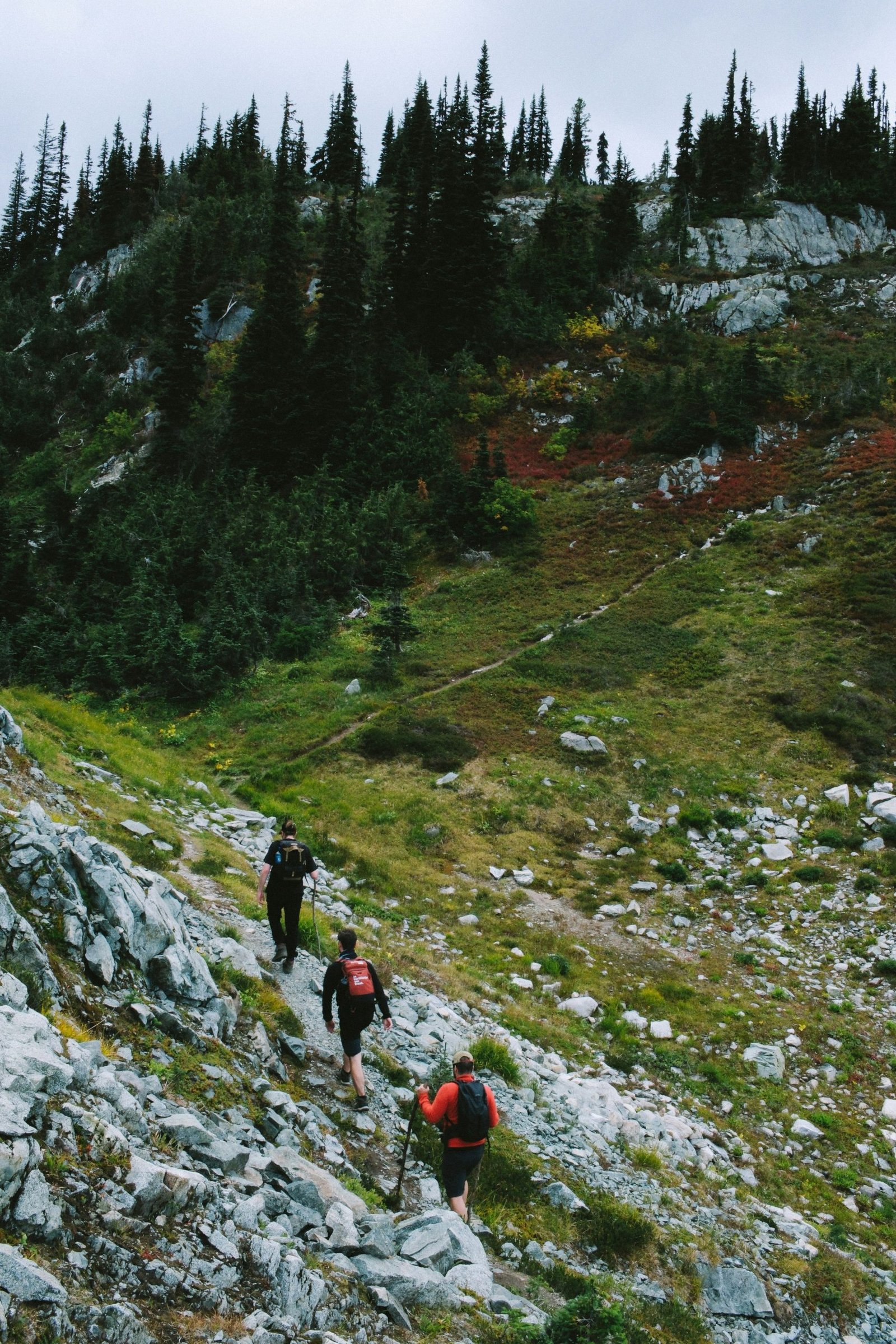
Gear helps you get out there. Skills help you enjoy the walk, make better decisions, and stay safe when conditions change.
That is the shift many hikers discover when they move from day hikes to overnight and multi-day trips. On a short trail close to home, you can get away with a few rough edges. On a multi-day hike, those rough edges become much more obvious. Starting too fast, wearing the wrong layers, packing poorly, misreading the weather, or relying too heavily on your phone can turn a good trip into a hard one.
The good news is that trail skills are learnable. You do not need to be an expert bushwalker to feel more capable on your first overnight adventure. You just need a few practical habits that make life on trail easier.
In this guide, we will cover the core multi-day hiking skills beginners should build before stepping into longer trips: navigation, pacing, energy management, layering, pack handling, Leave No Trace, weather awareness, and camp craft.
If you have not already read it, start with How to Plan Your First Multi-Day Hike. And if you are still building your setup, pair this guide with Multi-Day Hiking Gear: What You Actually Need (And What to Skip).
Why hiking skills matter more than beginners think
A first multi-day hike rarely goes badly because someone forgot a fancy piece of gear. More often, the problems are simpler than that.
People get tired too early because they paced badly. They get cold because they hiked in too many layers and soaked their shirt with sweat. They feel stressed because they never really understood the map. They reach camp late because they underestimated the terrain. They keep pushing when the smarter choice would have been to stop.
That is why skill-building matters so much. A few basic capabilities can make a much bigger difference than buying more equipment.
Strong trail skills help you:
- move more efficiently
- stay more comfortable in changing conditions
- make safer decisions
- avoid common beginner mistakes
- feel calmer and more confident on trail
The goal is not perfection. The goal is to become more competent, one trip at a time.
Navigation basics
Navigation is one of the most important skills for multi-day hiking. Even on popular trails, weather, fatigue, poor visibility, and simple distraction can make route-finding harder than expected.
Read the map before the hike starts
Before your trip, spend time looking at the trail on a map. Not just the start point and campsite. Try to understand the shape of the day.
Look for:
- major climbs and descents
- ridges, saddles, and valleys
- river or creek crossings
- trail junctions
- water sources
- campsites
- exposed sections
- possible exit points
This matters because navigation is not just about checking where you are when something feels wrong. It is about building a mental picture of the route so the landscape makes sense as you move through it.
Learn the basics of a topo map
You do not need advanced navigation training to get useful value from a topographic map.
Start with these basics:
Contour lines show the shape of the land. Close contour lines mean steep terrain. Wider spacing usually means gentler ground.
Ridges tend to appear as long raised spines. Gullies and creeks are usually lower lines cutting through the terrain. Saddles are lower points between higher ground.
As you hike, compare what you see around you with what the map suggests should be there. That habit builds awareness quickly.
Useful questions to ask are:
- Are we where the terrain says we should be?
- Does the direction of travel still make sense?
- Is the next major feature where I expected it to be?
Know how to use a compass
A compass is still worth carrying and knowing how to use, even if you rely mainly on a phone or GPS app.
For beginner multi-day hikes, a compass is most useful for:
- orienting your map
- checking the general direction of travel
- confirming your judgement when visibility drops
You do not need to start with complex bearings. Learn how to line up north, orient the map, and sense-check your direction. That alone gives you a valuable backup when things feel uncertain.
When to trust your GPS, and when not to
GPS is excellent. Offline map apps are genuinely useful, and for most hikers they are part of a sensible navigation system.
But they are not perfect.
GPS works best when:
- you have downloaded maps before the trip
- you are checking your position at a junction
- the track is faint or confusing
- you want confirmation in poor visibility
GPS becomes less reliable when:
- your battery is low
- cold weather drains power faster than expected
- you forgot to save offline maps
- heavy tree cover or terrain interferes with accuracy
- you stop thinking critically because you are following the dot blindly
The safest approach is to use layered navigation. Carry a map. Know the route. Bring a compass. Use GPS as a powerful backup, not your only plan.
Helpful navigation backups for beginners
- Best Hiking Compasses — see our guide
- Best Hiking GPS Devices — see our guide
- Best Power Banks for Hiking — see our guide
Pacing and energy management
One of the biggest differences between day hiking and multi-day hiking is the need to preserve energy.
On a day hike, you can sometimes push hard and recover later. On a multi-day trip, you still need to walk tomorrow.
Start slower than you think
Most beginners walk too fast early in the day, especially on climbs. They feel good, push a little too hard, then pay for it later.
A good multi-day hiking pace should feel sustainable, not heroic. You should be able to hold a conversation on moderate terrain and settle into a rhythm that feels controlled.
That usually means going slower uphill than your ego wants.
Use the rest step on steep climbs
The rest step is a simple uphill technique that helps conserve energy. Instead of driving continuously upward, you briefly settle your weight on the rear leg with each step, creating a tiny pause.
It is not dramatic, but it works. On long climbs with a pack, this small rhythm can help reduce fatigue and smooth out effort.
Practice it on day hikes first, then bring it into longer walks.
Plan mileage by effort, not just distance
A common beginner mistake is assuming a short distance will automatically feel easy.
On multi-day trails, kilometres do not tell the whole story. Elevation, rough ground, creek crossings, weather, and pack weight all matter.
For a first trip, daily mileage should be conservative. It is far better to finish the day with a little left in the tank than to drag yourself into camp exhausted.
Think about:
- elevation gain
- track quality
- pack weight
- expected weather
- daylight hours
- your current hiking experience
Eat and drink before you feel bad
A lot of trail fatigue is really late fuelling.
Do not wait until you are flat, thirsty, or irritable. Stay ahead of it by eating and drinking regularly through the day.
Good habits include:
- sipping water often
- eating small snacks consistently
- storing snacks where you can reach them easily
- eating before a major climb, not after it
Steady fuelling tends to work better than one big lunch and long gaps in between.
Know when to stop
One of the smartest trail skills is knowing when to stop earlier than planned.
That might be because:
- weather is deteriorating
- someone in the group is fading badly
- the trail is taking longer than expected
- navigation is becoming uncertain
- the next campsite is too ambitious for current conditions
Changing the plan is not failure. It is usually good judgement.
Useful gear that helps with pacing and trail efficiency
The layering system in practice
Layering is one of the most practical skills in hiking because it directly affects comfort, energy, and safety.
The aim is not to wear all your warm clothes at once. The aim is to stay dry enough and warm enough as conditions change.
Think in simple clothing functions
A basic hiking layering system includes:
- a base layer to manage moisture
- an insulating layer for warmth
- a shell layer for wind and rain protection
You can explore options in the Gear and Apparel sections, but the key skill is not owning more layers. It is learning when to change them.
Add or remove layers early
The best time to adjust clothing is before you feel uncomfortable.
If you are starting a climb and warming up fast, remove a layer early. If you stop on an exposed ridge for lunch, add a warm layer before the chill sets in.
Beginners often wait too long both ways. That creates the classic sweat-chill cycle.
Avoid the sweat-chill cycle
The sweat-chill cycle usually goes like this:
- you hike in too many clothes
- you sweat into your layers
- you stop moving
- you cool down quickly in damp clothing
To avoid it:
- start slightly cool, not over-warm
- vent early on climbs
- keep your waterproof or insulating layer easy to access
- change into dry camp clothes when practical
Dry clothing is often the difference between feeling comfortable and feeling miserable.
Simple clothing layers worth getting right
- Best Lightweight Hiking Jackets — see our guide
- Best Base Layers for Hiking — see our guide
- Best Fleece Jackets for Hiking — see our guide
Pack weight and load management
A badly packed backpack makes hiking harder than it needs to be. A well-packed one feels more stable, more comfortable, and easier to live with across a full day.
If you are still choosing gear, see Multi-Day Hiking Gear: What You Actually Need (And What to Skip) and browse the Backpacks section.
How to pack your backpack properly
Think in zones.
Bottom of pack: things you will not need until camp, like sleep gear or spare night clothes.
Middle of pack, close to your back: heavier dense items such as food, stove, or water.
Top of pack: layers, snacks, first aid kit, and other frequently used items.
Outer pockets: water bottles, map, phone, sunscreen, toilet kit, or waterproof jacket.
The aim is to keep the load stable and to avoid unnecessary unpacking during the day.
Keep important items easy to reach
You should not have to empty your pack every time the weather changes or you want a snack.
Keep these easy to access:
- rain jacket
- warm layer
- snacks
- water filter
- map or phone
- headlamp
- basic first aid items
Small access improvements make trail life much smoother.
Adjust the fit as you go
Your pack fit is not a set-and-forget thing. As terrain changes, small adjustments can improve comfort a lot.
Check:
- hip belt tension
- shoulder strap pressure
- sternum strap comfort
- load lifter position
If your shoulders are taking too much strain, your hip belt may not be doing enough. If the pack feels unstable, the load may be packed too far away from your back.
Lightweight is good, but not at the expense of basics
Going lighter is usually helpful. But beginners sometimes take this idea too far and leave behind items that support safety, warmth, or hydration.
The goal is not to strip your kit to the edge. The goal is to remove what you do not need while keeping what genuinely matters.
A few lightweight items can make pack management easier
Leave No Trace principles for multi-day hikers
Leave No Trace matters even more on overnight and multi-day walks because your impact lasts longer and spreads further.
Why it matters
Remote places stay special when hikers treat them carefully. Campsites, tracks, water sources, and wildlife all suffer when people treat the bush like a disposable space.
Good trail habits protect the place and improve the experience for everyone else.
Practical Leave No Trace habits
For beginners, focus on doing the simple things well:
- camp on established or durable surfaces where possible
- avoid damaging vegetation
- pack out all rubbish, including food scraps
- keep soaps and washing away from streams and lakes
- use toilets where available
- follow local guidance for human waste disposal
- keep wildlife wild by storing food properly
- respect the quiet of shared outdoor spaces
These are not glamorous skills, but they are part of becoming a better hiker.
Weather awareness
Weather is not background scenery on a multi-day hike. It shapes the difficulty, the comfort level, and the safety of the trip.
Check trail weather, not just nearby town forecasts
Before you go, check the weather for the actual hiking area.
Look at:
- temperature highs and lows
- rainfall
- wind speed
- thunderstorm risk
- overnight temperatures
- alpine or exposed conditions if relevant
Then interpret what that means for your route. Light rain in a town forecast can mean cold, slippery, unpleasant conditions on an exposed ridge.
Pay attention while you hike
Weather awareness is not just something you do the night before. Watch for:
- darkening skies
- wind strengthening
- visibility reducing
- dropping temperature
- cloud building over high ground
These cues matter because they help you make decisions before conditions get worse.
Be willing to turn back
Turning back is one of the most important hiking skills to develop.
It may be the right choice when:
- navigation is getting uncertain in poor visibility
- exposed terrain is becoming unsafe
- river crossings are looking risky
- someone in the group is cold, tired, or fading badly
- the forecast is worsening faster than expected
The trail will still be there another day.
Camp craft basics
A few practical camp skills can make your evenings and mornings much easier.
Choose your campsite carefully
A good campsite is usually:
- reasonably flat
- sheltered from wind where possible
- not sitting in a drainage line
- away from obvious hazards such as unstable trees or flood-prone creek edges
- in line with local rules and minimum-impact principles
Take a few minutes to choose well instead of collapsing into the first available patch of ground.
Treat your water properly
Water treatment is one of the core practical skills for multi-day hiking.
Even clear water can contain contaminants, so treat consistently and know how your specific system works before you leave home.
Useful habits include:
- filling up before you are desperate
- treating water every time, not only when you feel unsure
- keeping dirty water and clean water separate
- practising with your filter or purifier before the trip
Store food sensibly
Food storage depends on the local environment and rules, but the principles are consistent:
- keep food secure
- avoid leaving scraps around camp
- reduce wildlife attraction
- keep your camp area tidy
This is part of both good camp craft and Leave No Trace.
Build a repeatable evening routine
Camp gets easier when you use a repeatable order of tasks.
For example:
- drop pack
- add a warm layer if cooling down
- set up shelter
- collect and treat water
- sort food
- prepare for the next morning before dark
A simple routine reduces mistakes when you are tired.
Useful camp gear for beginners
Trail smarts that make everything easier
There are also a few smaller habits that quietly improve every hike.
Look behind you now and then
Trail features often look different in reverse. A quick glance back helps build better spatial awareness.
Fix foot problems early
Hot spots and friction rarely improve if ignored. Deal with them early before they become trip-limiting blisters.
Keep your systems simple
Simple packing, simple routines, and simple decisions work better when you are tired.
Do not let ego set the pace
A lot of beginner mistakes come from trying to prove something. On a multi-day trail, steady and sensible usually beats ambitious and sloppy.
Conclusion
The best multi-day hikers are not always the ones with the fanciest kits. Often, they are just the ones who have built a few smart, practical habits.
They know how to read the terrain. They pace themselves properly. They manage clothing before becoming uncomfortable. They pack well, treat water properly, watch the weather, and make sensible decisions when conditions shift.
That is the real foundation of confidence on trail.
If you are still planning your first trip, read How to Plan Your First Multi-Day Hike. If you want help with your backpack, sleep system, layers, and other essentials, head next to Multi-Day Hiking Gear: What You Actually Need (And What to Skip).
You can also browse more trip inspiration in Wild Trails, and explore equipment ideas in the Gear, Backpacks, and Apparel sections.
