

Last updated: August 2026
Wild Trail Hiker is reader-supported. We may earn a commission when you buy through links on this page, at no extra cost to you. We only recommend gear we’d take on a multi-day trip ourselves.
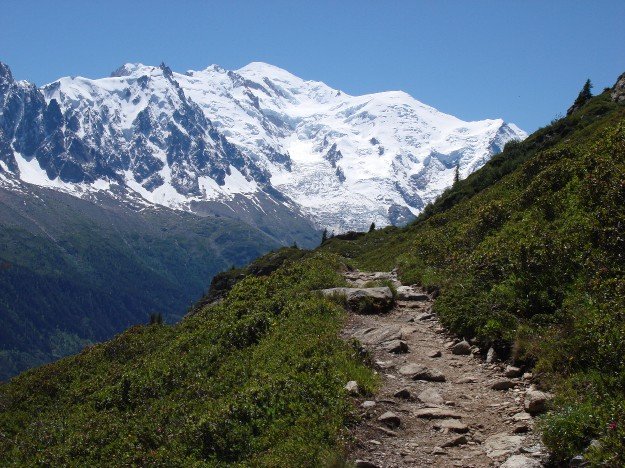
There is a moment on the climb to Le Brévent, on the last morning of the Tour du Mont Blanc, when the whole massif lines up across the valley at once: eleven days of walking, distilled into one view. Getting there without your feet, your back, or your sleep wrecked is a packing problem, not a fitness problem. Refuge life on the TMB rewards a small, well-chosen kit, since you carry everything you bring up and down a mountain pass most days for eleven days straight.
Here’s what to pack for the Tour du Mont Blanc: a hut-to-hut kit, not a wild-camp kit. That reshapes the whole list: no tent, no stove, no sleeping bag, but a mandatory refuge sleeping sheet you cannot check in without, a daypack sized for one day rather than a full expedition load, and a weather system built for daily alpine thunderstorms rather than sustained rain. Get the short list of make-or-break items right and the rest falls into line.
If you are still deciding whether to walk it, start with the full Tour du Mont Blanc guide for stages, refuge booking and the cross-border logistics. For the system behind these choices, see multi-day hiking gear: what you actually need.
Conditions That Drive Your Kit
| Factor | TMB reality |
|---|---|
| Distance and duration | Roughly 170 km, 10 to 11 days, hut-to-hut |
| Best season | Mid-June to mid-September; late June carries snow risk on high passes |
| Terrain | Well-graded, non-technical, but a mountain pass most days; two rockier exceptions |
| Weather | Warm days, cold refuge nights above 2,000 m, near-daily afternoon storms in July and August |
| Water | Tap water safe throughout; streams need treating; two dry stages with no refuge refill |
| Accommodation | Refuge dorm beds with half board; a sleeping sheet is mandatory, not optional |
Every choice below traces back to a line in this table. Full stage detail and refuge booking timing sits in the Tour du Mont Blanc guide.
How This Kit Is Built
This list is built from TMB trekking operator packing guidance, an REI Adventures-consulted equipment list, and independent hikers who’ve carried their own kit around the full circuit. It’s built for the trail first: where the right tool isn’t something we have a buying link for yet, we still tell you to take it.
Four things make or break a TMB kit: feet that survive eleven days of descents, a refuge sleep system that meets house rules, weather protection for a daily storm risk, and knees that make it to day eleven. Those get the detail; the rest still matters, and gets a clear pick.
The Kit, by Category
Footwear: The Trail’s Biggest Variable
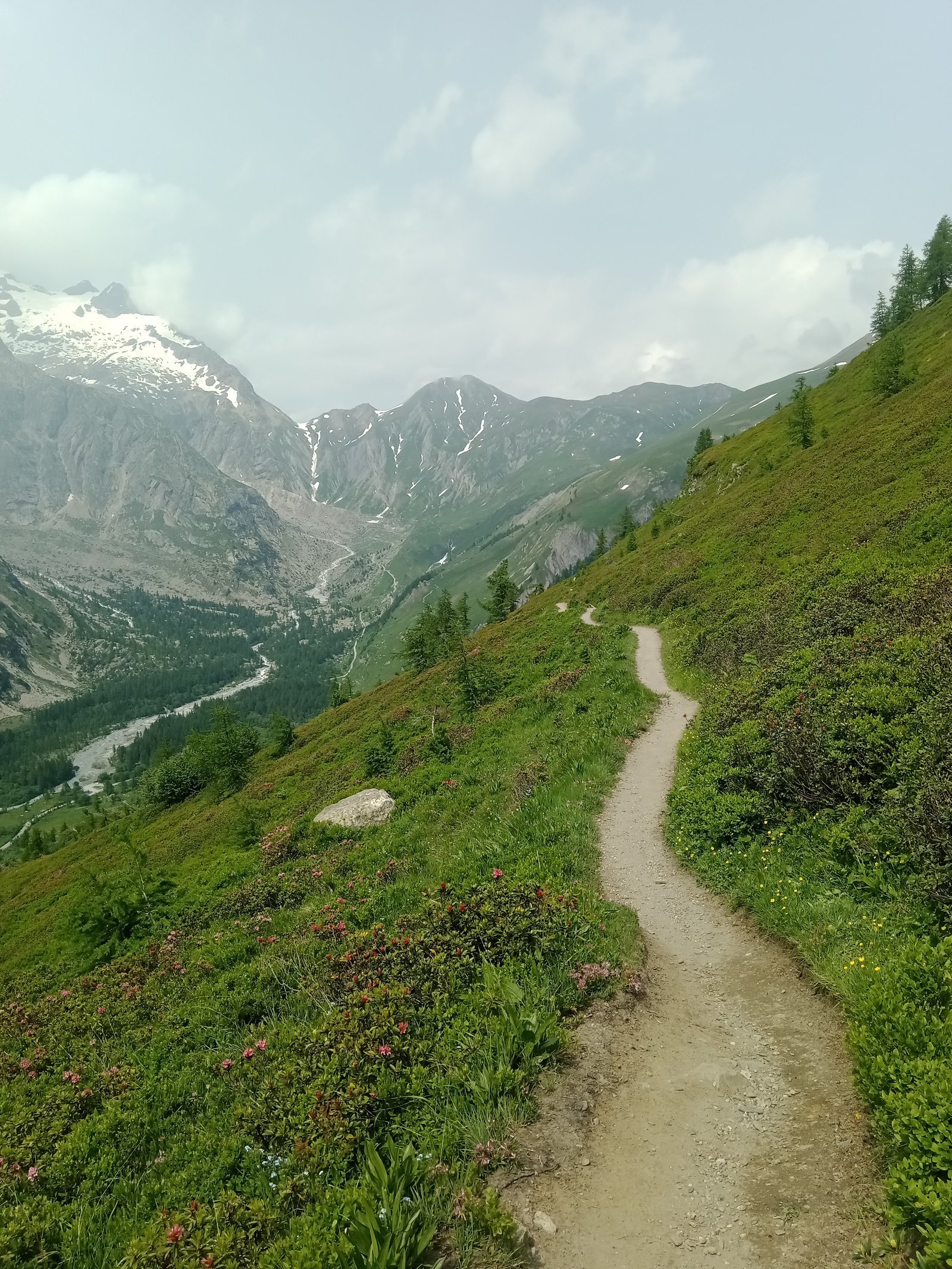
Ask five TMB veterans what broke their trip and four will say boots. The terrain isn’t technical, but eleven days of repeated steep descent (five stages drop over 1,000 m in a day) is exactly where a weak or unbroken-in boot shows up as a blister or rolled ankle, hours from the next refuge.
A mid-height waterproof hiking boot with real ankle support is the safer default. The Salomon X Ultra 5 Mid GTX balances a supportive fit with a lighter feel than a leather boot, and its Gore-Tex membrane covers stream splashes and lingering early-season snow.
Check Price on Amazon | Compare the best waterproof hiking boots
If you’d rather go lighter and your ankles are used to rough ground, a durable low-cut trail shoe such as the Merrell Moab 3 suits confident descenders who want less bulk in the evenings. Whichever you choose, break it in on real hills at home first: new boots on day three is the most preventable way to end a TMB trip early.
Check Price on Amazon | Compare the best durable hiking shoes
Pack a repair kit (blister plasters, tape, moleskin) regardless of choice. Refuges provide indoor shoes (usually crocs) once your boots come off, so nothing bulky is needed for evenings.
Refuge Sleep Kit: The Item First-Timers Forget
This is the category with no US-trail equivalent, and it catches first-timers out every season. Every refuge supplies a mattress, duvet and pillow, but linen isn’t washed between guests, so a sleeping sheet liner is mandatory. Turn up without one and some refuges will simply refuse you a bed.
Silk is the right call for a trek this long: it packs down to almost nothing and dries fast in a humid refuge, where cotton is bulkier and slower to dry. Look for a lightweight silk or silk-cotton mummy liner, roughly 130 to 150 grams. Most refuges also rent one for a few euros a night if you’d rather not carry your own.
Wild Trail Hiker note: this is a genuine gear gap, not a quality compromise. We haven’t found a stocked silk liner meeting this spec with a working affiliate link, so we’re naming the requirement rather than a weaker substitute.
Rain and Wind Protection: Built for a Daily Storm Window
Afternoon thunderstorms are close to a daily event in July and August, which is why an early start and finish is standard practice here, not a suggestion. You need gear you can hike in for hours, not gear that only works standing still.
A genuine waterproof, breathable rain pant earns its weight over a poncho once you’re crossing exposed cols. The Marmot PreCip Eco Rain Pant is a reliable, widely used pick that layers over hiking pants without restricting stride on steep descents.
Pair it with a genuine waterproof, breathable shell jacket with a hood, not a fashion softshell. Compare current picks in our best lightweight hiking jackets guide.
Trekking Poles: Non-Negotiable for This Much Elevation
The TMB’s cumulative climb runs to roughly 10,000 metres over eleven days, more than Everest from sea level, delivered as one long descent after another. Poles are close to universally recommended here, the thing that gets your knees to day eleven in decent shape.
The Black Diamond Alpine Carbon Cork is a proven pick for a trek this long: light enough to forget you’re carrying it, with cork grips that stay comfortable over consecutive long days.
Check Price on Amazon | Compare the best trekking poles
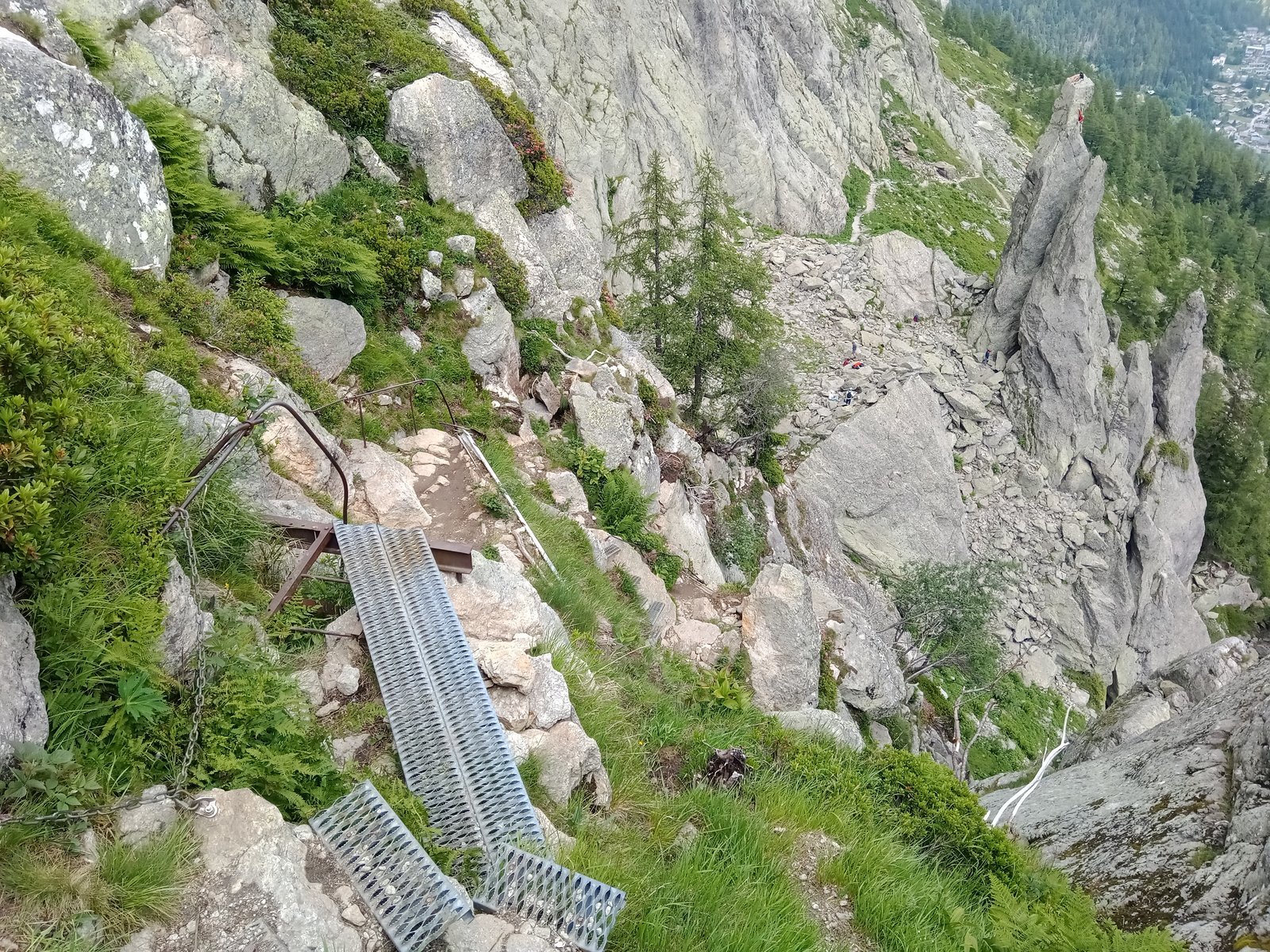
If you’d rather not trust carbon around rock and the metal ladder rungs on Day 10 (the one stretch where poles get stowed anyway), the Black Diamond Trail Trekking Poles in aluminum are a tougher, cheaper alternative. Collapsible designs pack away easily for that pitch and for travel.
Daypack: Sized for a Supported Trek, Not an Expedition
Because most TMB hikers use a luggage transfer service between refuges, this is a daypack trek, not a full-pack trek. Operators and independent hikers converge on 25 to 35 litres as the sweet spot: enough for a rain layer, insulated jacket, water, lunch and a camera, without tempting overpacking. Look for a built-in rain cover, since afternoon storms are close to a daily event here.
Wild Trail Hiker note: our daypack catalogue tops out at 20 litres, built for shorter day hikes. The Osprey Daylite Plus works if you’re minimalist with full luggage transfer, but a structured 28 to 35 litre pack (benchmarks: Osprey Talon 22/33, Deuter Speed Lite 24) fits most hikers better. Naming the spec rather than the smaller pack.
Socks: Doubling Up Matters More Than the Boot
TMB veterans are unusually consistent on one point: pack more spare socks than you think you need, because refuges don’t always have laundry, and wet or dirty socks are how blisters start on day six. A thin liner sock under a cushioned merino sock is the combination most repeat hikers land on.
The DANISH ENDURANCE Merino Wool Hiking Socks manage moisture and temperature well over consecutive days and hold up between wash opportunities.
Check Price on Amazon | Compare the best hiking socks for blister prevention
Pack four to five pairs minimum so you always have a dry one, plus liner socks if prone to friction blisters.
Insulated Layer: Refuge Nights Bite
Refuge nights above 2,000 metres get genuinely cold even in peak summer, and the temperature drop after an afternoon storm can be sharp. This is a warmth layer for evenings and exposed cols, not primary rain protection.
The North Face ThermoBall Eco Jacket 2.0 uses synthetic insulation that keeps working even if it gets damp, suited to packing one layer that covers every cold moment.
Check Price on Amazon | Compare the best insulated jackets for hiking
A warm hat and light gloves earn their place too, for pre-dawn starts and any col with wind on it.
Water Treatment and Carry
Tap water is safe throughout the French, Italian and Swiss sections, a lighter category than on a genuinely remote trail. Streams are a different story: enough livestock grazing happens nearby that untreated stream water carries a real contamination risk, and Days 10 and 11 have no refuge refill at all.
The Sawyer Squeeze Water Filtration System is light, field-cleanable, and threads onto standard bottles, suited to topping up from a stream mid-stage rather than treating a full daily supply.
Check Price on Amazon | Compare the best water filters for hiking
Carry at least 1.5 to 2 litres of capacity, and fill up before you leave the previous refuge on Days 10 and 11 specifically.
Light and Power
A headlamp earns its place even on a hut-to-hut trek: pre-dawn refuge routines, a night trip to the toilet block, or a delayed finish on a longer stage. The Black Diamond Spot 400-R is a proven, rechargeable pick with a genuine waterproof rating.
Check Price on Amazon | Compare the best headlamps for hiking
Refuge charging sockets are shared and often oversubscribed by dinner time, so a power bank removes the stress of fighting for an outlet. The ELECOM NESTOUT 15,000mAh Rugged Power Bank covers a phone and headlamp for several days between charges.
Check Price on Amazon | Compare the best power banks for hiking
Sun Protection and Early-Season Traction
Long days with limited shade mean sun exposure adds up fast, even in cool weather. Pack a wide-brim hat or cap, UV-filtering sunglasses, and SPF 30+ sunscreen and lip balm. None have a genuine trail-specific pick in our catalogue yet, so shop your own brand for now.
Walking in June or very early July, snow can linger on the higher cols (Col du Bonhomme and the approach to Col de Balme are most commonly flagged), and a compact pair of micro-spikes adds real security where poles alone aren’t quite enough. Most July and August hikers can skip this; Chamonix sports shops rent them if you’re unsure until closer to your date.
Kit at a Glance
| Category | Our Pick | Why It Matters Here |
|---|---|---|
| Boots | Salomon X Ultra 5 Mid GTX | Ankle support and Gore-Tex for repeated steep descents |
| Trail shoe alternative | Merrell Moab 3 | Lighter option for confident, experienced descenders |
| Refuge sleep sheet | Silk mummy liner, ~130 to 150g (see note) | Mandatory in every refuge; packs almost weightless |
| Rain pants | Marmot PreCip Eco Rain Pant | Daily afternoon storms need gear you can hike in |
| Trekking poles | Black Diamond Alpine Carbon Cork | Roughly 10,000m of cumulative descent over 11 days |
| Daypack | 28 to 35L structured pack (see note) | Carries a full rain and insulation kit comfortably |
| Socks | DANISH ENDURANCE Merino | Blister prevention over eleven consecutive days |
| Insulated jacket | North Face ThermoBall Eco Jacket 2.0 | Cold refuge nights above 2,000m |
| Water filter | Sawyer Squeeze | Treats stream refills; two dry stages need pre-fill |
| Headlamp | Black Diamond Spot 400-R | Pre-dawn starts and refuge routines |
| Power bank | ELECOM NESTOUT 15,000mAh | Refuge sockets are shared and oversubscribed |
What You Can Skip
Plenty of hikers carry weight up every col they never needed.
You do not need a tent, stove, or sleeping bag. This is a refuge trek with half board, not a wild camp; the rare hikers who do camp are the exception, not the rule your kit should plan around.
You do not need a heavy cotton liner. It’s bulkier and slower to dry than silk, with no real advantage on a trek this length.
You do not need micro-spikes walking July or August in a normal snow year. Rent them locally on the rare occasion conditions call for it.
And you do not need brand-new, untested boots. Walk them in at home, fix what rubs, and arrive with gear you already trust.
Renting vs Buying
Chamonix sports shops (Snell Sports and Ravenel Sports among them) rent trekking poles and early-season micro-spikes right in town. Refuges rent sleeping sheet liners for a few euros a night, sensible if you’re travelling light. Boots and rain gear are worth owning outright if you plan to keep hiking, since fit and break-in matter more than any rental can offer.
Final Thoughts
That’s what to pack for the Tour du Mont Blanc if you want the trail to be the story, not your knees or a leaking rain jacket. Get your feet, your refuge sleep sheet, your rain gear and your poles right, and the rest looks after itself over eleven days and three countries. Plan the stages and refuge bookings with the full Tour du Mont Blanc guide, and back up your gear logic with plan your first multi-day hike. For another hut-to-hut circuit with its own demands, see our Milford Track guide.
Frequently Asked Questions
Do I need a sleeping bag for the Tour du Mont Blanc?
No. Refuges supply a mattress, duvet and pillow. Instead you need a sleeping sheet liner, mandatory at every refuge because house linen isn’t washed between guests. A lightweight silk liner is the practical choice here.
How big a backpack do I need for the TMB?
Using a luggage transfer service, a 25 to 35 litre daypack is right. Self-carrying without transfer, you need a full 50 to 60 litre overnight pack instead, closer to a wild-camping load.
Are trekking poles really necessary on the TMB?
Close to it. The route’s roughly 10,000 metres of cumulative climb and descent is delivered as long, steep stages, and poles are among the most consistently recommended items across TMB operators and repeat hikers. The only stretch where they get stowed is the short ladder section on Day 10.
Can I rent gear in Chamonix instead of buying it?
Yes, for some items. Sports shops rent trekking poles and early-season micro-spikes, and refuges rent sleeping sheet liners nightly. Boots and rain gear are worth buying and breaking in yourself.
