

Last updated: July 2026
Wild Trail Hiker is reader-supported. We may earn a commission when you buy through links on this page, at no extra cost to you. We only recommend gear we’d take on a multi-day trip ourselves.
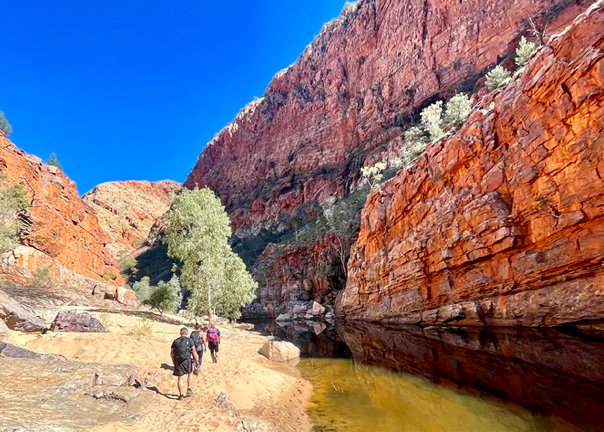
There is a moment near the end of the Larapinta Trail, climbing Mount Sonder in the dark, when the whole point of the walk arrives at once. The cold bites, the head torch picks out the next rock, and then the sun lifts over the West MacDonnell Ranges and turns 230 kilometres of red country gold. People plan for years to stand there.
Getting there is the part worth getting right. The Larapinta is one of the great desert walks on earth, and it is also one of the most demanding: hard quartzite ridges, sharp spinifex, dry creek beds, and a stretch on Section 9 where there is no reliable water and you carry two days of it up some of the roughest ground on the trail. Days can be hot enough to peel the soles off a boot. Nights drop below freezing. It rains here more than people expect.
None of that is a reason to be nervous. It is a reason to plan, which, if you are the sort of person drawn to a trail like this, is half the pleasure. This guide is the kit you actually need, sorted by what the Larapinta demands and why each piece earns its place. Get the short list of make-or-break items right and the rest falls into line.
If you are still weighing up the walk itself, start with the full Larapinta Trail guide for sections, water planning and logistics. For the system behind these choices, see multi-day hiking gear: what you actually need.
Conditions That Drive Your Kit
| Factor | Larapinta reality |
|---|---|
| Distance and duration | Over 230km, 12 sections, usually 14 to 16 days |
| Best season | May to August (cold nights, clear days) |
| Terrain | Hard, rocky, uneven ground; sharp quartzite; spinifex; exposed ridges |
| Temperature | Hot days, nights below freezing in winter; frost and heavy dew |
| Rain | Less likely in the dry season, but it does happen; plan for it |
| Water | Tank water at key trailheads only; treat everything; Section 9 needs a two-day carry, 4 to 6 litres per person per day |
| Remoteness | Marked sections with food drops, but long stretches with no road and no phone signal |
Every choice below traces back to a line in this table. Full booking, transfer and water detail sits in the Larapinta Trail guide.
How This Kit Is Built
This list is built from the official NT Parks equipment guidance, the packing standards used by the operators who run the trail every season, and the accounts of independent walkers who have finished it. It is built for the trail first. Where the best tool for the job is one we do not yet have a buying link for, we still tell you to take it, because a list that bends to anything other than the trail is not worth carrying.
Four things make or break a Larapinta walk: carrying and treating enough water, sleeping warm off cold ground, keeping your feet intact on rock, and managing sun. Those get the detail. The rest still matters, and gets a clear pick.
Water: The Category That Defines This Trail
Water is the core safety skill on the Larapinta, so it comes first. NT Parks supplies tank water at key trailheads but cannot guarantee its quality, and natural surface water is rare. You treat everything you drink, and you plan around 4 to 6 litres per person per day. Section 9 has no reliable water along its length, so you carry two days of it. That single carry shapes your whole water setup.
Two things matter: how you treat, and how much you can hold.
For treatment with real margin, a press purifier is hard to beat in this country. The GRAYL GeoPress presses clean water in seconds and removes viruses as well as bacteria and protozoa, which is reassurance worth having from a tank you cannot vouch for. Walkers who have used it at Hugh Gorge and the trail tanks rate it highly. It is bulkier than a squeeze filter, which is the trade.
If you would rather save weight and bulk, the Sawyer Squeeze threads onto standard bottles and bladders, handles years of use, and packs down small. Pair either system with collapsible soft bottles so you have the capacity for the Section 9 carry without hauling rigid bottles the whole way.
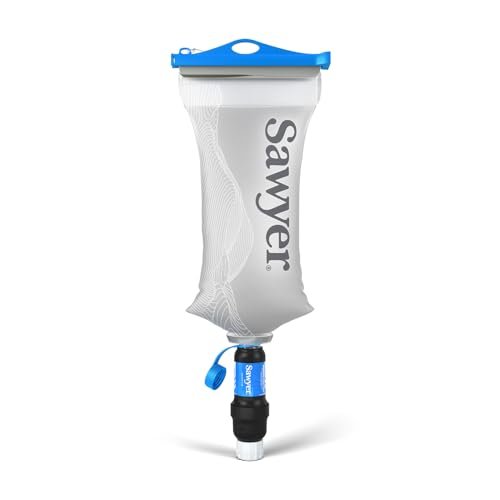
Plan capacity for the longest dry stretch, not the average day: a 2 to 3 litre bladder plus enough soft-bottle capacity to reach 6 litres or more. Carry electrolytes too. The heat pulls salts out of you faster than water alone replaces them. Compare the full range in the best water filters for hiking.
Sleep System: Cold Ground, Colder Mornings
This is where hikers underpack, and the desert finds them out at 3am. The Larapinta is walked in winter. NT Parks tells walkers to carry a bag rated below -5°C, and the ground is bitterly cold, hard and sharp underneath you.
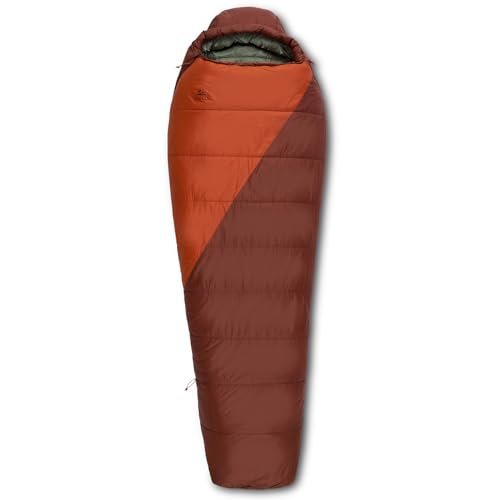
For the bag, go cold and go synthetic. The Kelty Cosmic Synthetic 0 Degree is rated to 0°F (around -18°C), which sits comfortably under the NT Parks guidance and gives you margin for an exposed high camp on the Chewings Range. Synthetic shrugs off damp from condensation, heavy dew or an unexpected wet crossing better than down. If you already own a quality down bag rated to -5°C or colder, that works too and saves weight; just keep it dry.
The mat matters as much as the bag, and this is the one item where we will not point you at our usual budget pick. Cold ground pulls heat straight out of you, so the Larapinta needs an insulated inflatable sleeping mat with a real R-value of around 3 or higher, not a thin foam or uninsulated camp pad. Walkers report an insulated inflatable around R-2.8 being “fantastic when freezing in the desert,” and more insulation is better on frost nights. Two more things this trail demands: it must pack small enough for a multi-day pack, and you must carry a patch kit, because spinifex punctures air mats. The class benchmarks are the Therm-a-Rest NeoAir and Nemo Tensor Insulated lines. See our best insulated sleeping pads for hiking for genuine R-value picks, including the Therm-a-Rest NeoAir XLite NXT, and read the note below before choosing, because not every pad on a camping list is built for sub-zero ground.
Compare bag options in the best synthetic sleeping bags.
Footwear: Protect the Thing That Carries You
Boots are the most common gear failure on the Larapinta, and the failure is specific: hot ground softens the glue and the sole peels off, often days from the nearest road. Sharp rock does the rest. Your feet take the same punishment.
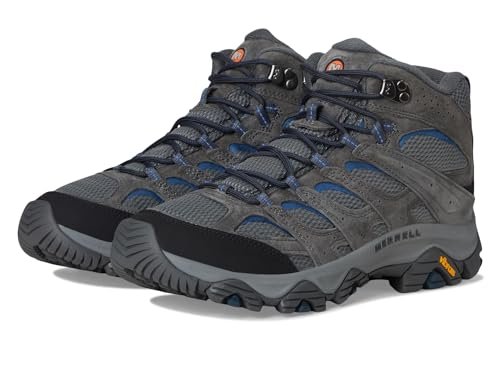
So this is not the place for a featherweight trail shoe or a fresh pair out of the box. You want a sturdy, broken-in boot with a durable, well-bonded sole and tread built for rock. A mid-height boot like the Merrell Moab 3 Mid adds the ankle support that pays off on loose descents and uneven ground, while staying breathable enough for the heat.
Compare the best hiking boots
If you genuinely prefer a low-cut shoe and your ankles are up to rocky ground, the low Merrell Moab 3 is the cooler option, but treat ankle support as the safer default here. See the best durable hiking shoes.
Two things to add regardless of choice. Wear them in hard before you fly to Alice Springs, because new boots on day three is how you collect trip-ending blisters. And carry a small repair kit, glue, tape and spare laces, so a peeling sole becomes an annoyance rather than an evacuation. Good socks finish the job: merino like the DANISH ENDURANCE Merino Wool Hiking Socks manages moisture and odour over consecutive days, and you carry a dry spare pair.
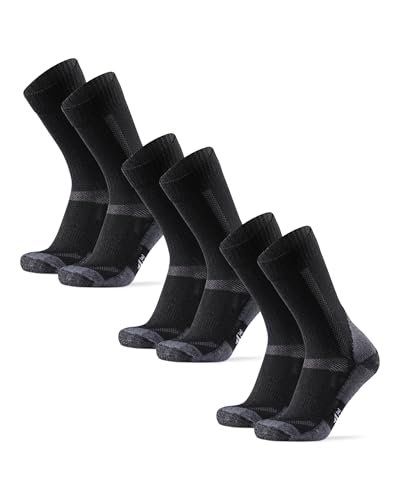
Compare the best hiking socks for preventing blisters
Lightweight gaiters are worth it too. They keep spinifex needles, gravel and red sand out of your boots all day.
Sun and Flies: Cover Up, Stay Sane
There is almost no shade between the gorges. Hours of direct sun on exposed rock is the daily reality, and the UV is fierce. Bare skin is the wrong answer, and a long-sleeve layer is cooler than it sounds because it keeps the sun off while it wicks sweat.
The WILLIT Men’s UPF 50+ Sun Hoodie is the desert workhorse: long sleeves, a hood you pull up under your hat, and thumb-loop cuffs to cover the backs of your hands on exposed sections.
Compare the best moisture-wicking shirts for multi-day hiking
Build the rest of your sun kit around it: a wide-brim hat (not a cap), proper UV-filtering sunglasses, and sunscreen for any skin still exposed. None of these are optional on the Larapinta.
And then the flies. Central Australian flies are relentless, and a head net is the difference between enjoying lunch and losing your temper. It weighs almost nothing and you will use it daily. See the best bug nets for camping.
The Rest of Your Kit
These categories are more straightforward, but each still earns its place on this trail.
Backpack
Add two days of water to your food and base weight and a weak pack becomes a shoulder injury, exactly where the ground is roughest. For an end-to-end carry you want roughly 65 to 85 litres with a frame that moves load onto your hips, a supportive hip belt, and tough fabric that survives being set down on rock. The Kelty Asher 65L covers this for most walkers without a premium price. Fit is everything with a loaded pack, so try it on weighted if you can; the Osprey-class adjustable harnesses are the benchmark for fit if budget allows.
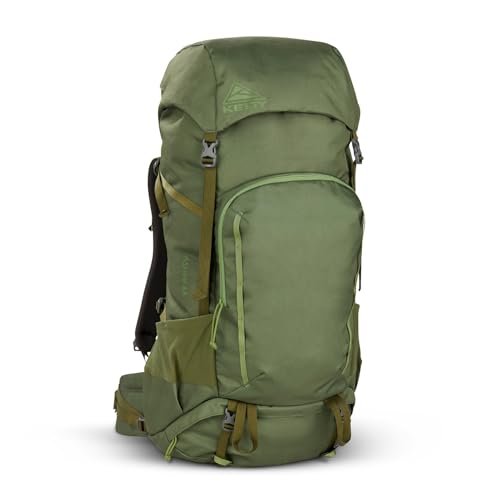
Compare the best internal frame backpacks
Shelter
Desert camps are rocky, windy and hard to peg, and the wildlife (mice, dingoes, the occasional snake) is a reason to zip yourself in. A freestanding double-skin tent like the Kelty Grand Mesa 2P stands up where stakes will not bite and vents against condensation. Take a footprint: sharp quartzite is unkind to a tent floor, and a groundsheet is cheap insurance against an expensive repair.
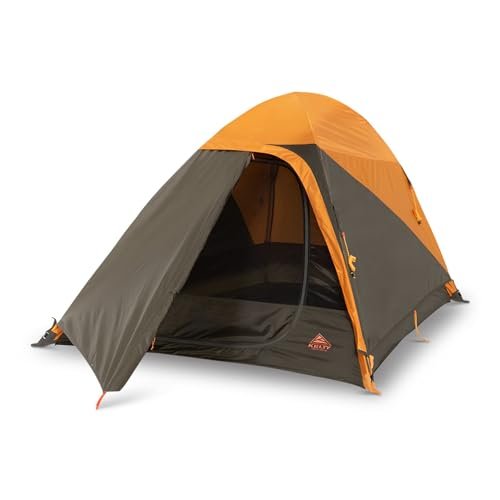
Compare the best freestanding tents
Trekking poles
Rocky descents, knee load and the wades through Hugh Gorge all make poles worth their weight. The Black Diamond Alpine Carbon Cork is durable and comfortable over a long trail. One trail-specific tip: leave the rubber tip covers at home. They have no grip on jagged rock and end up as litter on the trail. Use the bare carbide tips.
Compare the best trekking poles
Warm and wind layers
The cold is real once the sun drops. Pack a thermal base layer, a warm insulated or fleece jacket with a hood, a beanie and light gloves for pre-dawn starts. Add a light wind and rain shell, because exposed ridges are windy and the dry season is not always dry. See the best lightweight hiking jackets.
Stove and cooking
Open fires are banned on the Larapinta, so a gas or liquid-fuel stove is essential for hot food and for boiling water as a treatment backup. You cannot fly with fuel canisters, so buy them in Alice Springs before you start.
Power and light
A head torch with spare batteries is non-negotiable, both for camp and for a pre-dawn Mount Sonder summit. Charging is genuinely hard out here and the trailhead USB points are unreliable, so carry a power bank (a 20,000mAh unit covers a phone, watch and torch for the gaps between food drops). See the best power banks for hiking.
Emergency communication
Mobile coverage is patchy to nonexistent across most of the trail. A personal locator beacon (PLB) or satellite messenger is essential, especially if you walk solo. NT Parks strongly recommends one. This is a safety item, not an affiliate pick: buy or hire one you trust, and register it before you start. Pair it with a first aid kit that includes a snake bandage.
Kit at a Glance
| Category | Our Pick | Why It Matters Here |
|---|---|---|
| Water treatment | GRAYL GeoPress | Presses out viruses and bacteria from uncertain tank water in seconds |
| Water backup | Sawyer Squeeze | Light treatment that threads onto bottles for the Section 9 carry |
| Sleeping bag | Kelty Cosmic Synthetic 0 Degree | Rated below the -5°C NT Parks guidance; synthetic handles damp |
| Sleeping mat | Therm-a-Rest NeoAir XLite NXT, R-value 4.5 | Cold ground steals heat; foam camp pads are not enough |
| Boots | Merrell Moab 3 Mid | Durable bonded sole and ankle support for sharp, rocky ground |
| Socks | DANISH ENDURANCE Merino | Manages moisture and odour over consecutive days |
| Sun layer | WILLIT UPF 50+ Sun Hoodie | Full coverage for shadeless days on exposed rock |
| Backpack | Kelty Asher 65L | Carries two days of water weight onto your hips |
| Shelter | Kelty Grand Mesa 2P | Freestanding for rocky, hard-to-peg camps; use a footprint |
| Trekking poles | Black Diamond Alpine Carbon Cork | Saves knees on rocky descents; carbide tips, not rubber |
What You Can Skip
Plenty of walkers carry weight up every ridge that they never needed.
You do not need to carry your full water supply from day one. Tank water at key trailheads means you only carry hard where there is a known gap, mainly Section 9. Plan the carries, do not haul a full load the whole trail.
You do not need a heavy four-season mountaineering tent. Cold, wind and the odd rain night are the issue, not snow loading, so a sturdy three-season freestanding tent is plenty.
You do not need rubber tips on your poles. They have no grip on quartzite and litter the trail when they fall off. Use the bare carbide tips.
And you do not need brand-new, untested gear. The Larapinta is the wrong place to debut a stiff boot or a mat you have never slept on. Walk in your kit at home first, fix what rubs or leaks, and arrive with gear you already trust.
Final Thoughts
The Larapinta rewards the careful. Get the four big things right, water, warmth off cold ground, feet and sun, and the trail stops being a logistics problem and becomes what you came for: red ranges, silent camps, and that climb up Mount Sonder in the dark toward a sunrise you will remember for years.
When your kit is sorted, plan the route and water with the full Larapinta Trail guide, and back up your gear logic with plan your first multi-day hike. For another Australian classic with its own demands, see our Overland Track guide.
Frequently Asked Questions
What is the one thing people forget to pack for the Larapinta?
Enough water-carrying capacity. Walkers focus on the filter and forget they need the bottles and bladder to actually carry a two-day supply on Section 9. Add collapsible soft bottles to whatever treatment you choose, plan for 4 to 6 litres per person per day, and size your capacity to the longest dry stretch, not the average day.
How warm a sleeping bag and mat do I need for the Larapinta Trail?
NT Parks advises a bag rated below -5°C for the cooler walking season, so a bag rated to around 0°F (-18°C) gives useful margin. Pair it with an insulated inflatable mat of around R-value 3 or higher. The mat matters as much as the bag, because cold, hard ground will undo a warm bag from underneath.
Do I need hiking boots, or will trail runners do?
The Larapinta is hard on footwear, and the classic failure is a sole peeling off on hot rock far from help. A sturdy, broken-in boot with a durable bonded sole and ankle support is the safer choice on this terrain. If you prefer a low-cut shoe, make sure it is tough and well broken in, and carry a glue-and-tape repair kit either way.
Can I rent gear in Alice Springs instead of buying it?
Some gear and trek-support operators in Alice Springs can hire equipment, and food-drop and transfer companies help with logistics. If you only walk the Larapinta once, hiring big-ticket items like a cold-rated bag or a PLB can make sense. If you hike regularly, buying gear that handles water weight and cold nights pays off across other trails.
