

Last updated: August 2026
Wild Trail Hiker is reader-supported. We may earn a commission when you buy through links on this page, at no extra cost to you. We only recommend products we would consider taking on a multi-day trip ourselves.
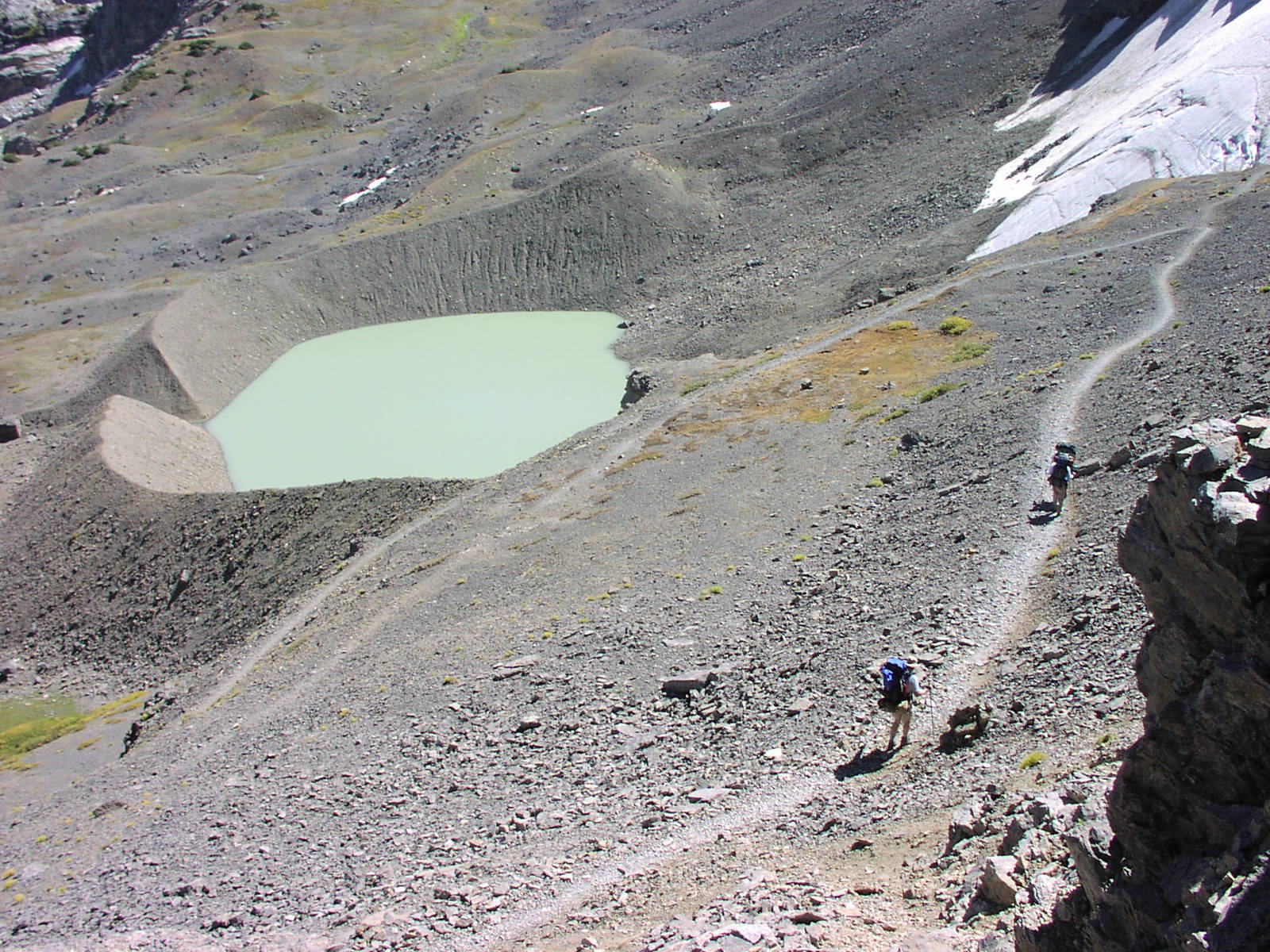
Standing on Hurricane Pass with the Grand Teton’s west face rising directly across the valley and Schoolroom Glacier still holding snow below you, it is easy to forget you are two days deep in grizzly country with a storm cell building over Alaska Basin. The Teton Crest Trail delivers that view almost every morning for five days straight, but it also demands real kit: a mandatory bear canister, a rain shell that actually works when the sky turns in twenty minutes, and a sleep system that holds up at 10,000 feet with camp temperatures near freezing even in August. This is what to pack for the Teton Crest Trail: the kit dialled for this specific route, not a generic packing list. Still deciding whether to walk it? Start with the full Teton Crest Trail guide. For the broader multi-day kit picture, see Multi-Day Hiking Gear: What You Actually Need.
Conditions That Drive Your Kit
Roughly 40 miles point to point, walked over 4 to 6 days. Season window is mid-July to late September; snow can linger on Hurricane Pass and Paintbrush Divide into late July. Two passes above 10,000 ft, with loose rock and real exposure at both. Daytime highs in the 70s to low 80s°F, nights into the 30s°F even in August, and fast-building afternoon thunderstorms. No campfires anywhere on the route. Grizzly and black bear country, bear canister and bear spray both mandatory. No resupply between trailheads. Full specs, permits, and the day-by-day breakdown are in the destination guide.
How This Kit Is Built
Everything here earns its place against the three things the Teton Crest Trail throws hardest at you: sustained climbing above 10,000 ft in grizzly country, a night-to-day temperature swing that can hit 40 degrees at elevation, and storms that build fast enough to catch hikers on exposed passes. This list is built from Grand Teton National Park’s own backcountry gear guidance, REI’s Grand Teton packing checklist, and real trip reports from hikers who have actually walked the route.
The Kit, by Category
Bear Canister and Bear Spray
Both are mandatory for every backcountry night in Grand Teton National Park, not optional extras. Get this wrong and you either fail permit pickup or, worse, have an unprotected food bag in one of the highest-density grizzly ranges in the Lower 48.

Canister: BearVault BV500 Journey: Best Overall. Large enough for a 5 to 6 day food carry, IGBC-approved, and the model most permit stations stock for free loans if you’d rather not buy one for a single trip. Compare more options: Best Bear Canisters for Multi-Day Hiking.
Spray: SABRE Frontiersman MAX 7.9 oz: Best Overall. Keep it on a hip belt or chest holster, never buried in your pack; you need it accessible in under three seconds. Compare more options: Best Bear Sprays for Multi-Day Hiking.
Sleep System
This is where a lot of otherwise well-prepared hikers get caught out. Camp temperatures near freezing at 9,000 to 10,000 ft are the norm here, not a worst-case scenario.
Sleeping bag: Kelty Cosmic Synthetic 20 Degree: Best Overall. A synthetic fill keeps insulating even if a surprise storm gets your gear damp, a real risk given how fast weather turns on the passes. Compare more options: Best Synthetic Sleeping Bags for Multi-Day Hiking.
Sleeping pad: look for an insulated inflatable pad rated R-value 4 or higher, such as the Therm-a-Rest NeoAir XLite NXT (R-value 4.5). See our best insulated sleeping pads for hiking guide for the full range. Ground cold, not air temperature, is what gets people at camps above 9,000 ft.
Rain Gear
The destination guide calls this a “genuinely waterproof rain shell, not just water-resistant,” and that framing matters: afternoon thunderstorms build fast at this elevation and a merely water-resistant jacket will soak through on an exposed pass.
Rain jacket: The North Face Antora Waterproof Jacket: Best Overall, genuinely waterproof rather than just showerproof. Compare more options: Best Waterproof Jackets for Multi-Day Hiking. If you want a lighter, more packable shell to layer over an insulated jacket instead, the Patagonia Torrentshell 3L is the pick from our lightweight jackets guide.
Rain pants: Marmot PreCip Eco Rain Pant: Best Overall. Compare more options: Best Rain Pants for Multi-Day Hiking.
Footwear
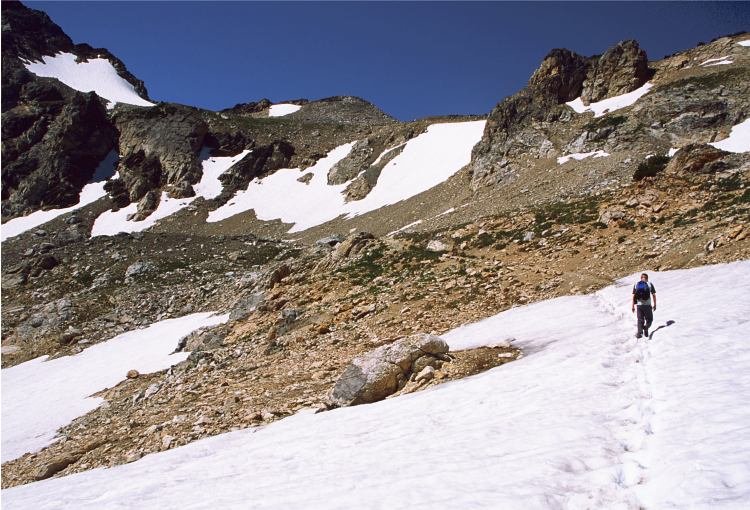
Loose rock on both pass descents and the possibility of lingering snow through late July put real demands on your boots, and you will also want something to change into at camp and river crossings.
Boots: Salomon X Ultra 5 Mid GORE-TEX: Best Overall, waterproof with solid grip for the loose descents off Hurricane Pass and Paintbrush Divide. Compare more options: Best Waterproof Hiking Boots for Multi-Day Hiking. If you’re carrying a heavier pack over more technical terrain, the La Sportiva Ultra Raptor II Mid GTX from the same guide is built for it.
Camp and river shoes: HUMTTO Men’s Amphibious Water Shoes: non-slip and quick-drying, useful for the trail’s stream crossings and for letting your feet recover at camp after a long day in boots. Compare more options: Best Hiking Sandals.
Backpack
TETON 55L Scout Internal Frame Backpack: Best Overall in our multi-day backpacks guide. A 50 to 65 litre range is the sweet spot here, big enough to carry a bear canister plus 4 to 6 days of food without needing to strap gear to the outside where it snags on brush. Compare more options: Best Multi-Day Backpacks.
Trekking Poles
Black Diamond Alpine Carbon Cork: Best Overall. Genuinely useful rather than optional on this trail, given the sustained climbing and descending over two passes above 10,000 ft. Compare more options: Best Trekking Poles for Multi-Day Hiking.
Water Treatment
Sawyer Squeeze Water Filtration System: Best Overall. Treat every source on this trail; the volume of both wildlife and hikers using the same basins rules out drinking untreated water anywhere on the route. Carry a lightweight chemical backup (tablets or drops) in case your filter clogs or freezes at a high camp. Compare more options: Best Water Filters for Hiking.
Insulated Camp Jacket
The North Face ThermoBall Eco Jacket 2.0: Best Overall. Earns its place the moment the sun drops behind the range and camp temperature falls 30 to 40 degrees from the afternoon high. Compare more options: Best Insulated Jackets for Hiking.
Cooking System
Fire-Maple Fixed Star 1: compact integrated stove system. Campfires are banned across the entire Teton Crest Trail, so this is not an optional comfort item, it is how you eat. Compare more options: Best Backpacking Stoves.
Headlamp
Black Diamond Spot 400-R: Best Overall. Useful for early starts aimed at clearing the passes before afternoon storms build, and for camp chores once the sun drops fast behind the range. Compare more options: Best Headlamps for Hiking.
Kit at a Glance
| Category | Our Pick | Why It Matters Here |
|---|---|---|
| Bear canister | BearVault BV500 Journey | Mandatory every night; free loans available if you skip buying |
| Bear spray | SABRE Frontiersman MAX 7.9 oz | Mandatory, keep it accessible not buried |
| Sleeping bag | Kelty Cosmic Synthetic 20 Degree | Synthetic holds warmth even if it gets damp in a storm |
| Sleeping pad | Therm-a-Rest NeoAir XLite NXT, R-value 4.5 | Camps sit at 9,000 to 10,000+ ft, near-freezing nights |
| Rain jacket | The North Face Antora | Genuinely waterproof, not just water-resistant |
| Rain pants | Marmot PreCip Eco | Fast-building afternoon storms on exposed passes |
| Boots | Salomon X Ultra 5 Mid GTX | Grip and waterproofing for loose pass descents |
| Camp/river shoes | HUMTTO Amphibious Water Shoes | Stream crossings and camp recovery |
| Backpack | TETON 55L Scout | Fits a bear canister plus 4 to 6 days of food |
| Trekking poles | Black Diamond Alpine Carbon Cork | Sustained climbing and descending over two passes |
| Water filter | Sawyer Squeeze | Every source needs treatment on this trail |
| Insulated jacket | North Face ThermoBall Eco 2.0 | Camp temperature can drop 30 to 40 degrees after dark |
| Cooking system | Fire-Maple Fixed Star 1 | Campfires are banned on the entire route |
| Headlamp | Black Diamond Spot 400-R | Early starts to clear passes before storms build |
What You Can Skip / Over-Packing Traps
Camp chairs, inflatable pillows, and a second book sound nice at the trailhead and feel like dead weight by Hurricane Pass. This is a point-to-point trail with real elevation gain most days, not a car-camping weekend, so weight has a way of making itself known by day three. A double sleeping bag or a shared double sleeping pad might work for a short, mild trip elsewhere, but they add real weight for a marginal comfort gain here, and this trail already asks a lot of your legs.
Do not overpack layers “just in case.” One insulated jacket, one rain shell, and a couple of moisture-wicking base layers cover the realistic temperature swing better than three different mid-layers you will barely rotate through. And do not skip the bear canister to save weight by hanging food instead: many of this trail’s camps sit above treeline where there is nothing to hang from, and rangers do check.
Renting vs Buying
If you don’t already own a bear canister, renting makes sense for a one-off trip: permit-issuing stations loan them free with a valid backcountry permit. Bear spray is a different story: renting it locally in Jackson runs roughly $16 for one to two days up to about $28 for five-plus days, which is close enough to the cost of buying a can you’ll actually want to keep for future trips in bear country that buying is usually the better call unless you’re flying in without checked luggage for it.
Final Thoughts
The gear that matters most on the Teton Crest Trail is the gear tied directly to its three real risks: a food storage system that satisfies both the regulations and the bears, a rain shell that holds up when a storm catches you on an exposed pass, and a sleep system that keeps you warm at 10,000 feet after dark. Get those three right and the rest of what to pack for the Teton Crest Trail is standard multi-day gear. For the full itinerary, permit process, and water sourcing detail, read the Teton Crest Trail destination guide. For the broader gear framework behind these picks, see Multi-Day Hiking Gear: What You Actually Need. If you’re weighing a similar high-alpine, bear-country trip, our What to Pack for the John Muir Trail guide covers a longer trail with a lot of the same core kit.
Frequently Asked Questions
Do I really need a bear canister for the Teton Crest Trail?
Yes, every backcountry night, no exceptions. Grand Teton National Park requires an IGBC-approved hard-sided canister or approved bear-resistant sack for every overnight backcountry stay, and many camps sit above treeline where hanging food isn’t an option anyway. Free loans are available at permit-issuing stations if you don’t own one.
What sleeping bag rating do I need?
Aim for a bag rated 20°F or warmer. Camp temperatures at 9,000 to 10,000+ ft regularly drop near freezing even in August, and a bag rated for a mild summer will leave you cold on more nights than not.
Can I rent gear near the trailhead?
Bear canisters, yes, free at permit-issuing stations with a valid permit. Bear spray can be rented in Jackson, though buying usually works out similar in cost if you’ll use it on future trips. Full backpacking kit rental (tents, sleeping bags) is available through Jackson-area outfitters, worth checking if you’re flying in and don’t want to check bulky gear.
How heavy should my pack be on the Teton Crest Trail?
Most backpackers land somewhere between 30 and 40 lbs fully loaded with 4 to 6 days of food and a bear canister, more if you’re carrying a heavier tent or camera gear. Given the sustained elevation gain over two passes, it’s worth trimming wherever you genuinely can without cutting into safety margin.
